
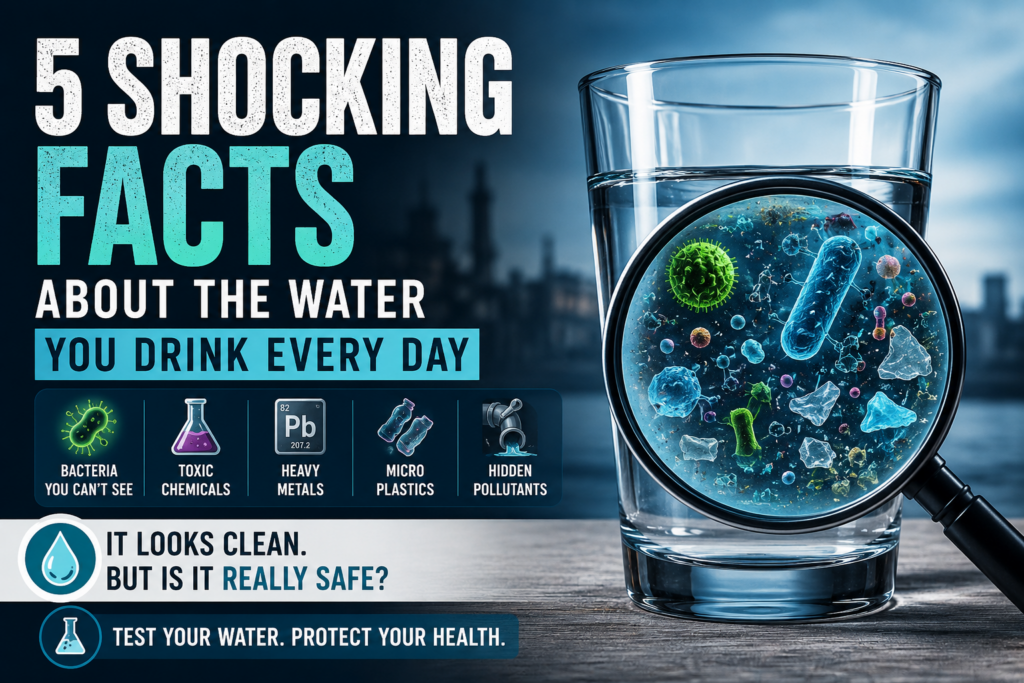
Every day, you drink water believing it is safe. A glass in the morning, water during meals, another bottle while travelling, and maybe filtered water before sleeping. Since it looks clear and tastes normal, most people never question it. But the truth is far more scary. Many harmful pollutants in drinking water are completely invisible. They have no smell, no color, and no strange taste. Yet they quietly enter the body every single day. That water can carry bacteria, toxic metals, industrial chemicals, and even tiny plastic particles that slowly affect health over time. Many stomach problems, skin issues, weakness, and long term diseases may have a hidden connection with unsafe drinking water. This is why water testing in the lab is becoming extremely important today. A proper lab test can reveal dangers that your eyes simply cannot see.
5 Shocking Truths About the Water You Drink Daily
1. Clear Water Does Not Always Mean Safe Water:
Dirty water always looks dirty, this is one of the biggest misconceptions people have. In reality, some of the most dangerous contaminants cannot be seen at all. Water may look crystal clear in a glass and still contain harmful bacteria, lead, arsenic, fluoride imbalance, nitrates, or chemical pollutants. Many people continue drinking polluted water for years because there are no immediate warning signs.
Sometimes the contamination starts from underground water sources. In other cases, it enters through damaged pipelines, old storage tanks, industrial waste, or sewage leakage. Even treated water can become unsafe before it reaches your home. The most dangerous thing is that symptoms often appear slowly. Frequent stomach infections, unexplained skin irritation, hair fall, tiredness, or recurring digestive problems may all have a connection with unsafe water. This is exactly why laboratory testing matters. A proper water testing lab can identify harmful pollutants accurately instead of leaving people to guess whether their water is safe or not.
2. Tiny Plastic Particles May Already Be Inside Your Water:
Most people worry about visible dirt in water, but very few think about plastic particles so tiny that they cannot even be seen. These are called microplastics. They enter water from plastic bottles, packaging waste, pipelines, synthetic materials, and environmental pollution. Over time, these plastics break into microscopic particles and mix with drinking water sources. Researchers around the world have already found microplastics in bottled water, tap water, rivers, lakes, and groundwater. The scary part is that people consume these particles daily without realizing it. Scientists are still studying their long term effects, but early findings suggest they may affect hormones, immunity, and organ health.
Many people assume packaged drinking water is automatically pure, but that is not always true. Poor storage conditions, heat exposure, and plastic packaging can all contribute to contamination risks. Home water filters also may not detect or remove every microscopic particle effectively. Only advanced laboratory testing can properly identify hidden contaminants like microplastics. Without testing, there is simply no way to know what may actually be present inside your drinking water.
3. Dangerous Chemicals Can Stay in Water for Years:
Some chemicals are so persistent that scientists call them “forever chemicals.” These substances, known as PFAS, are commonly used in industrial products, non-stick cookware, waterproof materials, food packaging, and firefighting foam. Once these chemicals enter the environment, they remain there for a very long time. The problem becomes serious when these chemicals mix with groundwater and drinking water systems. Since PFAS do not easily break down, they can continue polluting water for years. Studies have linked long term exposure to possible health problems including hormone imbalance, liver damage, immune system issues, fertility problems, and certain cancers.
The frightening part is that ordinary people usually have no idea these chemicals are present. The water may taste completely normal. Boiling it may not remove the contamination either. A certified water testing lab can detect such chemical pollutants using advanced scientific methods. Regular testing becomes especially important in industrial areas or places where groundwater quality may already be affected.
4. Heavy Metals in Water Can Slowly Harm the Body:
Heavy metal is another hidden danger found in many water sources. Metals like lead, arsenic, mercury, and cadmium may enter drinking water through industrial waste, toxic groundwater, agricultural waste, or old plumbing systems. Lead contamination is mostly dangerous for children as it can affect brain development and learning ability. Arsenic exposure over long periods has been associated with skin diseases, nerve damage, and increased cancer risks. What makes heavy metals especially dangerous is that their effects often build up slowly inside the body.
Many families spend money on medicines and treatments without ever suspecting their water supply. Constant weakness, stomach discomfort, poor immunity, skin irritation, headaches, and fatigue may sometimes have a direct connection with toxic water. Unlike visible dirt, heavy metals cannot be identified just by looking at water. Only proper laboratory testing can accurately measure their presence.
5. Water Pollution Is Not Only a Rural Problem:
A common myth is that water contamination only affects villages or remote areas. In reality, urban areas face major water quality problems too. Cities deal with aging pipelines, sewage leakage, construction damage, industrial pollution, chemical waste, and polluted storage tanks. Even modern apartment buildings may unknowingly supply unsafe water if tanks are not cleaned regularly. In some places, groundwater pollution has become a serious issue as chemicals from factories and agriculture slowly seep underground. During heavy rains or flooding, pollutants may also enter local water systems. Sometimes water gets affected after treatment while travelling through damaged pipelines before reaching homes.
This means, even if water treatment plants do their job properly, contamination can still happen later. Many people living in cities trust their water supply completely without ever getting it tested. Regular water testing is important not only for homes but also for schools, restaurants, hospitals, offices, and food businesses. Clean looking water should never be assumed safe without proper analysis.
Why Has Water Testing Become So Important Today?
Most harmful pollutants cannot be identified by taste, smell, or appearance. That is why a water testing lab is essential today. A certified lab uses advanced tools and scientific methods to detect bacteria, viruses, heavy metals, chemical pollutants, excess minerals, pH imbalance, nitrates, fluoride, and other hidden contaminants accurately. It also helps businesses maintain safety standards and protect public health. Instead of depending on assumptions, people get clear scientific information about their water quality. Water testing is not about creating fear, it is about awareness and prevention. Just like people regularly check their health through medical tests, drinking water also deserves proper attention. The water you drink every day directly affects your body, energy, immunity, and overall wellbeing.
Conclusion
Water is one of the most basic parts of life, yet many people never stop to question whether the water they drink is actually safe. The biggest danger with contaminated water is that it often stays unnoticed for years. It may look perfectly clean while silently carrying bacteria, toxic metals, industrial chemicals, or microscopic plastic particles. As pollution levels continue increasing, water testing labs are becoming a necessity rather than an option. Regular testing helps detect hidden contamination early, protects families from long term health risks, and ensures safer drinking water for everyone. Because when it comes to your health, clear water is not enough. Safe water is what truly matters.
FAQs
- How can I know if my drinking water is contaminated?
Contaminated water does not always have a bad smell, taste, or color. The safest and most accurate way to know is through laboratory water testing. - How often should drinking water be tested?
Experts generally recommend testing drinking water at least once a year. Areas using borewell or groundwater may need more frequent testing. - Can boiling water remove all pollutants?
No. Boiling can kill certain bacteria and germs, but it cannot remove heavy metals, chemical pollutants, or microplastics from water. - Is filtered water always safe to drink?
Not always. Some filters remove basic impurities but may not detect or eliminate all harmful contaminants. Proper testing is still important. - Why are water testing labs better than home testing kits?
Home kits provide limited information, while labs use advanced scientific methods to detect a wide range of hidden toxins more accurately.