
Food is the most essential part of our life, as without it we just cannot survive. But sadly enough, in the modern world, quick profitability and greed result in compromised food quality. Any type of edible food, raw vegetables, meat or packaged products, contains harmful ingredients. Moreover, many of these ingredients used in preparing dishes can jeopardize your health over time. Ingredients may be contaminated with bacteria, germs, or even industrial-grade toxic chemicals. While detecting these hazards is not always feasible, Pro Research and Testing Laboratory stand ready to assist in these critical situations. Let us give you reasons why we are the best food testing lab in Nagpur.
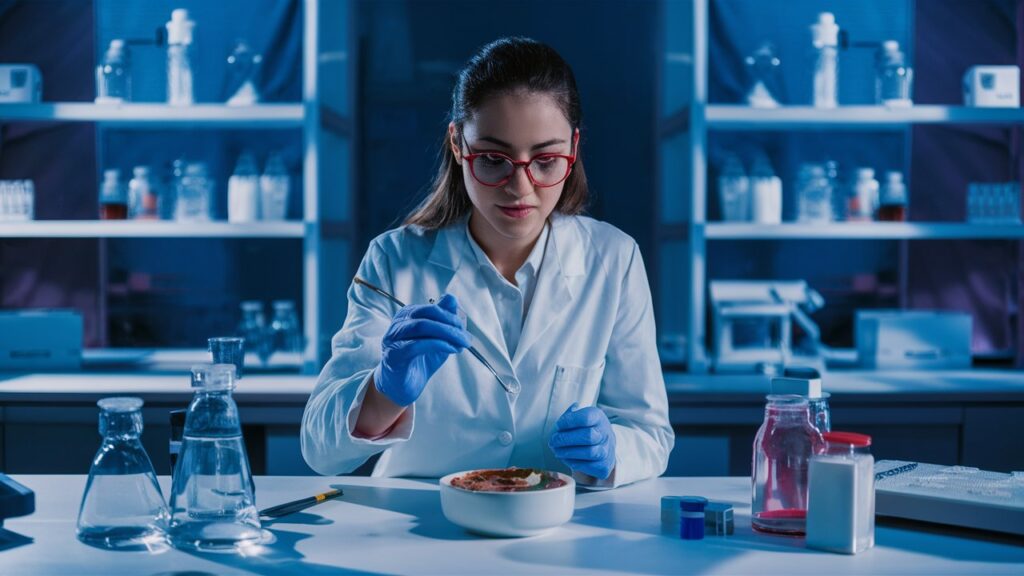
Government Approved Food Testing Lab In Nagpur – FSSAI Approved Food Testing Lab In Nagpur
Food safety and standards in India are maintained by the Food Safety and Standards Authority of India (FSSAI) Additionally, NABL, a separate entity, overseen by the Indian government’s Department of Science and Technology, laboratories that conduct a range of tests and methodologies are reviewed and accredited. To operate as a food testing lab in Nagpur, a food research laboratory must secure FSSAI approval and NABL accreditation. These bodies set the methodologies and standards for consumable foods in India. For maximum credibility, any esteemed food research lab in Nagpur, or elsewhere in India, should comply with these guidelines.. Additionally, there are several benefits to being a government-recognized and NABL-accredited food testing lab in Nagpur:
- The high standards of laboratories, which are supported by NABL accreditation, result in more accurate and dependable test results.
- NABL test results are now widely acknowledged because they have been verified by international certifying authorities.
- A certified NABL lab will have qualified personnel, appropriate equipment, and properly documented testing procedures.
Best Food Testing Laboratories In Nagpur: What Kind Of Food Tests Are Conducted?
- Microbiological testing plays a crucial role in identifying harmful bacteria, viruses, and other pathogens in food products. Such testing is vital for confirming the safety of food and for averting foodborne diseases.
- Chemical testing can identify a range of pollutants, such as pesticides, heavy metals, and toxins. It also evaluates and determines the safety levels of food additive concentrations.
- Nutritional testing establishes the recommended daily intake of fats, proteins, carbohydrates, vitamins, and minerals. This data is crucial for researching nutritional content and for the labelling of food products.
- Allergen testing is crucial for identifying allergies to substances such as soy, gluten, and peanuts. These tests are essential to protect individuals with allergies from accidental exposure.
- Shelf-life studies are conducted to assess the safety and longevity of food products. These studies assist manufacturers in identifying optimal storage conditions and establishing appropriate expiration dates for their products.
- Sensory testing is a method used to assess the flavour, aroma, texture, and appearance of food items. It is crucial for understanding consumer preferences and plays a key role in developing new culinary products.
- Physical testing involves evaluating the physical characteristics of food, including colour, texture, size, and shape. It can also detect the presence of foreign materials in food products.
- The Verification of Origin assesses the probability that food products are genuine and come from their stated place of origin. This procedure can involve analyzing the chemical makeup of the food or employing DNA testing methods.
The Necessity To Go For The Best Food Research Lab In Nagpur
| Benefits | Explanation |
|---|---|
| Safety | It is vital to ensure that food is free from harmful substances such as pesticides, heavy metals, toxins, and pathogens to protect consumers from foodborne illnesses. |
| Quality Control | Testing ensures that food products meet consumer expectations and comply with regulatory standards, thus maintaining consistent quality. |
| Allergen Detection | Precise testing for food allergens allows manufacturers to label their products correctly, thus protecting individuals with allergies. |
| Nutritional Information | Testing provides precise nutritional information, allowing clients to make well-informed decisions about their diet. |
| Authentication | It aids in confirming the authenticity and origin of food products, fighting fraud, and maintaining fair trade practices. |
| Shelf Life Determination | Testing assesses factors such as oxidation, spoilage, and microbial growth to ascertain the shelf life of food products in the market. |
| Compliance | Food testing is essential for compliance with food safety standards and regulations established by regulatory authorities such as the FSSAI, FDA, USDA, and the European Union’s food agencies. |
| Process Improvement | Testing results can improve food safety and quality by impacting production, packaging, and storage methods. |
| Consumer Confidence | Comprehensive testing of food products ensures that consumers can trust the safety and quality of the items they buy. |
| Global Trade | Food testing is essential for international trade because it verifies that products comply with import and export regulations and meet various national standards. |
Various Tests Are Performed By The Top Food Testing Laboratory In Nagpur
Pro Research & Testing Laboratory is considered one of the top food testing labs in Nagpur for several reasons. To comprehend this, we must consider the distinctive factors that differentiate us, beginning with the diverse range of testing services we provide:
- Microbiology is the study of pathogenic bacteria and germs.
- Analytical chemistry can identify food additives, toxins, and nutrients.
- Sensory evaluation is conducted by trained professionals who examine taste, texture, vision, and smell.
- Nutritional analysis involves calculating the quantities of fat, protein, carbs, vitamins, and minerals.
- Allergen testing can help discover potential allergies (like gluten or peanuts).
Application, Equipment, and Sampling: Ensuring food quality and safety necessitates compliance with established standards. It is crucial to analyze nutritional labels and determine shelf life. Equally important is the development of new products and the detection of food fraud. Precise sampling methods are essential to guarantee that test results accurately represent the entire batch. Instruments used include water activity meters, UV/Vis spectrophotometers, colourimeters, mass spectrometers, high-performance liquid chromatography (HPLC), gas chromatography-mass spectrometry (GC-MS), and liquid chromatography-mass spectrometry (LC-MS). The existing testing capabilities might indicate the need for more specialized equipment.
Why Is Pro Research & Testing Laboratory The Best Lab for Food Testing In Nagpur?
| Benefits | Explanation |
|---|---|
| Precision Test | The laboratory employs experts with diverse skills to analyze the flavors of various cuisines. Each interaction is unique, ensuring that every item is assessed with precision and attention to detail. |
| Technological advancements | The laboratory has some of the best cutting-edge technology in this sector. With the best tech available our team of experts precisely runs tests on the food and catches harmful components easily. |
| All food is essential | Whether it’s a lavish banquet or a simple street treat, at our food testing laboratory in Nagpur, we measure every sample with precision, ensuring your safety is our top concern. |
| A Bite of Trust | Your trust is fundamental to our mission. Understanding the joy that a fulfilling meal can provide, our laboratory dedicates itself to guaranteeing that each bite is not only flavorful but also secure. |
| Universal Standard of Examination | Our testing complies with international safety protocols. Our lab merges local culinary treasures with worldwide proficiency, guaranteeing that your dining experience is a delightful blend of contemporary and classic flavours. |
Step-by-Step Guide for Proper Food Sample Packaging and Transportation for Quality Lab Testing
In the context of food quality research, ensuring scientific accuracy and legal accountability necessitates that all packaging and transport protocols meet rigorous aseptic and logistical standards. The methodology starts with the collection of a representative sample, which entails sampling from multiple depths and locations. Specifically, drawing material from the geometric centre of a bulk container ensures the sample is statistically representative of the entire population.
To prevent exogenous microbial or chemical contamination, researchers must utilise sterilised implements, such as scoops or spatulas, and wear protective gear, including sterile gloves and hairnets. Each specimen should be housed in a sterile, leak-proof primary container. Whirl-Pak bags serve as the standard for solid matrices, while wide-mouthed plastic jars with screw closures are utilised for liquids. Liquid samples should be filled to 90% capacity to provide room for expansion during the thermal variations encountered in transit.
For liquid media, it is essential to seal the lids with waterproof adhesive and double-bag the container to avoid cross-contamination in the event of a breach. Marking should be performed immediately with indelible, waterproof ink, documenting the sample ID, date, time of collection, and source. For perishable or cryogenic samples, preserving the “cold chain” is essential. These items should be packed in robust, insulated foam containers with pre-frozen gel packs or dry ice, as dictated by the sample’s thermal requirements.
A “Temperature Control” (TC) sample—such as a separate vial of water—must be positioned at the centre of the package to allow the lab to verify internal conditions upon receipt. All documentation, including the Chain of Custody and requisition forms, should be enclosed in a waterproof pouch and taped to the interior lid. Finally, the external box must be labelled “Perishable Food Samples” and dispatched via priority overnight courier. This minimises the transit window, ensuring that the specimens arrive in the state necessary for high-fidelity analytical results. For a detailed overview, consult our guide on sample transport protocols.
Pro Research Is Also Present All Over India
Conclusion
Pro Research & Testing Laboratory employs state-of-the-art technology and rigorous protocols to ensure the safety of food products. We are dedicated to protecting the culinary health of the people in Nagpur. Our comprehensive testing methods ensure that your food is free from contaminants and health risks, giving you peace of mind to enjoy your favourite dishes. The steadfast dedication of our experts at Pro Research & Testing Laboratory to meticulously examine each food sample is what establishes us as the best food testing lab in Nagpur.
FAQs
- What types of contaminants can a lab detect in food?
- Labs can detect harmful bacteria, viruses, parasites, chemicals, heavy metals, allergens, and foreign objects in food.
- How do labs test for harmful bacteria in food?
- Labs use microbiological testing, such as culturing and PCR, to detect harmful bacteria like Salmonella, E. coli, and Listeria.
- Can labs detect allergens in food?
- Yes, labs can detect undeclared allergens, such as peanuts, tree nuts, fish, shellfish, milk, eggs, wheat, and soy, using tests like ELISA (Enzyme-Linked Immunosorbent Assay) and PCR
- How long does it take for a lab to detect contamination in food?
- The time it takes to detect contamination varies depending on the type of test and the complexity of the analysis, but labs typically provide results within a few days to a week.
- How do labs test for chemical contaminants in food?
- Labs use chemical testing, such as chromatography and spectroscopy, to detect harmful chemicals like pesticides, heavy metals, and veterinary drug residues.
- What testing processes are used in food testing laboratories in Nagpur?
- Sample Preparation and Collection
- Microorganism Test
- Chemical testing.
- Nutritional testing.
- Physical testing.
- Sensory assessment
- Data analysis and reporting.
- Does Pro Research & Testing Laboratory food testing lab in Nagpur detect contamination accurately?
- Yes, Pro Research & Testing Laboratory‘s test results for food contamination are highly accurate, with a low risk of false positives or false negatives, when performed by trained professionals using validated methods.
- Why is NABL approval important for a food testing laboratory in Nagpur?
- Laboratories approved by NABL are considered reliable. They ensure strict adherence to protocols and the use of accurate technology, leading to dependable test results.
- Is Pro Research & Testing Laboratory a government-approved food testing lab in Nagpur?
- Our Pro Research & Testing Laboratory is approved by NABL and the government, ensuring the reliability of our food testing services.
- Which is the best food testing lab in Nagpur?
- Pro Research & Testing Laboratory is recognized as a top food testing lab in Nagpur, holding NABL accreditation and utilizing cutting-edge equipment for food testing.