
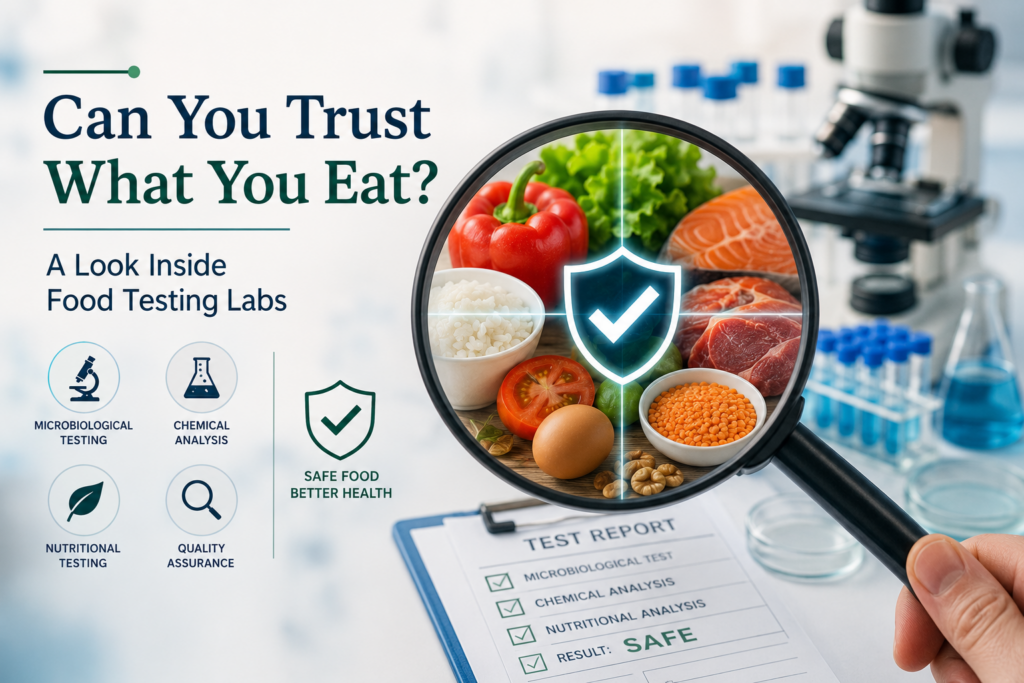
We eat without thinking too much. A packet of chips during a movie, sweets from a local shop, milk in the morning tea, or fresh fish from the market, food is a part of our everyday life. But have you ever stopped for a second and wondered, “Is this really safe?” In today’s world, food travels through many hands before reaching our plate. Farmers, factories, transport, storage, packaging, and shops, one small mistake can affect the quality of the food we eat. Most times, it is not. Harmful bacteria, chemicals, fake colors, pesticide residue, or contamination cannot always be seen, smelled, or tasted. This is where food testing labs quietly play a huge role. They work behind the scenes to check whether our food is truly safe, clean, and trustworthy. From milk and spices to packaged snacks and drinking water, these labs help protect public health every single day.
Why Food Safety Matters More Than Ever?
Modern food production has become faster and larger than ever before. While this helps food reach millions of people, it also increases the chance of contamination and adulteration. Unsafe food can lead to food poisoning, stomach infections, allergies, and long-term health problems. Children and older people are especially at risk. According to the World Health Organization, US$ 110 billion is lost each year in productivity and medical expenses resulting from unsafe food in low- and middle-income countries. In India, food safety has become a major concern because of issues like:
- Artificial colors in sweets
- Adulterated milk
- Pesticide residue in vegetables
- Harmful chemicals in packaged foods
- Contaminated water used in preparation
- Poor storage and hygiene practices
What Exactly Is a Food Testing Lab?
A food testing lab is a place where scientists carefully examine food samples to make sure they are safe to eat and meet quality standards. These labs check whether food contains harmful bacteria, chemicals, adulterants, or anything that could affect human health. They also test the nutritional value of food products to verify the information printed on labels. Using advanced machines and scientific methods, experts analyze everything from raw ingredients and packaged snacks to milk, water, spices, seafood, and ready-to-eat meals. Many different industries depend on these labs, including food manufacturers, restaurants, hotels, dairy farms, export businesses, and government bodies. Some laboratories also allow regular consumers to test food or water samples if they suspect contamination or poor quality.
What Do Food Testing Labs Actually Check?
Food testing is much more detailed than people imagine. A single food item may go through several different tests.
- Microbiological Testing: This test checks for harmful microorganisms like:
- Salmonella
- E. coli
- Listeria
- Yeast and mold
Microbiological testing is especially important for products like milk, paneer, meat, seafood, bakery items, and packaged foods because these products can spoil quickly if not stored properly. For example, paneer may look fresh and smell normal, but if it has been kept at the wrong temperature, harmful bacteria may start growing inside it. Without laboratory testing, the contamination may remain unnoticed until people become sick after eating it.
One of the biggest dangers of unsafe food is that it often appears perfectly normal. Bright red chili powder may contain artificial coloring chemicals, fresh-looking vegetables may carry pesticide residue, and packaged snacks may become contaminated due to poor storage conditions. This is why food testing labs depend on scientific analysis instead of appearance alone.
- Chemical Testing: Chemical testing checks whether harmful substances are present in food. They are:
- Pesticides
- Heavy metals
- Artificial chemicals
- Preservatives
- Antibiotic residue
- Adulterants
For example, fruits and vegetables may contain pesticide residue if chemicals were overused during farming. Fish or meat may contain antibiotic traces from animal treatment. These chemicals may not cause immediate illness, but long-term exposure can harm health slowly over time.
- Nutritional Testing: Have you ever read the nutrition label on a food packet? Calories, protein, fat, sugar, carbohydrates – all those numbers are verified through laboratory testing. Food companies cannot simply guess nutritional values. Labs test the food scientifically to ensure the information is accurate. People make health decisions based on these labels. This becomes extremely important for:
- Baby food
- Health drinks
- Protein supplements
- Diabetic food
- Diet products
- Moisture Testing: This may sound simple, but moisture testing is very important. Too much moisture in food can lead to:
- Fungal growth
- Spoilage
- Bad smell
- Short shelf life
Food testing labs use advanced moisture testing systems to quickly measure water content in products like grains, spices, snacks, and powdered foods. Even a small moisture imbalance can affect food quality and safety.
How Food Testing Labs Use Technology?
Modern food testing labs are highly advanced. Scientists use specialized instruments that can detect tiny amounts of contamination. Some machines can identify harmful substances at microscopic levels. Many labs now use:
- Automated moisture analyzers
- Chromatography systems
- Spectrometers
- DNA-based testing
- Digital monitoring software
Technology helps labs deliver faster and more accurate results than manual methods. Still, human expertise remains important. Skilled scientists analyze the results carefully before final reports are issued.
The Role of FSSAI and NABL in India:
In India, food safety is mainly regulated by the Food Safety and Standards Authority of India, commonly known as FSSAI. It sets rules and standards for food safety across the country. Many trusted labs are also NABL accredited. NABL stands for National Accreditation Board for Testing and Calibration Laboratories. An NABL-accredited lab follows proper scientific standards and quality systems. As per government information, hundreds of food testing labs in India are accredited under international quality standards. When choosing a food testing lab, accreditation matters a lot.
What Happens If Food Fails a Test?
If a food sample fails testing, several things can happen depending on the seriousness of the issue. The food may:
- Be rejected before reaching the market
- Be recalled from stores
- Require reprocessing
- Face legal action
- Receive penalties from authorities
For food companies, a failed test can damage their reputation badly. One contamination incident can destroy years of customer trust. That is why many companies test products regularly before selling them.
How Food Testing Protects Everyday Consumers?
Most people never visit a food testing lab. Yet they benefit from it every day. When you drink packaged water, buy baby food, order snacks online, or eat restaurant food, there is a good chance some part of that product was tested in a lab. Food testing helps:
- Reduce health risks
- Prevent food fraud
- Improve hygiene
- Increase transparency
- Build customer trust
Can Consumers Test Food Themselves?
There are some simple home tests for checking common adulteration in milk, spices, or oils. However, home methods are limited. Only professional laboratories can provide scientifically accurate reports. If someone suspects serious contamination in food or water, laboratory testing is the safest option.
The Future of Food Testing:
Food testing is becoming faster and smarter every year. Modern labs are now focusing on:
- Faster detection methods
- AI-supported analysis
- Portable testing systems
- Better traceability
- Real-time monitoring
As food supply chains become larger and more global, testing will become even more important. Consumers are also becoming more aware. People want clean labels, safe ingredients, and honest products. That pressure is pushing the food industry toward better quality control.
Final Thoughts
So, can you really trust what you eat? The honest answer is, trust should come with verification. Food testing labs may not be visible to the public, but they are one of the strongest safety shields protecting our food every day. They help detect contamination, confirm nutritional value, and stop unsafe products from reaching people. No system is perfect. But without food testing labs, food safety would become far more dangerous and unpredictable. The next time you pick up a food packet or eat at a restaurant, remember, behind that product, there may be scientists, machines, and careful testing working silently to protect your health. And that invisible work matters more than most people realize.
FAQs:
- Which is the best food testing lab in Kolkata?
One of the well-known food testing labs in Kolkata is Pro Research & Testing Laboratory. While choosing a lab, always check for NABL accreditation and FSSAI recognition. - How much does food testing cost in India?
The cost depends on the type of test. Basic tests may start from a few thousand rupees, while advanced chemical or microbiological testing can cost more. Pricing varies based on the food product and the number of parameters tested. - Why is NABL accreditation important for food labs?
NABL accreditation means the lab follows proper scientific standards and quality procedures. It improves trust in the accuracy and reliability of test results. - Can restaurants and small food businesses use food testing labs?
Yes. Many restaurants, bakeries, cloud kitchens, caterers, and small food brands regularly use food testing services to maintain food quality and customer trust. - What are the most common food safety problems found in India?
Some common issues include adulterated milk, pesticide residue in vegetables, artificial colors in sweets and spices, contaminated water, and poor hygiene during food storage and handling.