



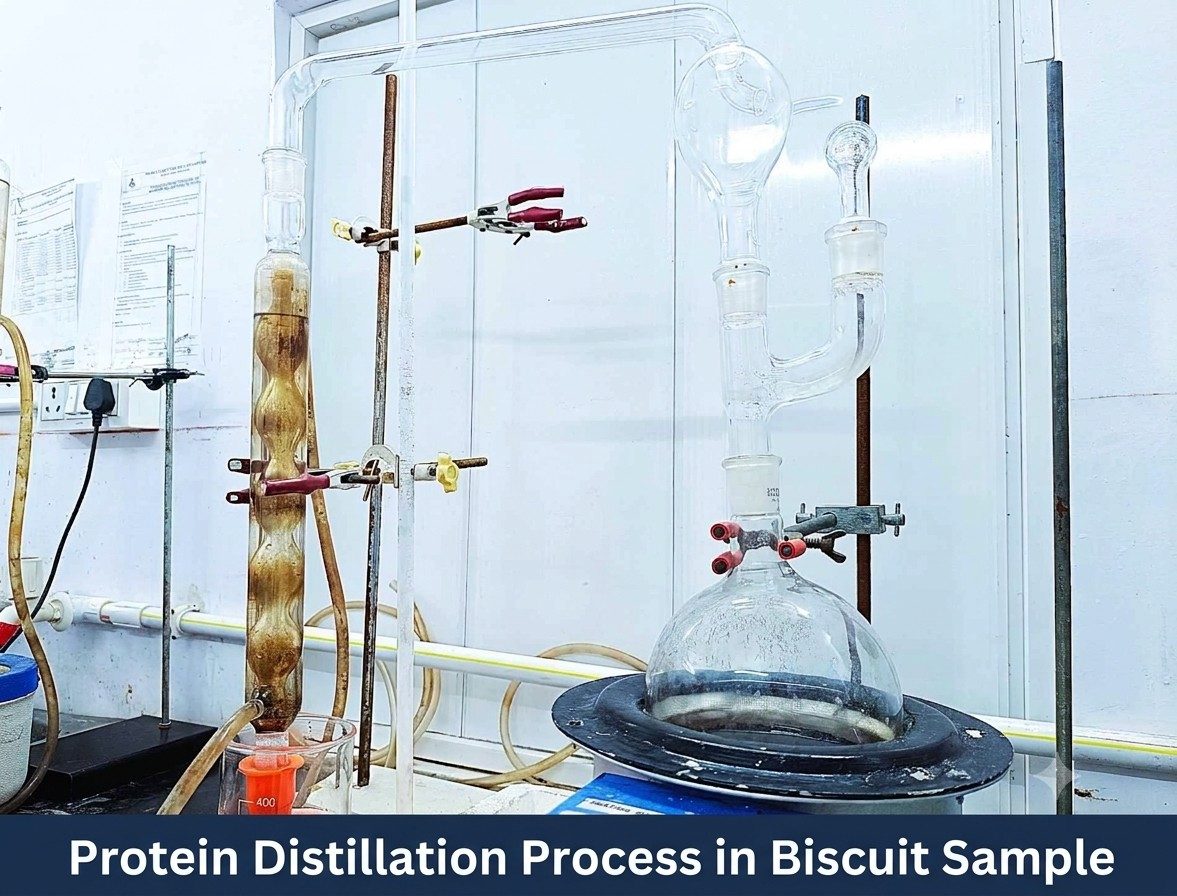
Bread is a widely consumed food product made from ingredients such as flour, water, yeast and salt. During bread preparation, yeast ferments the sugars present in the dough and produces different substances, including organic acids. These acids play a role in developing the texture, flavor and other characteristics of bread. The pH value is an important factor in understanding the quality and freshness of bread.This test helps to identify the acidic or alkaline nature of the bread and gives an idea about its chemical properties. Generally, bread has a slightly acidic nature due to the fermentation process.
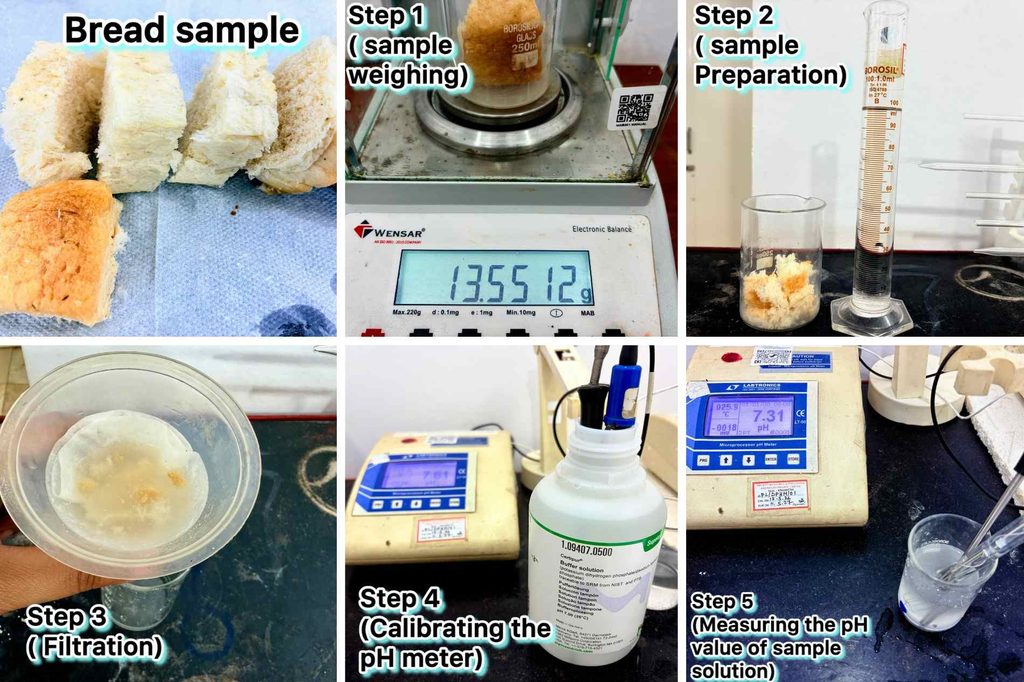
Here we used white bread to determine pH of Aqueous Extract.
Instruments, Glassware & Chemicals used in the test of pH of aqueous extract in bread
- Standard Buffer Solutions (pH 4, 7, 9):Used to calibrate the pH meter before taking measurements.Briefly described previously.
- Distilled Water:Used to wash the electrode and prevent unwanted impurities from affecting the results.The conductivity of distilled water should be <5 μS/cm to prevent contamination.Briefly described previously.
- pH Meter:Used to find the pH value of a given solution.Briefly described previously.
- Glass Electrode:Helps the pH meter detect the acidity or alkalinity of a solution.Briefly described previously.
- 4 digit Analytical Balance: Used for taking accurate measurements of the sample’s weight.
- Measuring Cylinder(100ml):Used to measure the required amount of distilled water.
- Whatman 1 Filter Paper:Used to filter the mixture and remove unwanted solid particles.
- Plastic Funnel:Helps in pouring liquids and carrying out the filtration process.
- Glass Beaker(250 ml):Used to hold and collect the liquid samples during the filtration process.
- Mortar and Pestle:Used to crush solid samples into a fine powder for testing.
Procedure of Determination of pH of Aqueous Extract in Bread
| Preparation of Aqueous Extract of the Material | About 10 g of the bread sample is measured using advance analytical balance and taken.The ground it into a fine paste using a mortar and pestle. Then, 100 ml of distilled water is measured using measuring cylinder and added.After mixing properly,the mixture is allowed to stand for about 15 minutes. After that, it is filtered using Whatman 1 filter paper, and the clear liquid (filtrate) is collected in a clean beaker. |
| Determination of pH of the Aqueous Extract | The pH meter is first calibrated using standard buffer solutions of pH 4, 7 and 9. The glass electrode is washed with distilled water and dipped into the prepared aqueous extract.Then the pH reading is noted. |
Importance of Determination of pH of Aqueous Extract in Bread
- Quality Assessment: It helps to understand the overall quality and condition of bread.
- Fermentation Control: The pH value gives an idea about the fermentation process and acid production during bread preparation.
- Taste and Flavour: Acidity plays an important role in developing the characteristic taste and flavour of bread.
- Texture: The pH may influence the texture and other physical properties of the bread.
- Freshness: Changes in pH can provide useful information about the condition of bread during storage.
- Microbial Growth: The acidity of bread can affect the growth of certain microorganisms.
- Shelf Life: pH measurement helps in understanding factors that may influence the storage stability of bread.
- Quality Control: It is a simple method used in food laboratories to maintain consistency in bread quality.
Handling Mistakes to Avoid During Determination of pH of Aqueous Extract in Bread
- Wrong Sample Quantity: Take the required amount of bread carefully. An incorrect quantity may affect the final result.
- Poor Crushing: Do not leave large pieces of bread, as they may not mix properly with water.
- Using Tap Water: Always use distilled water because tap water may contain minerals that can change the pH reading.
- Dirty Apparatus: Make sure that the beaker and other equipment are clean before starting the experiment.Proper cleaning Process described previously.
- Improper Mixing: Mix the bread and distilled water properly to allow the soluble substances to dissolve.
- Incomplete Filtration: Filter the mixture properly so that large particles do not remain in the extract.
- Skipping Calibration: Check and calibrate the pH meter with standard buffer solutions before taking the measurement.
- Careless Electrode Handling: Handle the pH electrode gently because its glass tip is delicate and can break easily.
- Not Washing the Electrode: Rinse the electrode with distilled water before and after use to avoid contamination.
- Improper Electrode Storage: Do not leave the electrode dry after the experiment. Store it in the recommended storage solution.
- Keeping the Extract for Too Long: Take the pH reading soon after preparing the extract, as prolonged standing may affect the result.
Conclusion
From this experiment, the pH of the aqueous extract of bread was determined using a digital pH meter. The test helped to identify the acidic nature of the given bread sample. The slight acidity of bread may be due to the organic acids produced during fermentation. It was also understood that pH plays a role in the taste, texture and keeping quality of bread. Overall, this experiment provided a simple way to study the chemical nature of bread and understand the importance of pH in food quality testing.Photographs taken during the experiment can be included to show the different stages of the testing procedure. Also, if you want professional help or need more advanced testing, you can contact Pro Research & Testing Laboratory.You can also join our Internship Programme if you’re looking to enhance your skills, gain practical experience, and grow professionally.
FAQs on Determination of pH of Aqueous Extract in Bread
1. Why is the pH of bread measured?
Ans-The pH is measured to find out whether the bread is acidic, neutral or alkaline and to get an idea about its quality.
2. What is meant by the aqueous extract of bread?
Ans-It is the liquid obtained by mixing crushed bread with distilled water and filtering the mixture to remove solid particles.
3. Why do we use distilled water for this test?
Ans-Distilled water is used because it has very few impurities that could affect the pH result.
4. Is bread acidic or alkaline?
Ans-Bread is generally slightly acidic because of the organic acids formed during fermentation.
5. Which instrument is required for this experiment?
Ans-A digital pH meter is used to measure the pH of the prepared bread extract.
6. Why should bread be crushed before testing?
Ans-Crushing helps the water come into contact with more of the bread, allowing its soluble components to mix with the water.
7. What is the purpose of filtering the mixture?
Ans-Filtration separates the solid bread particles from the liquid and makes the extract suitable for pH measurement.
8. Why is calibration of the pH meter necessary?
Ans-Calibration helps the instrument provide accurate readings and reduces measurement errors.
9. What causes acidity in bread?
Ans-The acidity mainly develops from organic acids produced during fermentation by yeast and other microorganisms.
10. Does the pH value affect the taste of bread?
Ans-Yes, the acidity of bread can influence its taste and flavour.
11. Can the pH value change during storage?
Ans-Yes, the pH may change during storage due to chemical and microbial activities.
12. Why should the electrode be washed after testing?
Ans-Washing the electrode removes any remaining bread extract and prevents contamination during the next measurement.
13. Can pH measurement alone determine whether bread is spoiled?
Ans- pH measurement provides information about acidity, but other observations and tests are needed to assess spoilage.
How We Verified This Testing/Research Procedure :
This testing procedure is done under qualified analyst .Continually monitored by expertise.Repeatedly testing is always done to get accurate result.
 Written by
Sramana Ghosh (M.Sc. Microbiology, MAKAUT)
Designation – Quality Manager
 Reviewed by
Riya Ghosh (M.Sc. Food Technology, MAKAUT)
Designation – Chemist
 Verified By
Dr. Jyotirmoy Kumar Dey (Phd,Chemistry)
Designation – Senior/Chief Chemist
Experience – 25 Years +
Published On: 13th November,2026 Updated On:13th November,2026