


Milk acidity is an important parameter used to evaluate the freshness and quality of milk(cow milk,buffalo milk,goat milk etc).Fresh milk naturally contains a small amount of acid, but it’s acidity increases during storage due to the growth of bacteria. These bacteria convert lactose into lactic acid, resulting in sourness and reduced milk quality. The acidity of milk can be determined by titration with a standard alkali and is commonly expressed as percentage of lactic acid. Thus, the lactic acid acidity test helps in assessing the freshness and possible spoilage of milk.
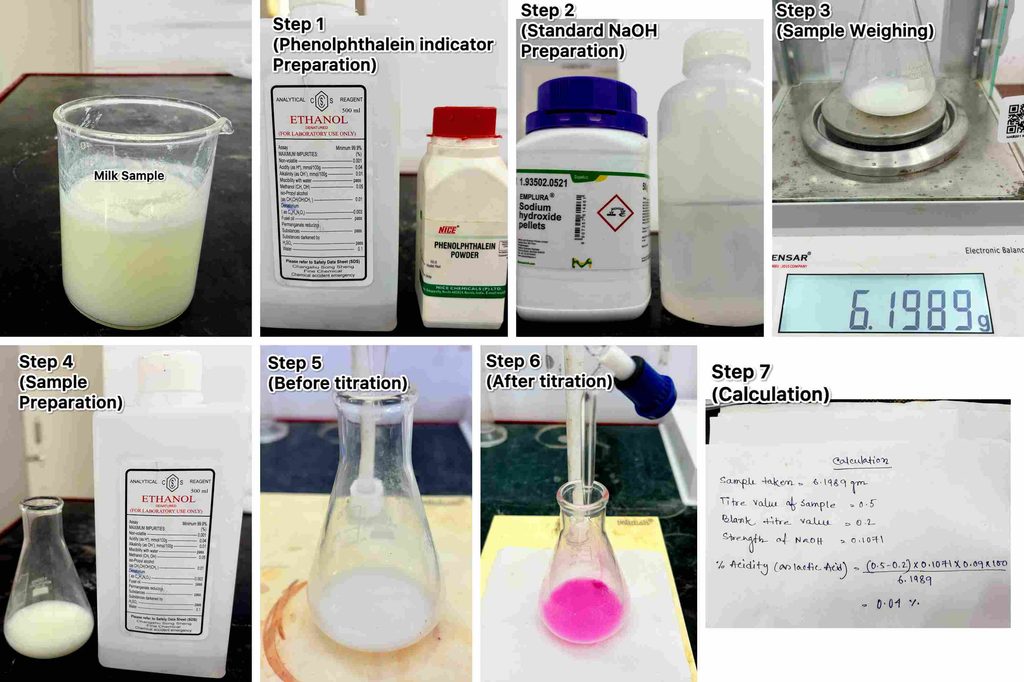
Here we used cow milk for determination of acidity as lactic acid.
Chemicals & Equipments used in acidity testing of milk
- Burette (50 ml): Used for NaOH titration.
- 4-Digit Analytical Balance: It is used for accurate sample weighing.
- Conical Flask (100 ml): Holds the sample during titration.
- 0.1 N NaOH: Neutralizes acidity in the milk sample. Preparation process described previously
- Phenolphthalein Indicator: Indicates the titration endpoint.Preparation described previously
- Ethyl Alcohol(C2H5OH): Used as the extraction solvent.
- Measuring Cylinder(50 ml): To measure solvents.
- Distilled Water: Used for solution preparation; conductivity of distilled water should be below 5 µS/cm.
Testing Procedure of acidity as lactic acid in milk
| Step 1 | Take 5-10 gm of milk sample in a conical flask.Add 50ml of ethanol. |
| Step 2 | Add phenolopthalin indicator dropwise. |
| Step 3 | Titrate with standarized 0.1 N NaOH solution untill cloudy pink colour appears.Similarly run a blank. |
| Step 4 | Calculation- % Acidity in milk as lactic acid = ( Sample Titre Value – Blank) x SNaOH x 0.09x 100/ Weight of sample |
Purpose of acidity testing in milk
- To determine the freshness and quality of milk.
- To measure the amount of lactic acid present.
- To identify souring or spoilage at an early stage.
- To check whether milk is suitable for processing.
- To help maintain proper milk quality standards.
Handling mistakes during milk acidity determination
- Use clean and dry glassware for the test to make the glasswares contamination free.Proper cleaning Process described previously.
- Measure the milk accurately using the required quantity.
- Add the titrant slowly and carefully.
- Read the burette at eye level to prevent reading errors.
- Observe the indicator’s colour change carefully.
- Record the readings immediately and accurately.
Conclusion for the test of acidity in milk
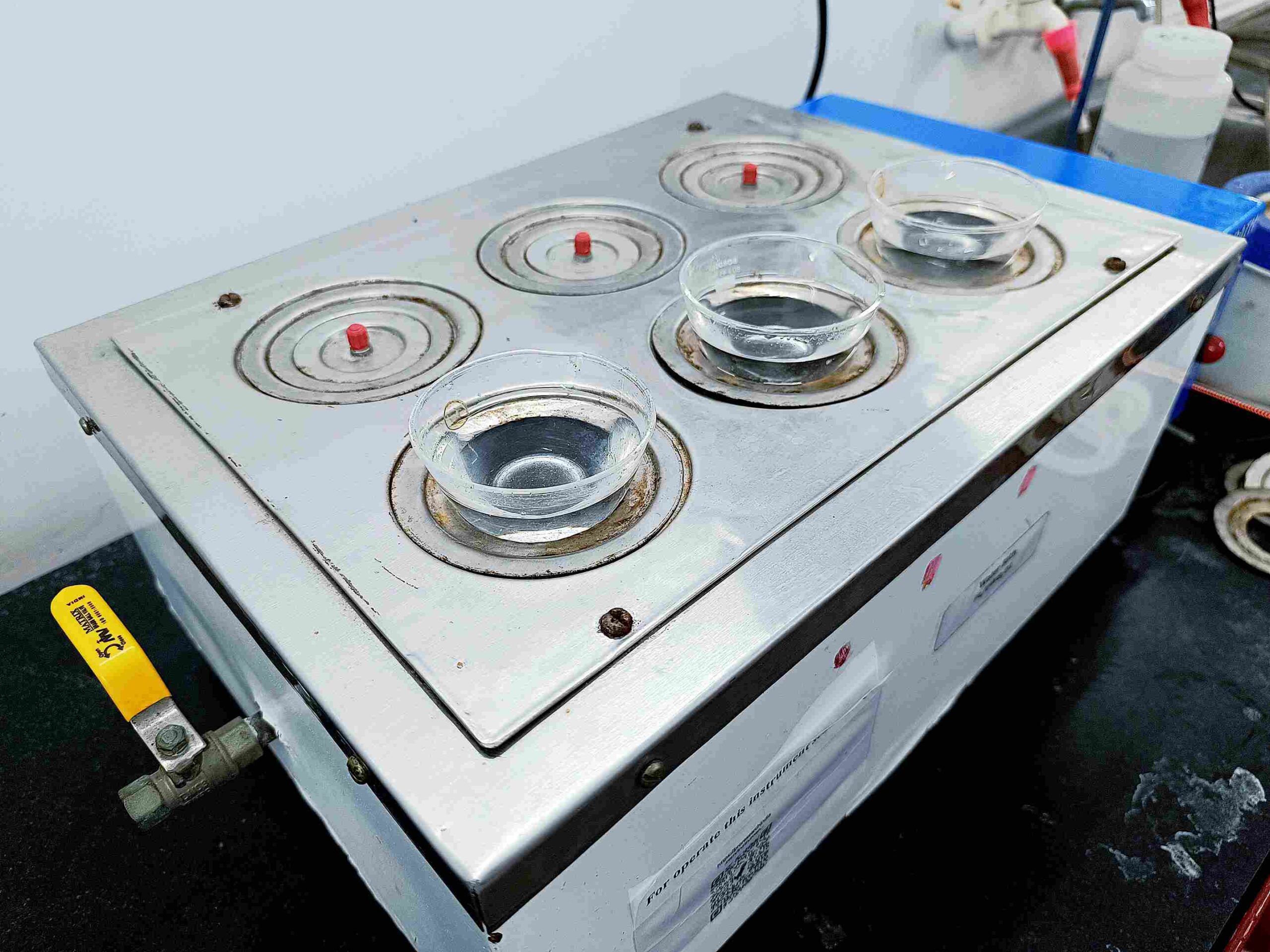
The acidity test is a useful method for checking the quality and freshness of milk. Fresh milk shows a low level of acidity, whereas a higher acidity value may indicate bacterial activity and deterioration. Thus, this test helps identify changes in milk quality and determine its suitability for further use or consumption. Acidity testing should be performed according to standard procedures using the appropriate equipment and chemicals to ensure accurate results and assess milk quality.The attached photos provide a clear visual guide to the testing process. For expert assistance, contact Pro Research & Testing Laboratory.You can also join our Internship Programme if you’re looking to enhance your skills, gain practical experience, and grow professionally.
FAQs on Acidity as lactic acid in milk
1. What is the acidity of milk?
Milk has a natural acidity because of its proteins, salts, phosphates, citrates, and other components. When bacteria act on lactose, lactic acid is formed, which increases the acidity of milk.
2. Why is acidity expressed as % lactic acid?
Milk acidity is reported as % lactic acid because lactic acid is the main acid formed when lactose is fermented by bacteria. It is therefore used as a standard way of expressing milk acidity.
3. What is the endpoint?
The endpoint is reached when a cloudy pink colour appears and remains for approximately 30 seconds after mixing.
4. What causes increased acidity in milk?
Increased acidity is mainly caused by the growth of these bacteria convert lactose into lactic acid, resulting in a rise in milk acidity.
5. What does high acidity indicate?
A higher-than-normal acidity usually suggests microbial activity and deterioration of milk.Sour flavour, unpleasant odour, and curd formation may also occur when acidity becomes high.
6. What can cause inaccurate results?
Incorrect reagent preparation, poor endpoint detection, contamination, improper sample handling, and titration errors can affect the result.
How We Verified This Testing/Research Procedure :
This testing procedure is done under qualified analyst .Continually monitored by expertise.Repeatedly testing is always done to get accurate result.
 Written by
Sramana Ghosh (M.Sc. Microbiology, MAKAUT)
Designation – Quality Manager
 Reviewed by
Anwesha Das (M.Sc Microbiology,BU)
Designation – Microbiologist
 Verified By
Dr. Jyotirmoy Kumar Dey (Phd,Chemistry)
Designation – Senior/Chief Chemist
Experience – 25 Years +