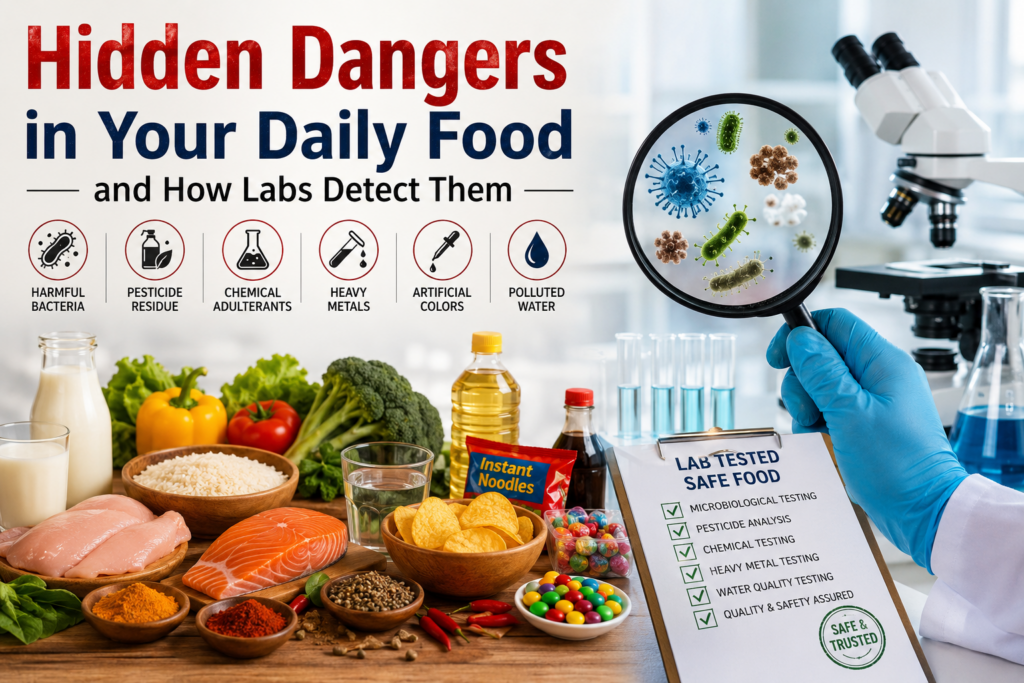
What if the food on your plate is not as safe as it looks? That crispy samosa from your favorite shop, the milk in your morning tea, the fresh vegetables in your kitchen, or even the bottled water you trust every day may carry hidden dangers you cannot see, smell, or taste. Scary, right? But this is the reality. Unsafe food does not come with warnings. It may look completely normal on your plate. Harmful bacteria, toxic chemicals, fake ingredients, pesticide residue, and even tiny metal particles can quietly enter the food chain and affect your health over time. The good news is: food testing laboratories work behind the scenes like silent detectives. They examine food scientifically and catch these hidden threats before they become dangerous. Let us explore the hidden dangers inside everyday food and understand how labs uncover the truth.
The Invisible Danger Inside Food:
Food can look perfectly fresh and still be unsafe. A bright red apple may contain pesticide residue; fresh paneer may carry harmful bacteria; spices with rich color may contain artificial dyes; cooking oil may be mixed with cheaper low quality oils. That is why appearance alone cannot tell whether the food is safe. Many harmful substances are microscopic. Some only affect the body slowly after repeated consumption. Others can cause immediate illness. This is where food testing laboratories step in. They use scientific tools and methods to analyze food samples carefully and detect things the human eye cannot see. And honestly, that science saves lives every day.
Hidden Danger 1: Harmful Bacteria in Everyday Food
Food may smell normal and still contain harmful bacteria.One of the biggest dangers in food is bacterial contamination. Tiny organisms like Salmonella, E. coli, and Listeria can enter food during processing, packaging, storage, or transportation. These bacteria are often found in:
- Milk and dairy products
- Meat and chicken
- Street food
- Seafood
- Cut fruits
- Packed ready to eat food
One contaminated batch of food can affect hundreds of people. Lab testing stops that from happening. Food laboratories test samples using microbiological analysis. Scientists place food samples in controlled conditions to check whether harmful bacteria grow. Advanced labs also use rapid DNA based methods to identify dangerous microorganisms much faster. This testing helps prevent:
How Labs Detect It:
- Food poisoning
- Stomach infection
- Vomiting
- Diarrhea
- Fever
- Serious health complications in children and elderly people.
Hidden Danger 2: Pesticide Residue on Fruits and Vegetables:
Ever wondered what gives some vegetables that extra shiny look? In many cases, there is heavy pesticide use. Farmers use them to protect crops from insects and diseases. But excessive or improper use can leave harmful chemical residue on food. Over time, consuming high levels of pesticides may affect the nervous system, hormones, liver, and even long term health. Children are especially vulnerable because their bodies are still developing.
How Labs Detect It:
Food testing labs use advanced techniques like gas chromatography and mass spectrometry to detect pesticide residue. These machines can identify even tiny traces of chemicals in fruits, veggies, grains, and spices. Yes, even amounts too small for humans to notice. Labs compare results with food safety standards to determine whether the food is safe for consumption. That mango may look juicy and perfect, but science checks what your eyes cannot.
Hidden Danger 3: Food Adulteration:
This is one of the oldest tricks in the food business and sadly, it still happens. Food adulteration means mixing food with cheaper, low quality, or harmful substances to increase profit. The scary part? Many adulterated foods look completely normal. Some shocking examples include:
- Milk diluted with water or chemicals
- Turmeric mixed with artificial color
- Honey mixed with sugar syrup
- Chili powder containing brick dust
- Mustard oil mixed with cheaper oils
How Labs Detect It:
Food labs perform chemical testing to identify unwanted substances and fake ingredients. Scientists check the purity, composition, and quality of food products using specialized techniques. They compare samples against standard food safety limits. In some cases, labs can even identify the exact chemical added during adulteration. One small test can reveal a massive fraud.
Hidden Danger 4: Heavy Metals in Food and Water
Rice, fish, spices, water, and even packaged foods can sometimes contain heavy metals. Heavy metals are real and dangerous. Metals like lead, arsenic, mercury, and cadmium can enter food and water through pollution, industrial waste, contaminated soil, or poor storage practices. Long term exposure may lead to:
- Kidney damage
- Nerve problems
- Weak immunity
- Development issues in children
- Serious chronic diseases
How Labs Detect It:
Labs use highly sensitive equipment to measure heavy metal content in food and water. These tests are incredibly precise. Even tiny amounts can be detected. This is especially important for bottled water companies, seafood industries, baby food manufacturers, and packaged food brands. When it comes to toxic metals, even small quantities matter.
Hidden Danger 5: Artificial Colors and Harmful Ingredients:
Bright colored sweets, spicy snacks, soft drinks, sauces, and street food often contain artificial colors and chemicals. Not all of them are harmful. Some are approved and safe in limited amounts. But illegal or excessive use can create health risks. Certain synthetic colors may trigger allergies, hyperactivity in children, or other health issues. Cheap food sellers sometimes use industrial dyes that are never meant for human consumption.
How Labs Detect It:
Scientists check whether approved ingredients are used within safe limits. If banned chemicals are present, labs can detect them quickly. This testing helps authorities take action against unsafe food products.
Hidden Danger 6: Polluted Water Used in Food Preparation:
This pollution can spread diseases rapidly. Water is used everywhere in food preparation. Restaurants, street vendors and factories use it. If the water itself is contaminated, the food becomes risky too. Unsafe water may contain:
- Harmful bacteria
- Viruses
- Heavy metals
- Chemical pollutants
How Labs Detect It
Water testing labs examine physical, chemical, and microbiological quality. They test for purity, bacterial infection, pH levels, dissolved substances, and toxic chemicals. Safe water testing protects both food businesses and consumers. Clean cooking water is just as important as fresh ingredients.
Why Food Testing Matters More Today Than Ever:
When people trust food, they eat without fear. Modern food travels long distances before reaching your plate. Vegetables come from farms hundreds of kilometers away. Packaged foods pass through factories, warehouses, transport vehicles, and shops. The longer the journey, the higher the risk of contamination. At the same time, food production is faster and larger than ever before. Without proper testing, unsafe food could easily enter the market. Food testing laboratories act like safety checkpoints in this huge system. They help:
- Protect public health
- Prevent disease outbreaks
- Maintain food quality
- Ensure legal compliance
- Build customer trust
- Reduce business risks
Food Safety Is Not Just a Government Responsibility:
Stay aware! Many people think only authorities should worry about food safety. But consumers also play a huge role. Simple habits can reduce food risks:
- Wash fruits and vegetables properly.
- Avoid unusually bright colored food.
- Check expiry dates carefully.
- Buy from trusted brands and vendors.
- Store food correctly.
- Avoid damaged packaging.
Final Thoughts
Modern labs now use automation, rapid testing systems, and digital tracking to identify contamination more accurately. Some advanced systems can detect bacteria within hours instead of days. AI and smart sensors are also improving food quality monitoring. That means safer food for everyone. Science is constantly evolving to stay one step ahead of food infection. The next time you enjoy a meal, remember this – Safety is not just about taste, It’s about trust, science, and the unseen work that protects millions of lives daily. And honestly, that invisible protection deserves more attention than it gets.
FAQ:
- Is there any reliable food testing lab in Kolkata?
Yes. One of the best certified food testing labs in Kolkata is Pro Research & Testing Laboratory. - Can harmful food look completely normal?
Yes. Many adulterated foods look fresh, smell normal, and taste fine. Harmful bacteria, pesticides, and chemicals are often invisible without laboratory testing. - How often should food businesses test their products?
Regular testing helps maintain safety standards and prevents contamination issues. - Are packaged foods also tested in laboratories?
Absolutely. Packaged foods go through multiple quality and safety tests before reaching the market. Labs check ingredients, preservatives, contamination levels, and shelf stability. - Why is water testing important in food preparation?
Unsafe water can contaminate food with bacteria, viruses, and chemicals. Water testing ensures the water used for cooking, cleaning, and processing is safe for consumption.