

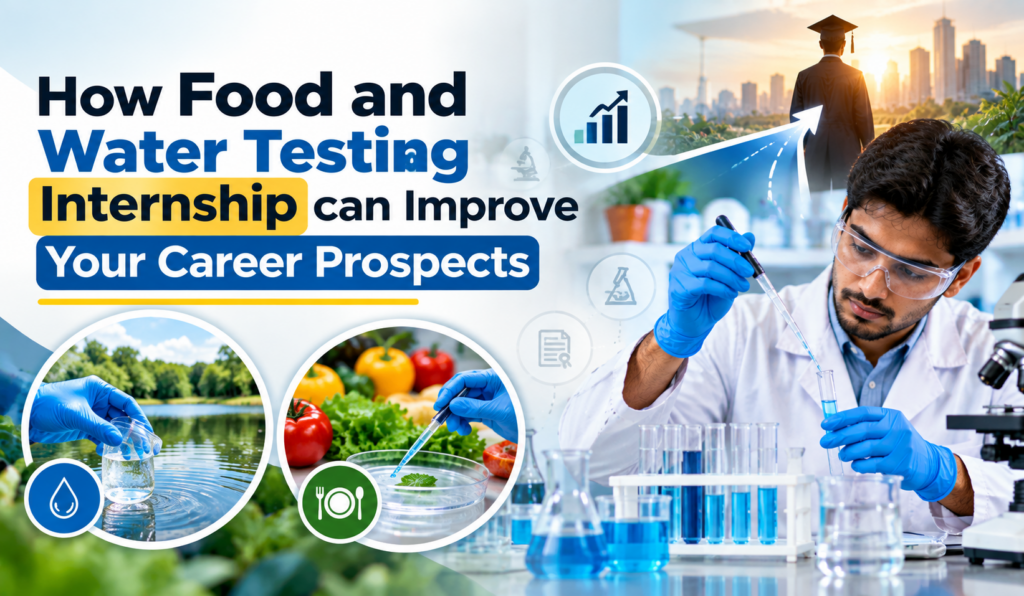
A food and water testing internship can give science graduates practical experience that is difficult to gain through classroom learning alone. Students can learn how samples are collected, prepared, tested, measured, and documented while working with microbiological and chemical testing methods. They can also gain exposure to parameters such as microbial contamination, pH, hardness, chloride, sulphate, moisture, protein, and other quality checks. Pro Research & Testing Laboratory’s internship programmes can help students understand these testing processes and develop skills relevant to careers in food testing, water quality analysis, quality control, laboratory testing, and research.
Why Choose Food and Water Testing Internship?
- Supports public safety: Testing helps identify microorganisms, chemical parameters, contaminants, and other quality issues.
- Offers diverse career paths: Graduates can explore roles in testing laboratories, food and beverage companies, environmental services, quality control, and research facilities.
- Builds technical expertise: The field requires practical knowledge of laboratory methods, instruments, sample processing, and analysis.
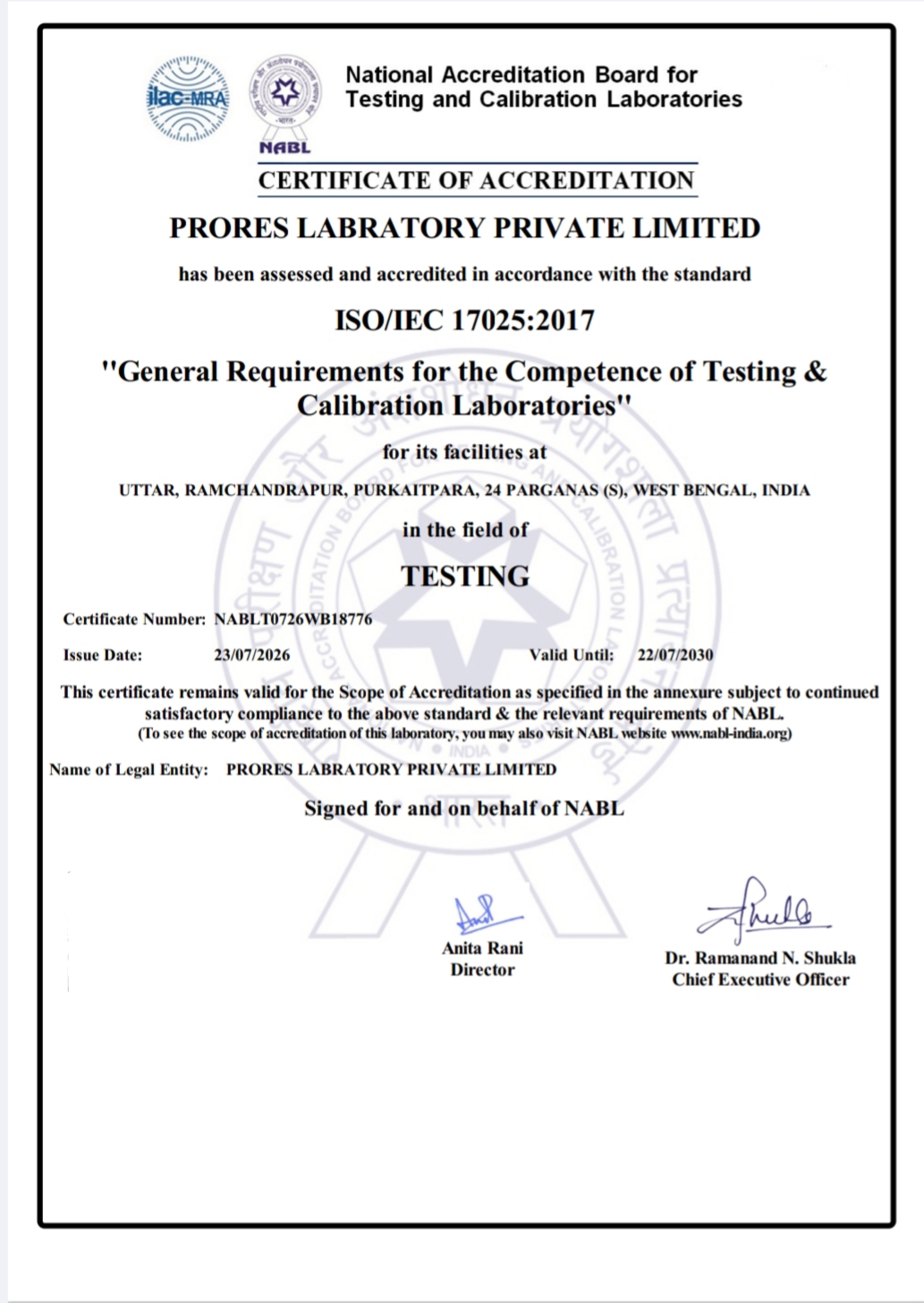
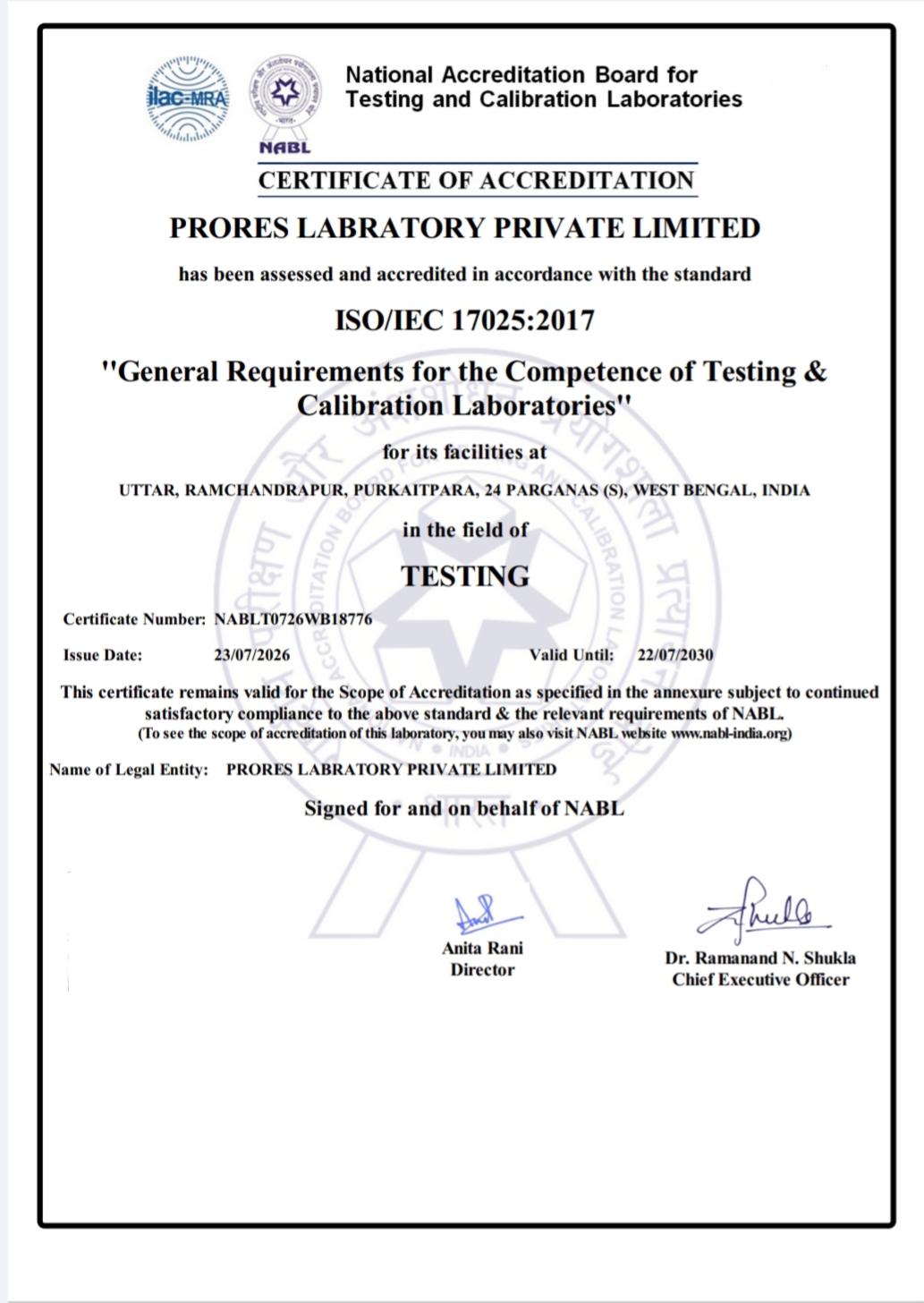
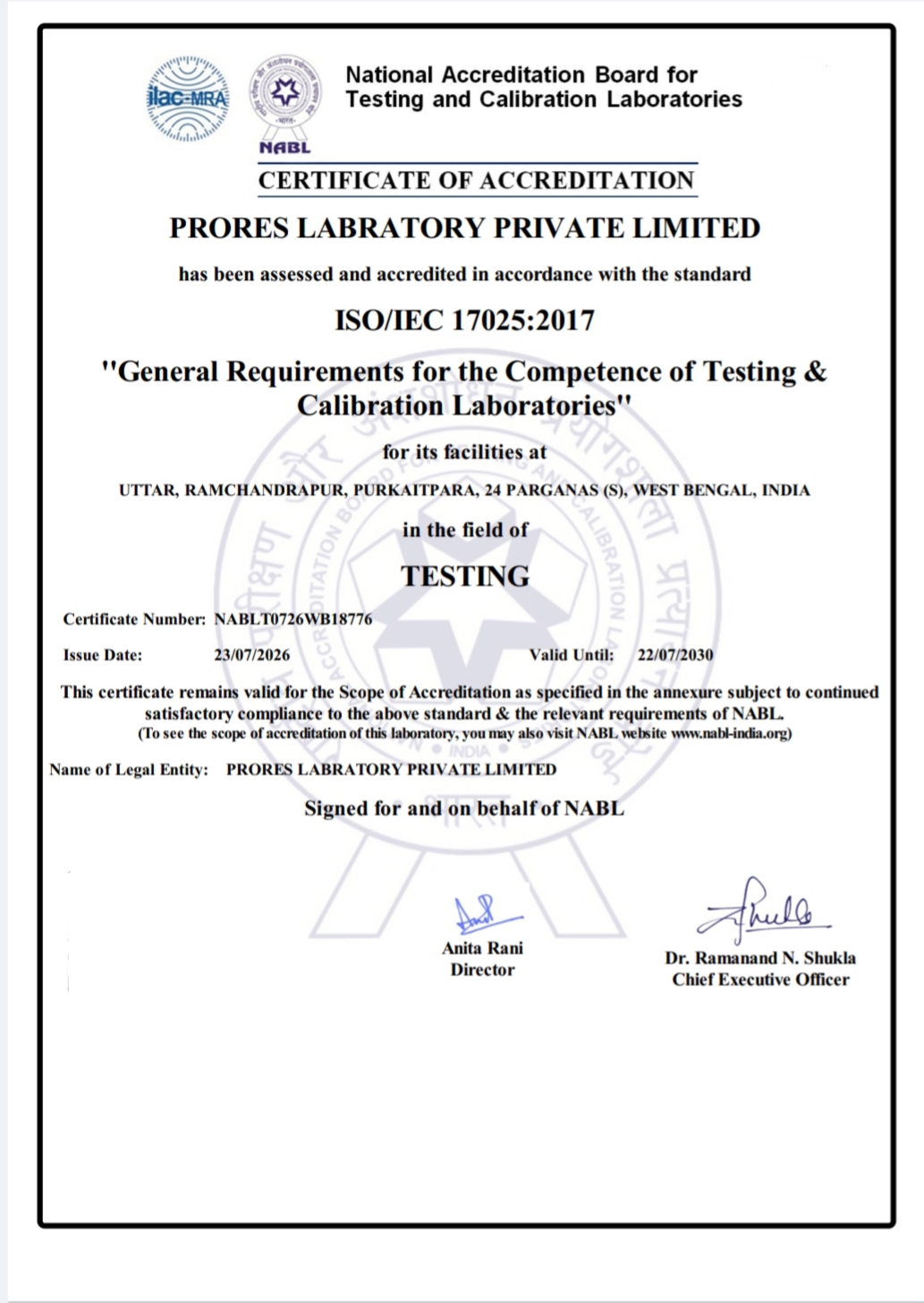
- Provides exposure to quality systems: Indian laboratories follow structured quality and accreditation practices, including ISO/IEC 17025-based requirements through NABL.
- Creates opportunities for science graduates: Students from relevant B.Sc. and M.Sc. backgrounds can build practical skills for laboratory-based careers.
Who Can Start a Career in This Field?
- B.Sc. graduates: Students from Microbiology, Chemistry, Biotechnology, Food Science, Life Science, Environmental Science, and related subjects can explore laboratory careers.
- M.Sc. graduates: Postgraduates can pursue roles involving more advanced analytical, testing, research, and quality-related work.
- Relevant subject background: A degree related to laboratory science can provide a suitable academic foundation.
- Practical skills: B.Sc. graduates can focus on strengthening basic techniques, while M.Sc. graduates can develop advanced analytical skills.
- Check job requirements: Eligibility varies by employer, role, and level of responsibility, so students should review individual job descriptions.
Steps to Build a Career After Food and Water Testing Internship
Starting a career in this field requires a combination of academic knowledge, practical laboratory experience, technical skills, and an understanding of professional quality practices. The following steps can help graduates move from education to industry.
Step 1: Build a Strong Academic Foundation
Build a clear understanding of subjects related to your field. Microbiology students should know microorganisms, culture techniques, sterilisation, and contamination control. Chemistry students should understand analytical chemistry, measurements, solutions, reactions, and calculations. Food Science, Biotechnology, and Life Science graduates can connect their academic knowledge with laboratory analysis and quality practices.
Step 2: Gain Practical Laboratory Experience
Practical experience after food and water testing internship helps graduates understand how professional laboratories actually operate. Through internships, students can practise sample receipt, preparation, dilution, media preparation, aseptic handling, testing, observations, calculations, and reporting. Regular practice improves technical confidence, accuracy, and attention to detail while helping students become familiar with laboratory workflows.
Step 3: Develop Microbiology Skills
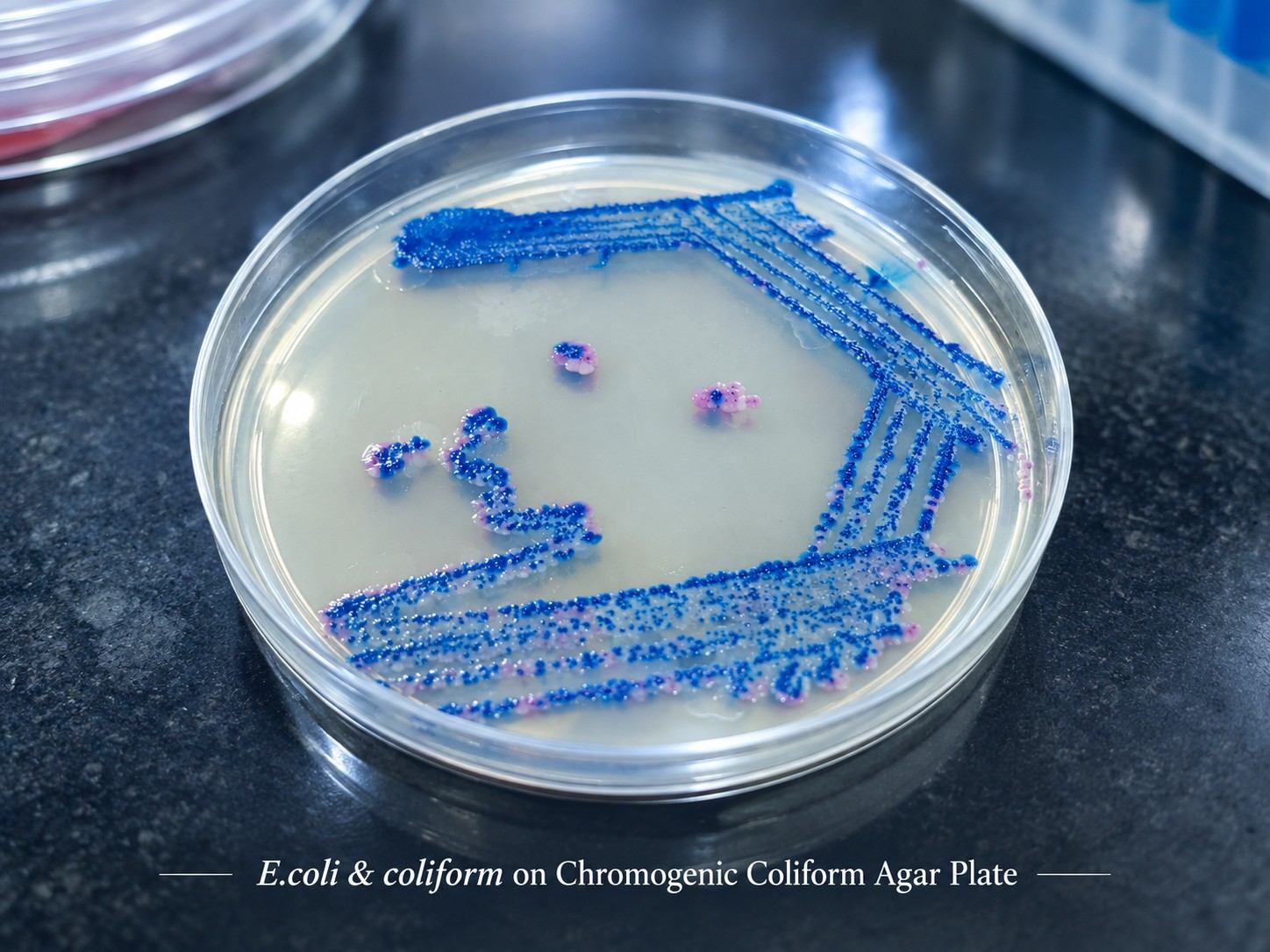
Graduates interested in microbiology should develop practical skills in aseptic techniques, media preparation, sterilisation, microbial isolation, and colony counting. Training may also cover the detection or enumeration of microorganisms such as E. coli and coliforms. These skills help students understand how microbiological results are generated, documented, and reviewed.
Step 4: Develop Chemical Analysis Skills
Chemical analysis requires accurate measurements, calculations, reagent preparation, glassware handling, and method-based testing. Students can gain experience with parameters such as pH, hardness, chloride, sulphate, moisture, ash, fat, protein, and dissolved oxygen. Further training can introduce calibration, instrument care, quality checks, and SOP-based analytical work.
Step 5: Learn Laboratory Instruments
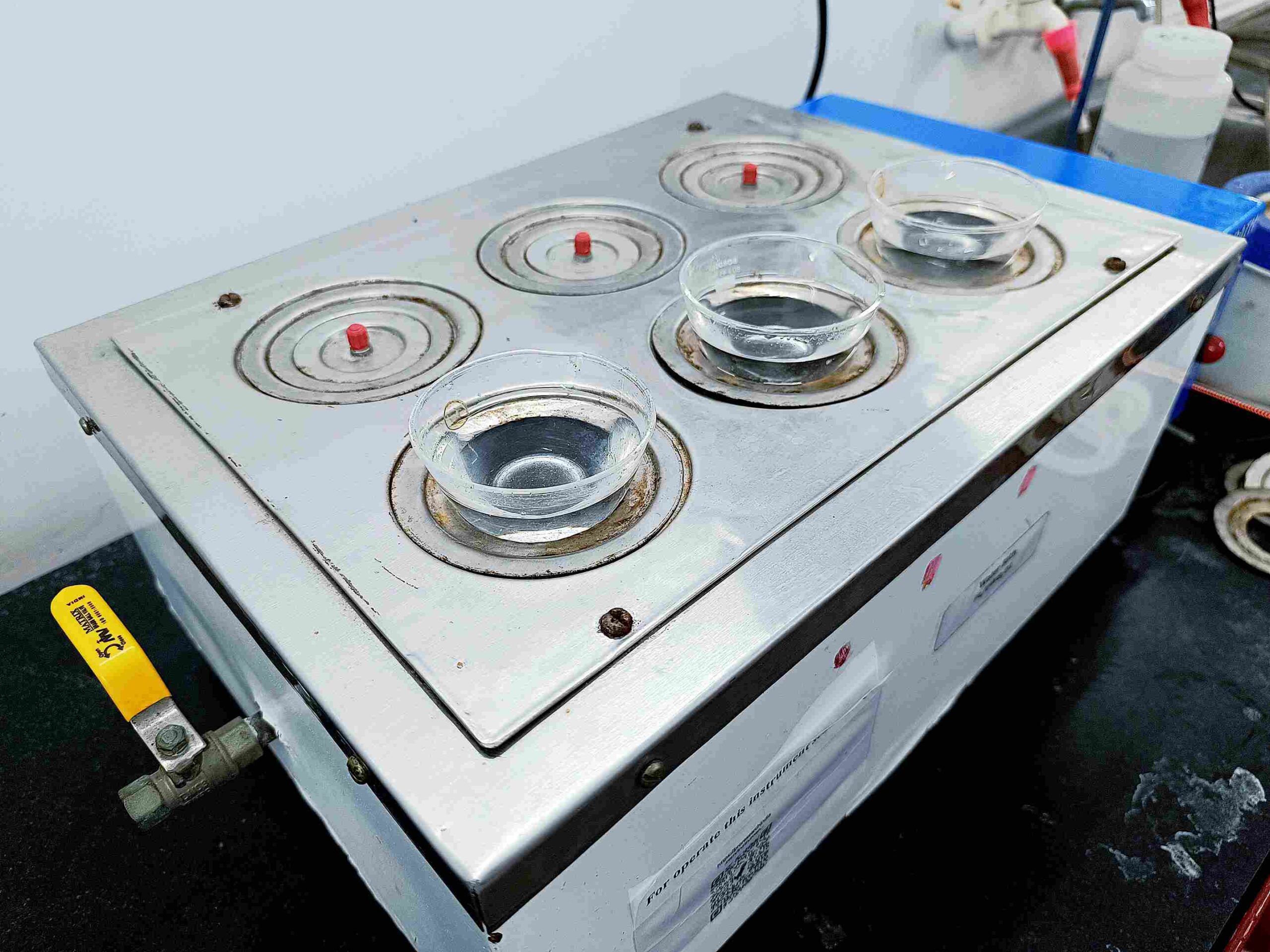
Understanding laboratory instruments is essential for professional testing work. Graduates should learn their correct operation, cleaning, calibration, maintenance, and recording requirements. Practical training during Food and Water Testing Internship can take students through the complete process, from preparing samples and solutions to taking measurements, recording readings, checking results, and following proper equipment-handling procedures.
Step 6: Understand SOPs and Documentation
Accurate documentation is an essential part of laboratory work. Students should learn to follow Standard Operating Procedures, maintain worksheets, identify samples correctly, record observations, perform calculations, and prepare reports. B.Sc. graduates can focus on accurate record-keeping, while M.Sc. graduates can develop stronger skills in method requirements, result review, and technical reporting.
Step 7: Understand Quality and Accreditation
Understanding laboratory quality systems can help graduates adapt to professional testing environments. Students can become familiar with concepts such as traceability, calibration, quality control, proficiency testing, and controlled documentation. NABL accreditation follows ISO/IEC 17025 requirements for testing and calibration laboratory competence, making awareness of quality practices valuable for aspiring laboratory professionals.
Step 8: Choose the Right Internship Programme
Choose an internship according to your academic background and career goals. Pro Research & Testing Laboratory offers Food and Water Testing Internship, programmes in microbiology and chemical analysis at different levels. Its training provides exposure to practical laboratory work, while its services cover areas including food, water, pharmaceuticals, environmental samples, and agricultural products, helping students understand professional analytical workflows.
Internship Options at Pro Research & Testing Laboratory
| Programme | Duration | Fee | Key Learning Areas |
| Certificate in Microbiology Analysis (Food & Water) | 2 Months | ₹25,000 | Biosafety, aseptic handling, E. coli, coliform, TPC, yeast & mould |
| Advanced Certificate in Microbiology Analysis (Food & Water) | 3 Months | ₹34,000 | Sample processing, pathogens, bacteria & fungi, bioburden |
| Professional Certificate in Microbiology Analysis (Food & Water) | 6 Months | ₹49,000 | Microbial isolation, instruments, laboratory management, SOPs |
| Certificate in Chemical Analysis (Food) | 2 Months | ₹25,000 | Moisture, ash, fat, protein, sodium & potassium |
| Advanced Certificate in Chemical Analysis (Food) | 3 Months | ₹34,000 | Food chemistry, milk quality, adulteration, toxic metals |
| Professional Certificate in Chemical Analysis (Food) | 6 Months | ₹49,000 | Calibration, reagent preparation, sugar, toxic metals, SOPs |
| Certificate in Chemical Analysis (Water) | 2 Months | ₹25,000 | pH, TDS, turbidity, alkalinity, hardness |
| Advanced Certificate in Chemical Analysis (Water) | 3 Months | ₹34,000 | Wastewater, COD, DO, TSS, oil & grease |
| Professional Certificate in Chemical Analysis (Water) | 6 Months | ₹49,000 | BOD, TKN, metals, phosphate, silica, SOPs |
| Professional Certificate Internship (Food & Water Quality) | 6 Months | ₹75,000 | Calibration, food analysis, water testing, pathogens, reporting |
The programme names, durations, fees, and learning areas should be confirmed with Pro Research before enrolment, as course details may change.
Career Roles You Can Explore After Food and Water Testing Internship
Practical training can help graduates explore different laboratory-based roles. Depending on their qualification, skills, and employer requirements, possible areas include:
- Laboratory Assistant
- Microbiology Analyst
- Chemical Analyst
- Quality Control Executive
- Quality Assurance Assistant
- Sample Processing Executive
- Research Assistant
- Analytical Laboratory Executive
- Laboratory Technician
The responsibilities and eligibility for each position can vary between organizations.
B.Sc. and M.Sc. Students: Different Starting Points
B.Sc. graduates can use practical training to strengthen their basic laboratory techniques and understand professional work culture. Sample handling, measurements, equipment use, safety, and documentation can form an important foundation.
M.Sc. graduates can use the same exposure to develop more advanced analytical skills. They may focus on method execution, instrument operation, calculations, quality practices, result interpretation, and technical reporting.
The aim is not simply to collect an internship certificate. Students should look for training that gives them meaningful practical exposure and helps them understand how laboratory work is actually performed.
The Future of Laboratory Careers in India
India’s food safety and testing system continues to depend on laboratories, trained analysts, quality systems, and reliable analytical methods. FSSAI currently maintains a network of recognized and notified food laboratories, while its Food Analyst and Junior Analyst examination initiatives are designed to build a pool of qualified professionals for the food safety testing network. For science graduates, this highlights the importance of combining academic qualifications with practical laboratory skills. Building that foundation early can help students make more informed decisions about their future career direction.
Conclusion
A degree can open the door, but practical experience after Food and Water Testing Internship helps students move forward with confidence. B.Sc. graduates can build strong laboratory basics, while M.Sc. graduates can take their analytical skills further. With the right training, students can learn how laboratory work is done in real situations and understand which career path suits them best. Pro Research & Testing Laboratory, an FSSAI approved Food and Water Testing lab in Kolkata, can Improve Your Career Prospects gives graduates this opportunity through practical internship programmes in microbiology and chemical analysis. For students looking towards India’s growing laboratory sector, gaining hands-on experience can be a valuable step towards a future in testing, quality, analysis, or research.
FAQs
1. What can I learn from a food and water testing internship?
You can learn sample handling, testing methods, equipment use, calculations, documentation, and quality practices.
2. Who can join a food and water testing internship?
Graduates from Microbiology, Chemistry, Biotechnology, Food Science, Life Science, and related fields can explore relevant programmes.
3. Can an internship improve my laboratory job prospects?
Yes. Practical experience can help you develop skills that are useful for laboratory and testing roles.
4. What career areas can this internship support?
It can support career paths in food testing, water quality analysis, quality control, laboratory testing, and research.
5. Why choose practical training after graduation?
It helps you apply academic knowledge in real laboratory situations and understand professional testing work.