
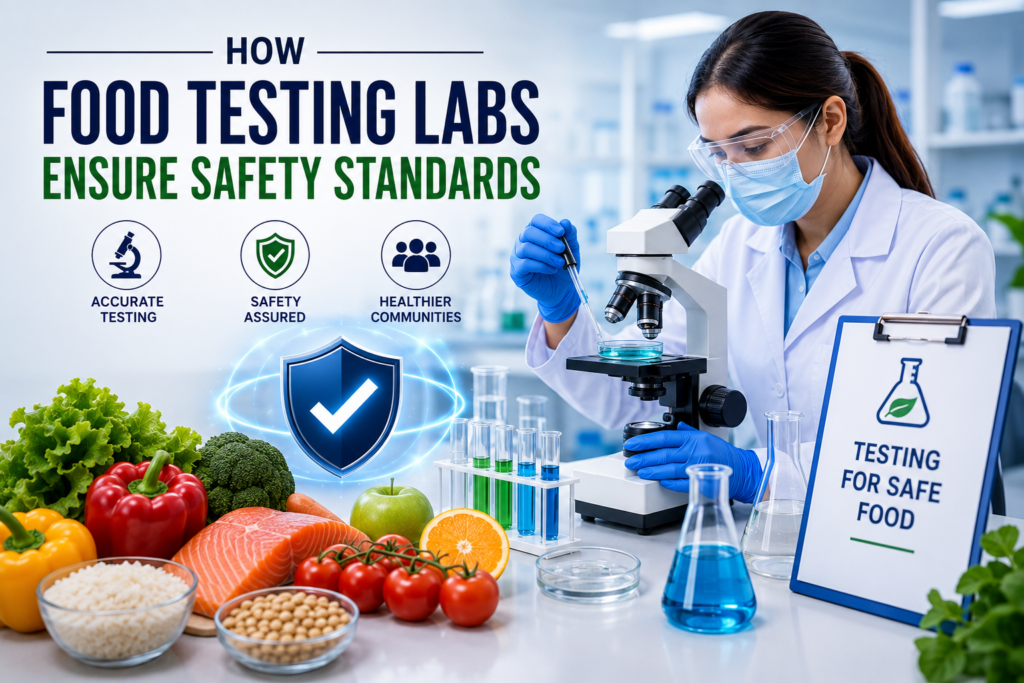
Food safety is something most people rarely think about until a health issue appears. Yet every meal we eat passes through a long chain of farming, processing, packaging, transportation, and storage where contamination can occur at any stage. According to the World Health Organization (WHO), every year, about 600 million people get sick from eating contaminated food, and around 420,000 people die because of it worldwide. This is why food testing laboratories have become a critical part of public health protection. Through advanced scientific testing, these laboratories detect harmful bacteria, chemical contaminants, adulterants, toxins, and quality issues before food reaches consumers, helping ensure safety, compliance, and trust in the food industry.
What Is a Food Testing Laboratory?
A food testing laboratory is a scientific facility where food samples are analyzed to determine whether they meet safety and quality standards. These laboratories test:
- Raw materials
- Processed foods
- Dairy products
- Meat and seafood
- Packaged foods
- Beverages
- Spices and oils
- Food packaging materials
Labs may operate independently or under government bodies, regulatory agencies, manufacturers, exporters, or research institutions. In India, many food laboratories are recognized by FSSAI and accredited through NABL standards.
Why Does Food Testing Matters?
Food contamination can happen at any stage, from farming and storage to transportation and packaging. The major food hazards include:
- Biological hazards
- Chemical hazards
- Physical hazards
Examples:
- Salmonella and E. coli bacteria
- Pesticide residues
- Heavy metals like lead or arsenic
- Artificial adulterants
- Glass or metal fragments
- Toxic chemicals from packaging
Contaminated food may contain harmful bacteria, viruses, parasites, or chemicals that can lead to illnesses ranging from diarrhea to cancer. Without proper testing, these risks can reach consumers unnoticed. Without proper testing, these risks can reach consumers unnoticed.
The Main Safety Standards Food Testing Laboratories Follow:
Food testing laboratories work under strict national and international standards to ensure accuracy and reliability.
1. FSSAI Standards:
In India, FSSAI regulates food safety under the Food Safety and Standards Act. FSSAI-approved laboratories follow scientific protocols for:
- Sample handling
- Testing methods
- Equipment calibration
- Reporting accuracy
- Quality assurance
2. NABL Accreditation:
Many Indian food labs are accredited by the National Accreditation Board for Testing and Calibration Laboratories (NABL). This accreditation ensures that laboratories:
- Use validated testing methods
- Maintain qualified staff
- Follow international laboratory practices
- Deliver reliable results
3. International Standards:
Food labs often align with:
- ISO/IEC 17025
- Codex Alimentarius guidelines
- FDA analytical methods
- WHO food safety frameworks
How Food Testing Laboratories Actually Work?
Food testing is a step-by-step scientific process. Each stage is carefully controlled to avoid errors.
Step 1: Sample Collection: The process starts with collecting food samples. The collection process is critical because improper handling can affect results. Labs follow documented procedures to preserve sample integrity and prevent contamination. Samples may come from:
- Manufacturing plants
- Retail markets
- Restaurants
- Warehouses
- Farms
- Import shipments
Step 2: Sample Preparation: Once the sample reaches the laboratory, scientists prepare it for analysis. This may involve:
- Grinding
- Drying
- Dilution
- Extraction
- Homogenization
Different foods require different preparation methods. For example:
- Milk testing requires microbial and chemical extraction methods
- Spice testing may focus heavily on adulteration and heavy metals
- Packaged foods may undergo preservative analysis
Step 3: Microbiological Testing: One of the most important areas of food testing is microbiology. Labs check whether harmful microorganisms are present in food. Common pathogens include: - Salmonella
- E. coli
- Listeria
- Norovirus
- Clostridium botulinum
WHO highlights microbial hazards as one of the leading causes of foodborne illness globally. Scientists use techniques such as:
- Culture testing
- PCR analysis
- Rapid pathogen detection
- Colony counting
These tests help determine whether food is safe for consumption.
Step 4: Chemical Testing: Chemical contamination is another major concern. Food labs analyze products for:
- Pesticide residues
- Heavy metals
- Artificial colors
- Preservatives
- Toxins
- Industrial contaminants
The FDA regularly monitors chemical contaminants and pesticide levels in food products. Advanced instruments used include: - Gas Chromatography (GC)
- High Performance Liquid Chromatography (HPLC)
- Mass Spectrometry
- Atomic Absorption Spectroscopy
These technologies can find even very small amounts of harmful substances.
Step 5: Physical Contamination Testing: Food labs also check for physical hazards such as:
- Glass particles
- Plastic fragments
- Metal pieces
- Stones
- Packaging contamination
Physical contamination may occur during manufacturing, packaging, or transportation. Even tiny foreign particles can pose serious health risks.
Step 6: Nutritional Analysis: Food labels must accurately represent nutritional values. Labs test for:
- Protein
- Fat
- Carbohydrates
- Sugar
- Fiber
- Vitamins
- Minerals
- Calories
This helps ensure honest labeling and regulatory compliance. Recently, FSSAI also tightened regulations against misleading food claims such as “100% pure” or “100% natural” without scientific proof.
Step 7: Quality Control and Validation: Reliable food testing depends on validation and quality control. Labs maintain accuracy by:
- Calibrating instruments regularly
- Running control samples
- Using certified reference materials
- Following validated analytical methods
Advanced Technology in Modern Food Labs:
Food testing has become far more advanced in recent years. Technology allows laboratories to detect contamination faster and with greater precision. Modern laboratories now use:
- AI-assisted data analysis
- Automated pathogen detection
- Electronic nose systems
- Electronic tongue technology
- Real-time contaminant monitoring
How Food Labs Help Consumers and Businesses?
Food testing laboratories benefit both the public and food manufacturers.
For Consumers
They help:
- Prevent food-caused illness
- Reduce exposure to toxins
- Ensure proper labeling
- Detect adulteration
- Improve trust in food products
For Businesses
They help companies:
- Meet regulatory requirements
- Avoid legal penalties
- Improve product quality
- Maintain export standards
- Protect brand reputation
Testing is especially important for exporters because international markets demand strict compliance with global safety standards.
Common Challenges Food Labs Face:
- Despite technological progress, food testing laboratories still face several challenges.
- Complex Food Composition: Modern processed foods contain multiple ingredients, making analysis more difficult.
- Emerging Contaminants: New chemicals and contaminants continue to appear in food systems.
- Rapid Supply Chains: Global food movement increases contamination risks during transport and storage.
- Cost and Infrastructure: Advanced testing equipment is expensive and requires trained professionals.
FSSAI has acknowledged the need to strengthen state food laboratories with better infrastructure and advanced testing capability.
The Future of Food Safety Testing:
As food systems become more globalized, laboratory science will continue to play a central role in protecting public health. Food testing is becoming more data-driven, faster, and more sensitive. Future trends include:
- Portable testing devices
- AI-powered analysis
- Blockchain traceability
- Real-time contamination monitoring
- Faster molecular testing methods
Conclusion:
Food testing laboratories are one of the strongest defenses against unsafe food. Their scientific work helps identify contamination before products reach consumers. From microbiological testing to chemical analysis and nutritional validation, these labs ensure that food meets strict safety standards. Their role is essential not only for regulatory compliance but also for protecting human health and maintaining trust in the food industry. Every accurate lab report represents something bigger than numbers. It represents safer meals, healthier families, and stronger public confidence in the food we consume every day.
FAQs:
- What do food testing laboratories check for?
Food testing labs check for bacteria, viruses, pesticide residues, heavy metals, adulterants, toxins, preservatives, and nutritional accuracy. - Do food testing labs in Kolkata test drinking water too?
Yes, many food testing laboratories in Kolkata also provide drinking water testing services to check for bacteria, chemical contamination, and overall water quality. - Which authority regulates food testing in India?
Food testing in India is mainly regulated by the Food Safety and Standards Authority of India (FSSAI). - What equipment is commonly used in food testing labs?
Common instruments include HPLC systems, gas chromatographs, PCR analyzers, spectrometers, and microbiological incubators. - Can food testing detect adulteration?
Yes. Modern laboratories can detect adulterants such as artificial colors, chemicals, detergents, starch, synthetic milk compounds, and contaminated oils through advanced analytical methods.