
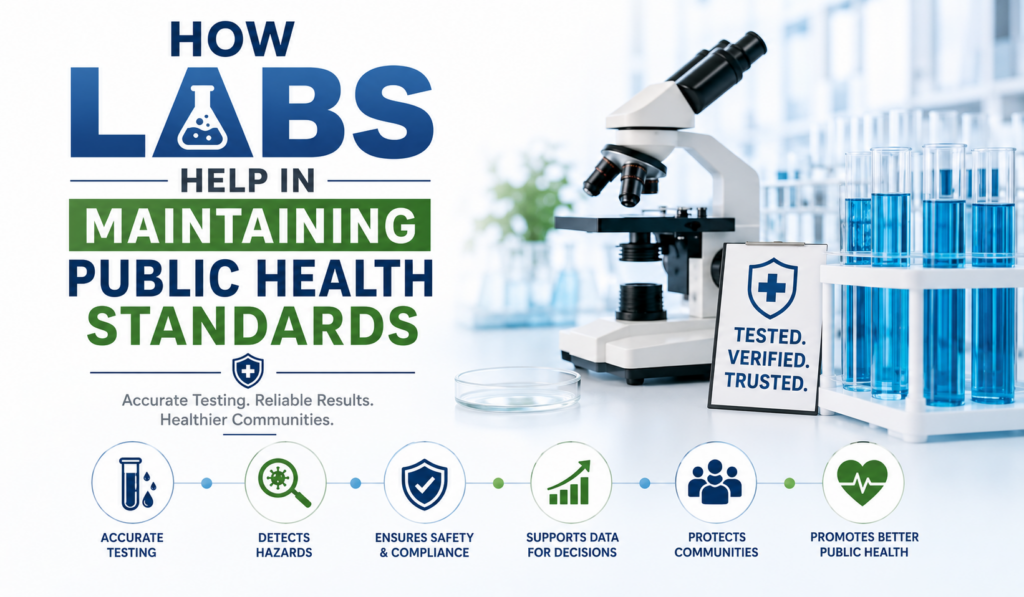
When people think about public health, they often think of doctors, hospitals, medicines, and healthcare workers. While all of these play a crucial role, there is another important contributor that often goes unnoticed: laboratories. Every day, laboratories work behind the scenes to ensure that the food we eat, the water we drink, the medicines we take, and the environments we live in meet safety standards. Most people never see the testing process, but they benefit from it every single day. Imagine a world without laboratory testing. Unsafe food could reach supermarket shelves, polluted water could flow into homes, and harmful pollutants could go undetected. Public health risks would increase significantly, making communities more vulnerable to diseases and health emergencies. This is why laboratories are considered one of the strongest pillars of public health. They help identify risks before they become problems, support government regulations, and provide scientific evidence that keeps people safe.
Public Health at a Glance: How Laboratories Make a Difference
Before we explore the detailed role of laboratories in maintaining public health standards, here’s a quick overview of how testing and scientific analysis contribute to safer communities. From food and water safety to disease detection and environmental monitoring, labs provide the data needed to protect public health and support informed decision making.
| Public Health Area | How Laboratories Help | Public Benefit |
| Food Safety | Test food for bacteria, contaminants, pesticides, and adulterants | Reduces foodborne illnesses |
| Drinking Water | Analyze water quality and detect harmful substances | Ensures safe drinking water |
| Disease Detection | Identify infections and monitor outbreaks | Helps control disease spread |
| Environmental Monitoring | Test air, soil, and water for pollutants | Supports healthier living conditions |
| Pharmaceuticals | Verify medicine quality and safety | Protects patients from unsafe products |
| Regulatory Compliance | Validate products against safety standards | Improves consumer confidence |
| Industrial Quality Control | Monitor manufacturing processes and product quality | Reduces public health risks |
| Consumer Product Testing | Assess safety of products used daily | Enhances public protection |
Public Health Starts with Accurate Testing
Good decisions depend on accurate information. In public health, laboratory testing provides that information. Whether it is testing food products, drinking water, pharmaceuticals, environmental samples, or industrial materials, laboratories generate reliable data that helps authorities, businesses, and healthcare professionals make informed decisions. Without scientific testing, organizations would have to rely on assumptions. Unfortunately, assumptions can be dangerous when public health is involved. A product may appear safe on the surface while containing harmful bacteria, chemicals, or contaminants that are invisible to the naked eye. Laboratory analysis removes uncertainty by providing factual, evidence based results. This allows potential risks to be identified and addressed before they affect consumers and communities.
Keeping Food Safe for Everyone
Food safety is one of the most important areas where laboratories contribute to public health. Every day, millions of people consume packaged foods, dairy products, beverages, spices, snacks, and restaurant meals. Consumers trust that these products are safe to eat. Laboratories help ensure that this trust is well placed. Food testing laboratories analyze products for microbial contamination, harmful pathogens, pesticide residues, heavy metals, adulteration, and chemical contaminants. These tests help identify safety issues before products reach the market. Regular food testing not only protects consumers from foodborne illnesses but also helps food businesses maintain quality standards and comply with regulatory requirements. When laboratories detect problems early, they prevent unsafe products from reaching families and communities. This proactive approach plays a vital role in protecting public health on a large scale.
Safe Drinking Water Begins in the Laboratory
Water is essential for life, but safe water is essential for health. Contaminated drinking water can lead to serious illnesses and disease outbreaks. Harmful microorganisms, chemicals, heavy metals, and pollutants can enter water sources through industrial activities, agricultural runoff, or inadequate sanitation systems. Laboratories help monitor water quality by conducting detailed testing and analysis. These tests determine whether water meets established safety standards and identify potential contaminants that could pose health risks. Regular water testing helps municipalities, industries, institutions, and communities take corrective action before contamination becomes a serious public health issue. The simple act of turning on a tap and trusting the water that flows out is often supported by extensive laboratory testing happening behind the scenes.
Detecting Disease Before It Spreads
One of the most critical functions of laboratories is disease detection. During outbreaks and public health emergencies, laboratories play a central role in identifying infectious diseases and helping health authorities respond quickly. Accurate testing allows healthcare professionals to diagnose illnesses, monitor disease patterns, and track the spread of infections. This information helps governments and public health agencies implement appropriate control measures. The importance of laboratory services became especially clear during global health crises, where testing was essential for identifying cases, monitoring trends, and supporting public health responses. Early detection often makes the difference between controlling an outbreak and allowing it to spread. Laboratories provide the data needed to make timely and effective decisions.
Monitoring Environmental Health
Public health is influenced by more than food and water. The quality of our environment also plays a significant role in overall well being. Air pollution, industrial waste, soil contamination, and hazardous chemicals can all affect human health. Laboratories help assess environmental quality by testing air, water, soil, and other environmental samples. These tests help identify pollutants and determine whether environmental conditions meet regulatory standards. When contamination is detected, corrective measures can be taken to reduce risks and protect communities. Environmental testing contributes to healthier living conditions and supports long term sustainability efforts. By monitoring environmental health, laboratories help create safer spaces for people to live, work, and grow.
Supporting Regulatory Compliance and Safety Standards
Public health standards are established to protect people from preventable risks. However, standards are only effective when compliance can be verified. Laboratories provide the scientific evidence needed to confirm whether products, processes, and facilities meet required regulations. Industries across sectors rely on laboratory testing to demonstrate compliance with safety guidelines and quality standards. This includes food manufacturers, pharmaceutical companies, healthcare institutions, educational facilities, water treatment plants, and many others. Testing helps organizations identify potential issues before regulatory inspections occur. It also ensures that products and services consistently meet established safety requirements. By supporting compliance efforts, laboratories contribute to safer products, safer environments, and better public health outcomes.
Protecting Consumers Through Scientific Evidence
Consumers make countless decisions every day based on trust. They trust that food products are safe, medicines are effective, drinking water is clean, and consumer goods meet quality standards. Laboratory testing helps support that trust through objective scientific analysis. Rather than relying on assumptions or marketing claims, laboratories provide measurable evidence that products meet specific safety and quality criteria. This scientific approach benefits both consumers and businesses. Consumers gain confidence in the products they use, while businesses strengthen their credibility and reputation. In a world where transparency and accountability matter more than anything, laboratory testing plays a key role in building consumer trust.
Helping Industries Improve Quality
Laboratories do more than identify problems. They also help organizations improve. Testing provides valuable insights that allow businesses to refine production processes, enhance product quality, and reduce risks. Continuous monitoring helps companies identify trends, detect inconsistencies, and implement improvements over time. This commitment to quality benefits consumers while also supporting business growth and innovation. Organizations that invest in regular testing often experience fewer product issues, stronger customer confidence, and improved operational performance. Quality improvement is not a one time effort. It is an ongoing process, and laboratories provide the data needed to support that journey.
Building Healthier Communities for the Future
Public health is not just about preventing illness today. It is also about creating healthier communities for future generations. Laboratories contribute to this goal by supporting preventive measures rather than simply reacting to problems after they occur. Through routine testing and monitoring, risks can be identified early and addressed before they impact large populations. This preventive approach reduces healthcare burdens, supports economic development, and improves overall quality of life. Healthy communities depend on safe food, clean water, effective healthcare systems, and a healthy environment. Laboratories help strengthen all of these foundations.
Conclusion: The Unsung Heroes of Public Health
Laboratories may operate behind closed doors, but their contribution to public health is impossible to ignore. From ensuring food safety and monitoring water quality to detecting diseases and supporting environmental protection, laboratories play a crucial role in safeguarding communities. Every test conducted, every sample analyzed, and every report generated contributes to a larger mission of protecting human health. Their work helps governments make informed decisions, supports businesses in maintaining safety standards, and gives consumers greater confidence in the products and services they rely on every day. As public health challenges continue to evolve, the importance of reliable laboratory testing will only grow. Organizations that prioritize testing are not simply meeting regulatory requirements. They are actively contributing to safer, healthier communities. Trusted testing partners such as Pro Research Testing Laboratory play an important role in this effort by providing accurate scientific analysis that supports public health standards and helps organizations maintain the highest levels of safety and quality.
FAQs
1. Why are laboratories important for public health?
Laboratories help identify health risks, monitor safety standards, detect diseases, and provide scientific evidence that supports public health decision making.
2. How do laboratories help ensure food safety?
Laboratories test food products for bacteria, contaminants, pesticides, heavy metals, and other harmful substances to ensure products are safe for consumption.
3. Why is water testing important for public health?
Water testing helps identify contamination and ensures drinking water meets safety standards, reducing the risk of waterborne diseases.
4. How do laboratories contribute during disease outbreaks?
Laboratories help diagnose infections, track disease spread, and provide critical data that supports public health responses and disease control measures.
5. Can laboratory testing help businesses maintain compliance?
Yes. Laboratory testing helps organizations verify compliance with regulatory standards, improve quality control, and demonstrate commitment to safety and public health.