
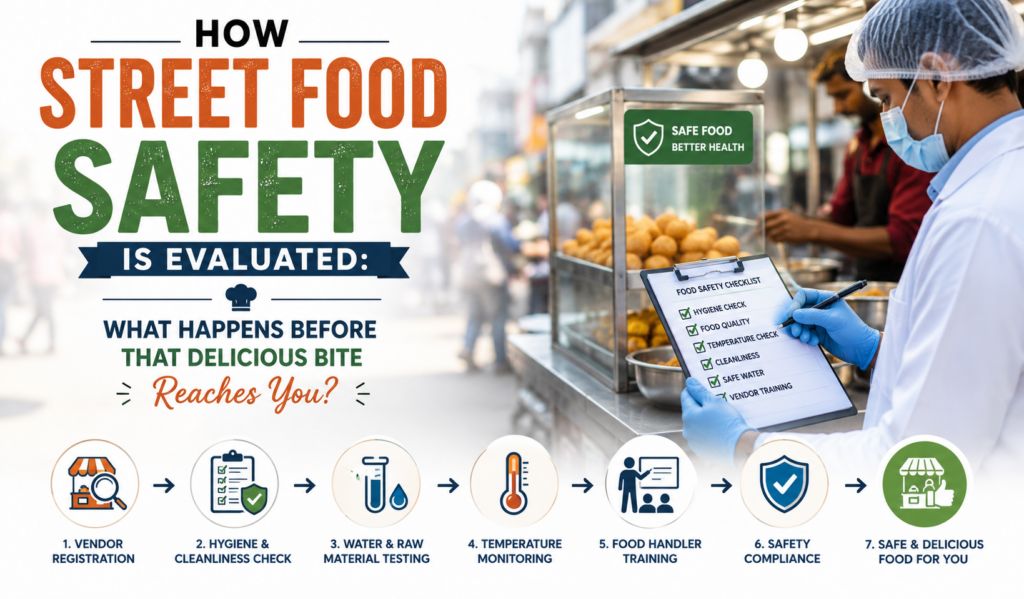
You are enjoying your favorite plate of phuchka, momos, chaat, rolls, or noodles. But have you ever stopped and wondered one thing? How safe is that food really? Street food is an important part of everyday life across the world. It is affordable, convenient, and often packed with flavor. Yet behind every popular food stall lies an important question that many consumers never ask: Does the food meet basic safety standards? Food safety is not determined by taste alone. A dish can look fresh, smell wonderful, and still contain harmful bacteria, contaminated water, or unsafe ingredients. This is why food safety evaluation plays such a critical role. The good news is that food safety experts assess street food safety through inspections, hygiene checks, ingredient testing, water analysis, and laboratory evaluations. These measures help identify risks before they affect public health. Because when it comes to food, what you cannot see often matters the most.
Street Food Safety at a Glance
| Safety Check | What Is Evaluated | Why It Matters |
| Food Handling Practices | How food is prepared and served | Reduces contamination risks |
| Water Quality Testing | Water used for cooking and cleaning | Prevents waterborne diseases |
| Ingredient Quality | Freshness and condition of raw materials | Improves food safety |
| Personal Hygiene | Cleanliness of food handlers | Reduces transfer of harmful germs |
| Equipment Cleanliness | Condition of utensils and cooking tools | Prevents cross contamination |
| Food Storage | Temperature and storage conditions | Prevents bacterial growth |
| Laboratory Testing | Detection of contaminants and pathogens | Confirms food safety |
| Regulatory Compliance | Adherence to food safety guidelines | Protects consumers |
Safety Starts Long Before Cooking Begins
Many people assume that food safety begins when cooks place ingredients on the stove. In reality, food safety starts much earlier. Food safety professionals evaluate the quality of raw ingredients as one of the first steps in the assessment process. Vendors must source vegetables, meat, spices, dairy products, oils, and other ingredients from reliable suppliers and store them properly. Even the best cooking practices cannot fully compensate for poor quality ingredients. Inspectors and food safety professionals assess whether ingredients are fresh, properly stored, and fit for consumption. Laboratories also test ingredient samples for contamination, adulteration, pesticide residues, and other potential safety risks. Safe ingredients form the foundation of every safe meal.
Water Quality Can Make or Break Food Safety
One of the most overlooked aspects of street food safety is water. Food vendors use water to wash vegetables, clean utensils, prepare beverages, make ice, and cook food. If contaminated water enters the preparation process, it can introduce harmful microorganisms into otherwise safe food. This is why water testing plays an important role in evaluating street food safety. Laboratories can analyze water samples for bacteria, pathogens, chemical contaminants, and other impurities. Testing helps determine whether the water meets accepted safety standards. A food stall may have excellent recipes and experienced cooks, but unsafe water can still create significant health risks. Safe food and safe water go hand in hand.
The Human Factor Matters More Than You Think
Food handlers play a major role in food safety. Even when ingredients are fresh and equipment is clean, poor hygiene practices can introduce contamination during preparation or serving. Evaluations often focus on simple but important practices such as hand washing, use of clean clothing, proper handling of ingredients, and avoidance of cross contamination. For example, handling raw meat and then touching ready to eat food without proper cleaning can transfer harmful microorganisms. Food safety is not only about facilities and equipment. It is also about everyday habits. Small actions can make a big difference.
Clean Utensils Are Just as Important as Fresh Ingredients
Imagine eating from a perfectly prepared meal served on a contaminated plate. Unfortunately, food safety risks can originate from utensils, cutting boards, knives, containers, and cooking equipment. Food safety professionals carefully inspect food contact surfaces during safety assessments. Residues, improper cleaning practices, and poor maintenance can increase contamination risks. Laboratories use microbial testing to assess contamination on food preparation surfaces. Clean equipment supports safe food. One should never exist without the other.
Temperature Is a Silent Safety Factor
Not all food safety problems are visible. One of the most common risks involves improper food storage temperatures. Many harmful bacteria multiply rapidly when food remains within unsafe temperature ranges for extended periods. This can happen when food vendors leave cooked food exposed for too long or fail to refrigerate it properly. Food safety inspectors examine how vendors store, transport, and display food before serving. Although customers cannot always see temperature control practices, they remain one of the most effective ways to prevent foodborne illnesses. In many cases, proper food storage plays a greater role in food safety than the food itself.
Lab Testing Reveals What the Eye Cannot See
A food stall may appear clean and organized. Customers may be satisfied. Yet hidden risks can still exist. This is where laboratory testing becomes valuable. Laboratories analyze food samples for harmful bacteria, pathogens, chemical contaminants, adulterants, heavy metals, and other safety concerns. Scientific testing provides evidence that visual inspections alone cannot reveal. Laboratory analysis helps identify risks that might otherwise remain undetected. In many cases, testing acts as the final layer of protection between contamination and consumers.
Compliance Helps Build Consumer Confidence
Food safety regulations exist for a reason. Authorities establish standards to protect public health and reduce the risk of foodborne diseases. Street food vendors are often encouraged or required to follow specific hygiene and food handling guidelines. Evaluations may include reviewing compliance with these requirements. When vendors follow food safety practices, consumers benefit from greater protection and confidence. Compliance is not just about satisfying regulators. It is about creating a safer food environment for everyone.
Why Regular Monitoring Matters
Food safety is not something that can be evaluated once and forgotten. Conditions can change over time. Suppliers may change, equipment may wear out, hygiene practices may become inconsistent, and environmental factors may create new challenges. This is why ongoing monitoring is essential. Regular inspections, testing programs, staff training, and quality checks help ensure standards are maintained consistently. A stall that was safe six months ago must continue meeting those standards today. Food safety is a continuous commitment, not a one time achievement.
The Goal Is Prevention, Not Reaction
One of the biggest misconceptions about food safety is that action only happens after people get sick. In reality, modern food safety systems focus on prevention. The purpose of inspections, testing, monitoring, and evaluations is to identify risks before consumers are affected. Every contamination issue detected early represents a problem that was prevented rather than experienced. This preventive approach protects public health while helping food vendors maintain quality and customer trust. Food safety authorities solve potential food safety problems before the public ever notices them.
Conclusion
Street food brings people together through flavor, tradition, and convenience. It remains one of the most loved parts of food culture around the world. However, food businesses must support great taste by following strong food safety practices. Evaluating street food safety involves much more than a quick visual inspection. It includes assessing ingredients, water quality, food handling, storage conditions, equipment cleanliness, and laboratory test results. Together, these factors help determine whether food is safe for consumers. Regular testing and scientific analysis play an important role in identifying hidden risks and maintaining public health standards. Trusted labs such as Pro Research & Testing Laboratory support these efforts by providing accurate testing services that help businesses and food vendors make informed decisions. The best street food experience is one that is both delicious and safe.
FAQs
1. How is street food safety evaluated?
Food safety inspectors evaluate street food through hygiene inspections, ingredient assessments, water quality checks, food handling reviews, storage evaluations, and laboratory testing.
2. Why is water testing important for street food vendors?
People use water for cooking, cleaning, and food preparation. Contaminated water can introduce harmful bacteria and pathogens into food.
3. Can laboratory testing detect food contamination?
Yes. Laboratory testing can identify harmful microorganisms, chemical contaminants, adulterants, heavy metals, and other food safety risks.
4. What are the most common street food safety concerns?
Common concerns include poor hygiene, contaminated water, improper storage, unsafe ingredients, cross contamination, and inadequate cleaning practices.
5. How can street food vendors improve food safety?
Vendors can improve food safety by using clean water, maintaining hygiene, storing food correctly, cleaning equipment regularly, and conducting periodic laboratory testing.