Food safety is not something businesses can ignore today. Whether you run a restaurant, packaged food company, sweet shop, cloud kitchen, water plant, or catering business, the quality of your food directly affects people’s health and your brand reputation. A single contamination issue can lead to customer complaints, legal trouble, financial loss, and loss of trust. According to WHO, children below 5 years carry nearly 40% of the global burden of foodborne diseases, leading to around 125,000 deaths every year due to unsafe food consumption. That is why choosing the right food testing lab is very important. A good laboratory helps you maintain food quality, meet FSSAI rules, improve customer confidence, and avoid safety risks. But with many labs available, how do you know which one is reliable? In this blog, we will explain everything in simple words so you can choose the right food testing lab for your needs.
Why Every Food Product Needs Safety Testing
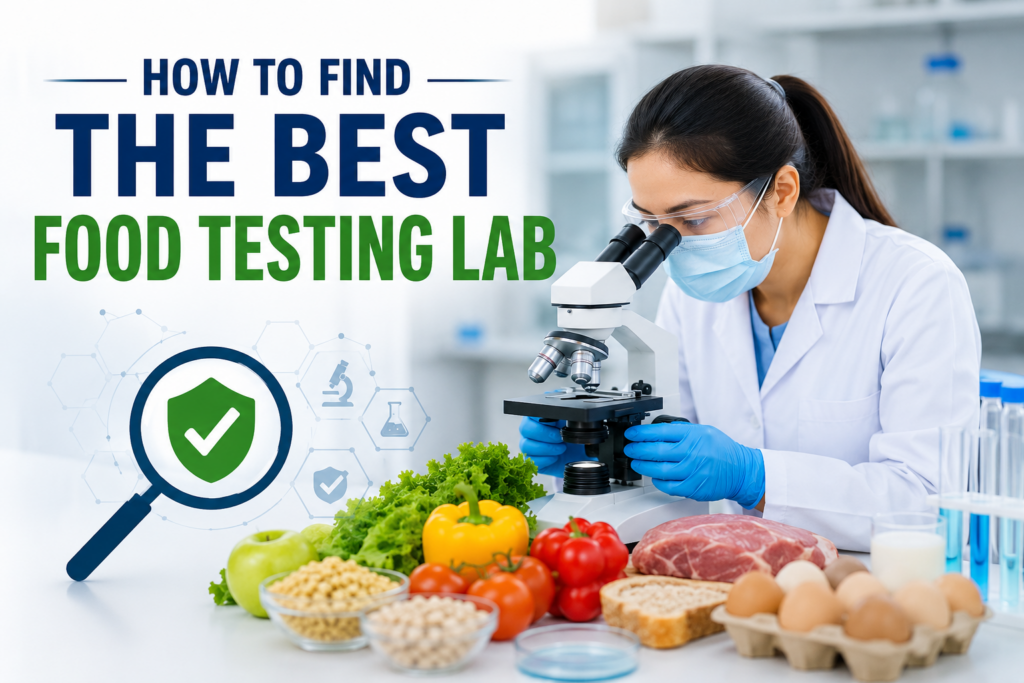
Food testing checks whether food products are safe for people to consume. It identifies harmful bacteria, chemicals, pesticides, heavy metals, toxins, or contamination that may affect health. Testing helps businesses:
- Maintain food quality
- Follow FSSAI regulations
- Improve shelf life
- Avoid legal problems
- Build customer trust
- Reduce product recalls
Food contamination can happen during farming, processing, packaging, storage, or transportation. Harmful substances like bacteria, pesticides, or heavy metals may enter food without being noticed.
Which Type of Testing You Require:
Before choosing a lab, understand what type of testing you need. Different businesses require different tests. Knowing your exact requirement helps you choose a lab with the right expertise.
Common Food Testing Services:
- Microbiological Testing: Checks bacteria, yeast, fungus, Salmonella, E. coli, and other harmful microorganisms.
- Chemical Testing: Checks preservatives, additives, toxins, acidity, moisture, and chemical contamination.
- Water Testing: Tests drinking water quality, mineral content, bacteria, and impurities.
- Nutritional Testing: Checks protein, fat, carbohydrate, vitamins, and calorie values for food labels.
- Shelf-Life Testing: Finds how long a product remains safe and fresh.
- Heavy Metal & Pesticide Testing: Checks contamination from lead, arsenic, mercury, pesticides, and industrial pollution.
1. Always Choose an NABL Accredited Lab:
One of the most important things to check is NABL accreditation. The National Accreditation Board for Testing and Calibration Laboratories (NABL) verifies whether a laboratory follows proper testing standards and has qualified professionals and accurate equipment. An NABL-accredited lab usually follows ISO/IEC 17025 standards, which are globally accepted quality standards for testing laboratories.
Why NABL Accreditation Matters?
- Ensures accurate testing
- Improves reliability of reports
- Accepted by government authorities
- Helps in legal and export compliance
- Shows professional quality standards
FSSAI also recognizes NABL-accredited laboratories for official food sample analysis. Before selecting a lab, ask:
- Is the lab NABL accredited?
- Is the accreditation valid?
- What tests are covered under their accreditation?
2. Check FSSAI Recognition:
If you are in the food business, choose a lab recognized or notified by FSSAI. FSSAI-approved laboratories follow food safety standards required in India. Their reports are more reliable for compliance and licensing purposes. You can verify approved labs from the official FSSAI website: fssai.gov.in .
Look at the Lab’s Experience and Expertise:
Experience matters a lot in food testing. A good lab understands industry standards, sample handling, testing procedures, and reporting accuracy. Choose labs that have experience in:
- Packaged foods
- Restaurant foods
- Dairy products
- Bakery items
- Drinking water
- Spices
- Oils
- Snacks
- Export products
3. Check the Equipment and Technology:
Modern equipment gives more accurate results. A reliable food testing lab should use updated technology for:
- Chemical analysis
- Microbiology testing
- Water purity testing
- Heavy metal detection
- Nutritional analysis
Advanced equipment improves testing accuracy and reduces errors. FSSAI itself highlights the importance of proper laboratory infrastructure and sophisticated analytical equipment for food safety testing.
4. Ask About Turnaround Time:
Testing reports should come on time. Delays can affect:
- Product launch
- Export shipment
- Restaurant operations
- Compliance deadlines
Fast reporting with accurate results is always better for businesses. Before choosing a lab, ask:
- How many days will the report take?
- Is urgent testing available?
- Can reports be shared online?
5. Compare Pricing Carefully:
Do not choose a lab only because it is cheap. Good food testing is an investment in safety and brand reputation. Very low-cost testing may sometimes compromise quality or accuracy. Instead, compare:
- Testing scope
- Number of parameters covered
- Accreditation
- Experience
- Report quality
6. Check Sample Collection Support:
Some laboratories provide sample collection services from your business location. This is useful for:
- Restaurants
- Food factories
- Water plants
- Caterers
- Cloud kitchens
Proper sample collection is important because wrong handling can affect results. FSSAI guidelines also mention proper sealing, packaging, and handling of food samples during testing.
7. Review the Reporting Format:
Good reports help businesses quickly understand safety issues and take corrective action. A professional lab should provide:
- Clear test reports
- Easy-to-understand findings
- Proper parameter values
- Regulatory limits
- Recommendations if needed
8. Read Customer Reviews and Reputation:
Before finalizing any lab:
- Read Google reviews
- Check ratings
- Ask for client references
- Look at industry reputation
Reliable labs usually have consistent positive feedback for:
Accuracy
Professional behavior
Fast reporting
Customer support
9. Questions You Should Ask Before Finalizing a Lab:
Here are some important questions to ask:
- Is the lab NABL accredited?
- Is the lab approved by FSSAI?
- What tests do they specialize in?
- How long will reports take?
- Do they provide sample collections?
- Are the reports accepted for compliance?
- What equipment do they use?
- Do they offer consultation support?
Signs of a Good Food Testing Lab:
A reliable lab usually has:
- Qualified scientists and technicians
- Modern equipment
- NABL accreditation
- Transparent pricing
- Clear communication
- Timely reports
- Good customer support
- Proper hygiene and sample handling
Common Mistakes to Avoid:
Choosing Only Based on Low Price: Cheap testing may not always be accurate.
- Ignoring Accreditation: Always check NABL and FSSAI recognition.
- Not Understanding Test Parameters: Different products need different tests.
- Delaying Regular Testing: Food quality should be monitored regularly, not only during problems.
- Ignoring Water Quality: Water quality is equally important in food preparation.
Final Thoughts
Choosing the right food testing lab is an important decision for every food business. A good laboratory helps protect customer health, improve product quality, and maintain business reputation. Always choose a lab that is NABL accredited, experienced, technologically updated, and trusted by customers. Food safety is not only about following rules. It is about responsibility. Customers trust businesses that care about hygiene, quality, and transparency. Regular food and water testing shows that your business takes safety seriously. Whether you run a restaurant in Kolkata, a packaged food company, a bakery, or a water plant, investing in proper testing today can save you from bigger problems tomorrow.
FAQs
- Why is NABL accreditation important for a food testing lab?
NABL accreditation confirms that the laboratory follows proper testing standards and provides accurate and reliable results. - How often should food businesses test their products?
It depends on the product type and FSSAI requirements, but regular testing is recommended to maintain safety and quality. - Can food testing labs test drinking water also?
Yes. Many food testing laboratories also provide water testing services for drinking water, packaged water, and industrial water. - What are the common contaminants checked in food testing?
Labs commonly check bacteria, pesticides, heavy metals, toxins, preservatives, and chemical contamination. - How can I verify whether a lab is genuine?
You can check the official NABL and FSSAI websites to verify accreditation and approval status.