

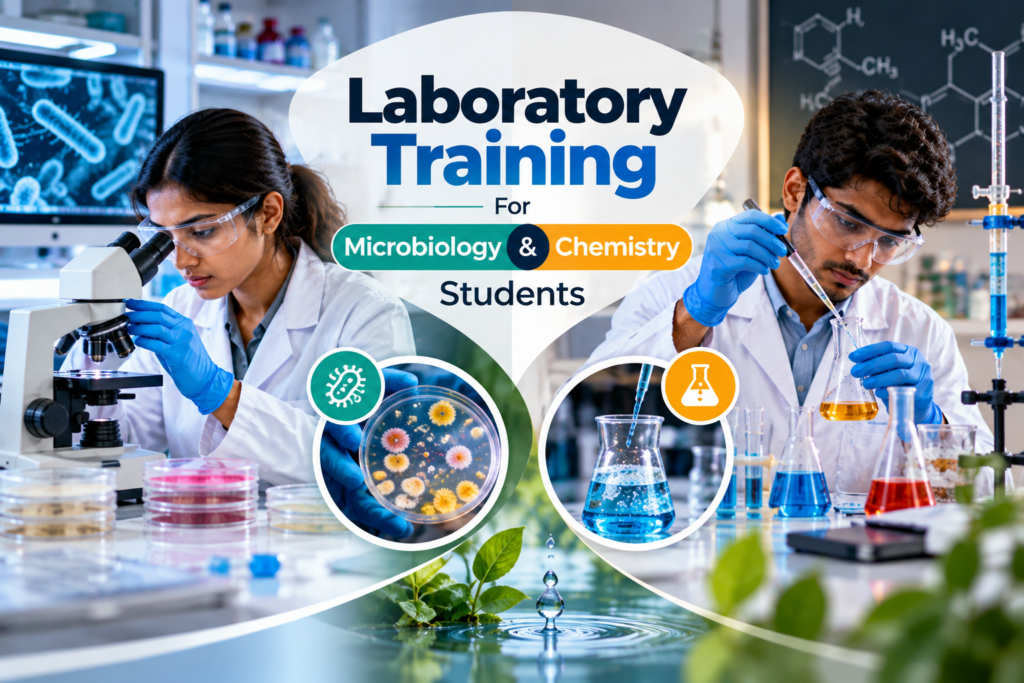
A successful career in microbiology, chemistry, food testing, water testing, research, or quality control requires more than academic knowledge. Professional laboratories expect students to apply concepts accurately, safely, and consistently. This is where laboratory training for Microbiology & Chemistry students becomes valuable. Pro Research & Testing Laboratory offers hands-on internship and training programmes designed to connect classroom learning with real laboratory practices. Supported by scientists with more than 25 years of expertise, Pro Research gives students opportunities to develop technical skills, understand quality practices, work with laboratory equipment, and gain greater confidence for their future careers.
Why Hands-On Laboratory Training for Microbiology & Chemistry Students Is Essential
Laboratory science is learned through practice. Students need opportunities to prepare samples, follow methods, operate equipment, record observations, perform calculations, and interpret results. Practical exposure helps them understand how errors in weighing, pipetting, dilution, incubation, or observation can affect results. An internship also helps students understand the complete testing process: preparing samples, applying methods, checking results, and documenting work. For students planning careers in testing, research, food and water analysis, quality control, or industrial laboratories, this can ease the transition to professional work.
Skills Students Can Build Through Internship Training
A good laboratory internship should help students develop both technical ability and professional habits. Through repeated practice and guidance, students can strengthen skills such as:
- Sample preparation and handling
- Laboratory equipment handling
- Microbiological and chemical testing
- Accurate measurements and calculations
- Aseptic and safe working practices
- SOP following and preparation
- Documentation and reporting
- Quality checks and laboratory discipline
- Observation, analysis, and problem-solving
These skills can help students approach future laboratory roles with confidence.
- Developing Microbiology Skills
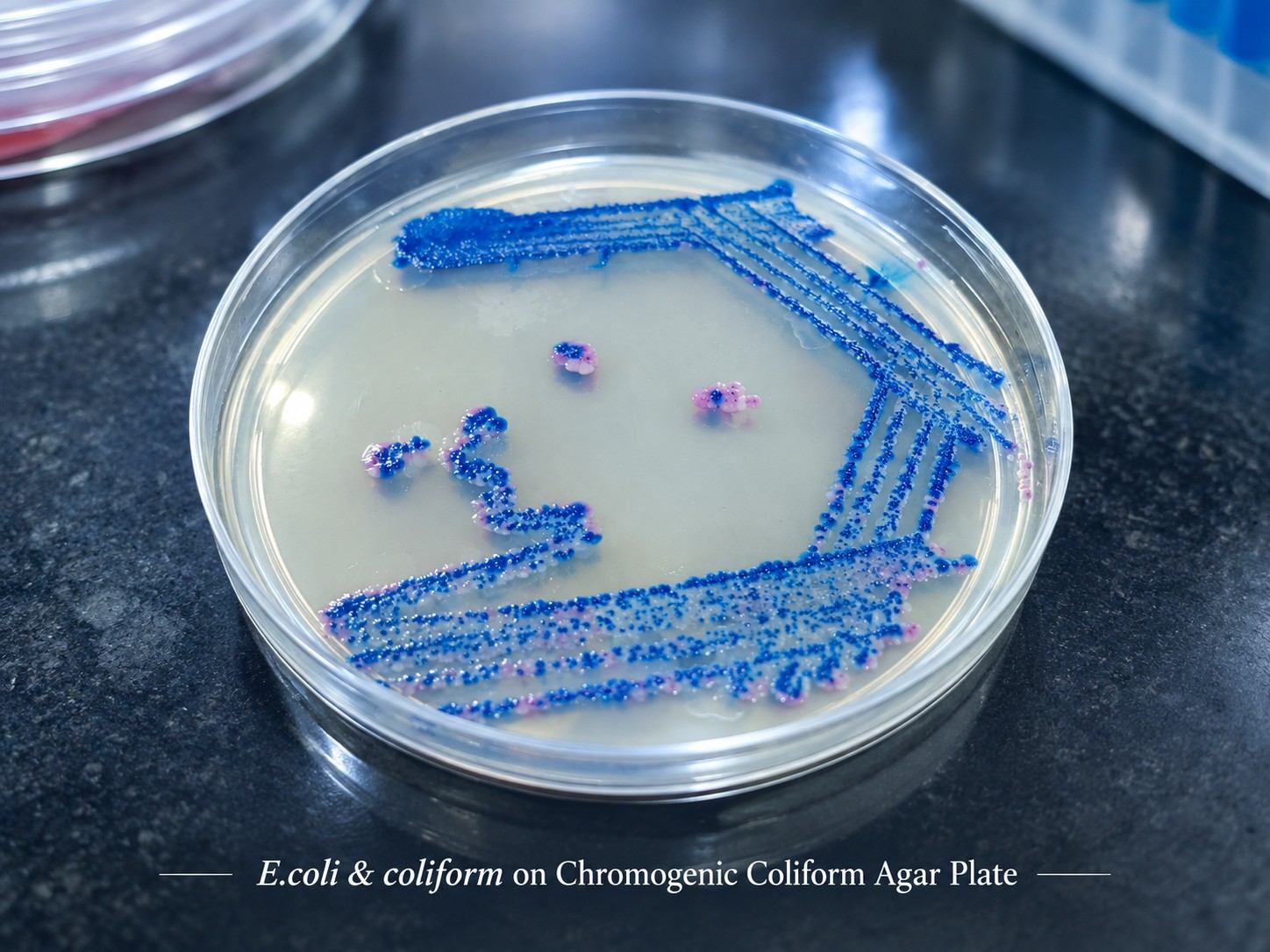
Students interested in microbiology can gain practical exposure to important laboratory activities. Depending on the selected programme, laboratory training for Microbiology & Chemistry students include biosafety, aseptic handling, media preparation, microbial isolation, E. coli and coliform testing, total plate count, yeast and mould testing, pathogen-related analysis, and environmental checks. Practical work helps students understand contamination control, culture handling, and why careful technique matters. Instead of simply remembering procedures, students can understand their application in laboratory work.
- Developing Chemical Analysis Skills
Students interested in chemistry and analytical testing can build practical knowledge through food and water analysis programmes. Food-focused training includes areas such as moisture, ash, fat, protein, sodium, potassium, food composition, edible oil and fat, milk quality, adulteration, and toxic metals. Water-focused programmes cover parameters including pH, TDS, turbidity, alkalinity, hardness, chloride, sulphate, COD, DO, TSS, BOD, metals, phosphate, and silica. These areas expose students to analytical procedures used in food and water quality testing.
- Understanding Laboratory Quality and Safety
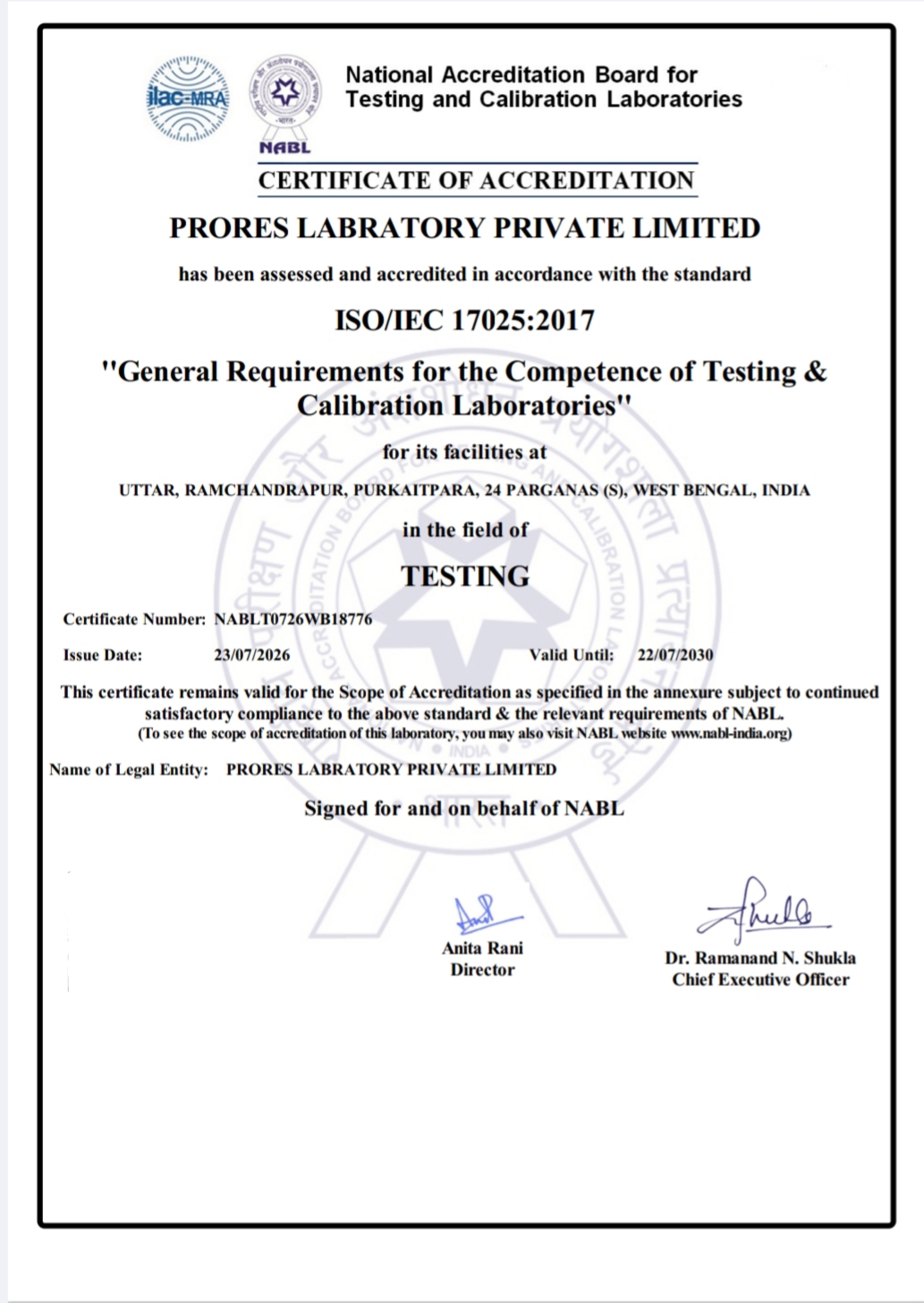
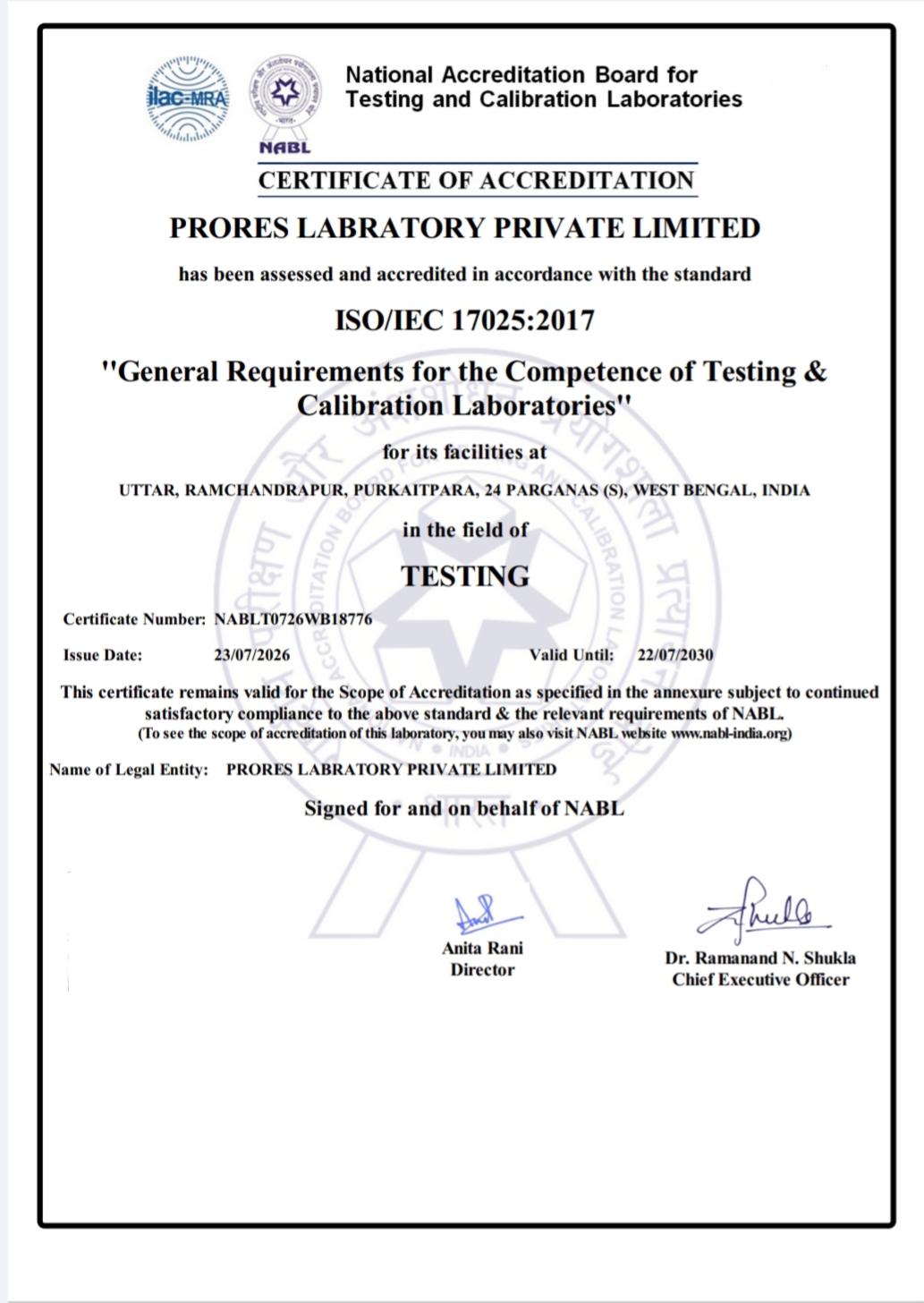
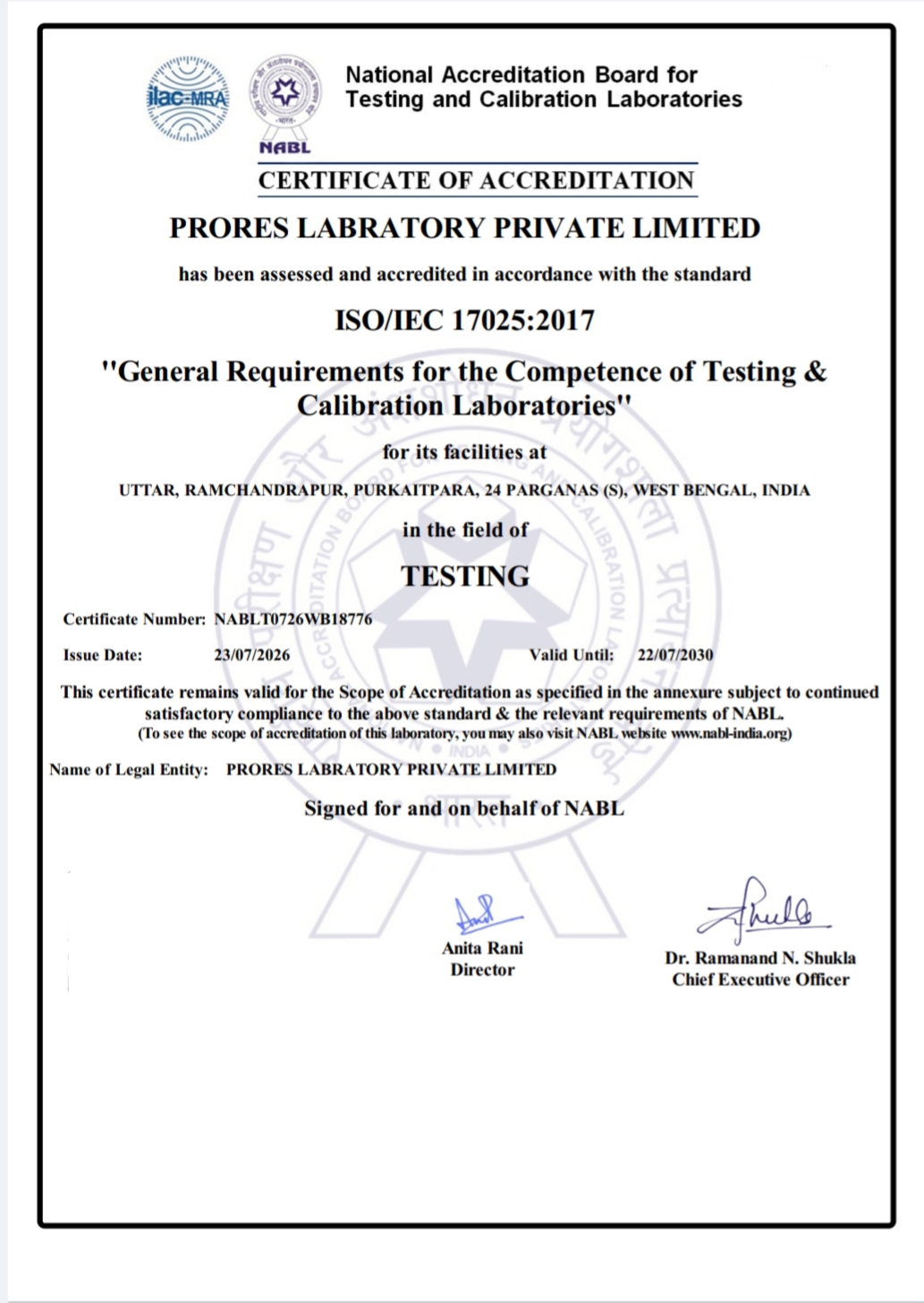
Career growth in laboratory science requires both technical ability and an understanding of quality and safety. Students need to follow procedures, handle equipment correctly, maintain records, control contamination, and work responsibly. Pro Research’s programmes provide exposure to quality assurance practices related to ISO/IEC 17025 and are designed around NABL 120. Students can therefore learn that reliable laboratory results depend on people, methods, equipment, records, and quality processes working together. This quality-focused approach helps students develop professional laboratory habits.
- Learning to Solve Real Laboratory Problems
Real laboratory work does not always produce perfect textbook results. A culture may show unexpected growth, an instrument reading may differ from expectations, or a test may need to be repeated. Practical laboratory training for Microbiology & Chemistry students gives them an opportunity to examine possible causes, check calculations, review procedures, and make decisions based on evidence. This develops scientific reasoning and problem-solving ability. Students learn that laboratory work also requires understanding whether results are reliable.
- Building Professional Confidence
Internship training can also build confidence. Students who have handled samples, equipment, testing procedures, documentation, and safety practices can approach professional environments with greater familiarity. Practical exposure can help students identify interests in microbiology, food analysis, water quality, chemical testing, quality control, or research, supporting more informed career and education decisions.
Programme Options at Pro Research
Pro Research provides programmes across microbiology and chemical analysis, including specialised options for food and water testing. Different durations and levels allow students to select training according to their learning goals.
| Programme | Duration | Fee | Career-Focused Areas |
| Certificate in Microbiology Analysis (Food & Water) | 2 months | ₹25,000 | Aseptic handling, media preparation, microbial testing |
| Advanced Certificate in Microbiology Analysis | 3 months | ₹34,000 | Sample processing, pathogens, isolation, environmental checks |
| Professional Certificate in Microbiology Analysis | 6 months | ₹49,000 | Microbial isolation, instruments, water and air testing, SOPs |
| Certificate in Chemical Analysis (Food) | 2 months | ₹25,000 | Food composition and basic chemical testing |
| Advanced Certificate in Chemical Analysis (Food) | 3 months | ₹34,000 | Food quality, adulteration, oils, milk, toxic metals |
| Professional Certificate in Chemical Analysis (Food) | 6 months | ₹49,000 | Calibration, food quality, toxic metals, SOPs |
| Certificate in Chemical Analysis (Water) | 2 months | ₹25,000 | pH, TDS, turbidity, hardness and related testing |
| Advanced Certificate in Chemical Analysis (Water) | 3 months | ₹34,000 | COD, DO, TSS, wastewater and related analysis |
| Professional Certificate in Chemical Analysis (Water) | 6 months | ₹49,000 | BOD, TKN, metals, phosphate, silica, SOPs |
| Professional Certificate Internship (Food & Water Quality) | 6 months | ₹75,000 | Calibration, testing, pathogens, calculations, reporting |
Choosing Right Internship or Laboratory Training for Microbiology & Chemistry Students for Career Growth
The right programme depends on a student’s background, interests, and career direction. Those interested in microbial testing may consider microbiology, while students interested in analytical measurements may prefer chemical analysis. Duration is another consideration. Shorter programmes offer focused exposure, while longer programmes provide broader practical learning. The six-month Professional Certificate Internship in Food & Water Quality includes calibration, food and water testing, pathogens, calculations, and reporting.
From Academic Learning to Industry Readiness
Internship training cannot guarantee a particular job or career outcome, but it can strengthen the practical foundation students take into their next step. Technical skills, quality awareness, safety habits, documentation, and scientific reasoning can support further study and laboratory careers. Pro Research gives students exposure to analytical challenges, instrumentation, and quality assurance practices, helping them understand the accuracy, consistency, and responsibility expected in laboratory work.
Conclusion
A laboratory career begins with strong fundamentals, but practical experience helps students turn knowledge into professional capability. An internship lets them practise methods, handle equipment, follow safety procedures, document work, analyse results, and learn from laboratory challenges. Pro Research provides structured laboratory training for Microbiology & Chemistry students across food analysis, water analysis, and chemical testing, with programmes designed to develop practical and quality-focused laboratory skills. For students building their future, the right internship can be an important step toward becoming more confident and industry-ready.
FAQs
- Who should consider Pro Research & Testing Laboratory internships?
Students interested in microbiology, food testing, water testing, chemical analysis, quality control, research, or laboratory operations can benefit from practical training.
- Are the programmes hands-on?
Yes. Pro Research describes its programmes as hands-on, with exposure to laboratory work, equipment, analytical challenges, and quality practices.
- What career skills can students develop?
Students can develop technical testing skills, equipment familiarity, safety awareness, documentation habits, analytical thinking, problem-solving ability, and professional confidence.
- Are both microbiology and chemical analysis available?
Yes. Pro Research offers programmes in microbiology and chemical analysis, with specialised options covering food and water testing.
- What programme durations are available?
Programmes are available for two, three, and six months, depending on the subject and level. A six-month Professional Certificate Internship in Food & Water Quality is also listed.
- Why is quality training important for a laboratory career?
Quality practices help students understand accuracy, documentation, calibration, controlled procedures, and reliable laboratory operations.