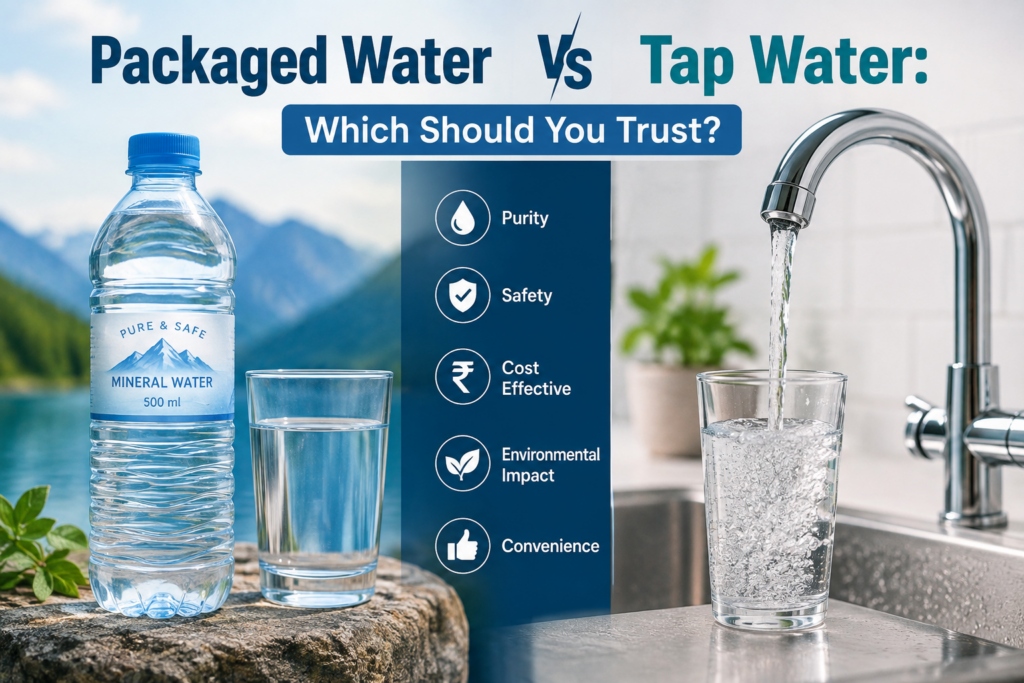
You’re thirsty. You reach for a glass of water. But then a question pops into your mind. Should you drink tap water or buy packaged water instead? The debate around packaged water Vs tap water is common because many people believe packaged water is always safer, while others trust water directly from their taps. The truth is, neither option is automatically better. It depends on where the water comes from, how it is treated, how it is stored, and whether it is regularly tested. According to WHO and UNICEF, 2.1 billion people still lacked safely managed drinking water in 2024. So, which water source should you trust?
Understanding Packaged Water
Packaged water is water that is processed, purified, bottled, and sealed before reaching consumers. Depending on the manufacturer, it may come from groundwater, municipal sources, springs, or other approved water sources before undergoing purification. Most reputable packaged water brands use multiple treatment methods such as reverse osmosis, ultraviolet disinfection, ozonation, filtration, and mineral balancing before bottling. The biggest advantage is convenience. It is easy to carry, widely available, and useful during travel or emergencies. However, the quality depends entirely on whether the manufacturer follows proper quality control, hygiene standards, and regular testing.
What is Tap Water?
Tap water is supplied through public or private water distribution systems. Before reaching homes and businesses, it is usually treated to remove harmful microorganisms and pollutants. In many cities, tap water is tested regularly to meet drinking water standards. However, its quality can still be affected by old pipelines, damaged plumbing, storage tanks, or contamination after treatment. That means the water leaving the treatment plant may be perfectly safe, but poor maintenance within a building can reduce its quality before it reaches your glass.
Packaged Water Vs Tap Water: A Quick Comparison
| Feature | Packaged Water | Tap Water |
| Source | Purified and bottled | Municipal or local supply |
| Convenience | Easy to carry anywhere | Available at home or workplace |
| Cost | Higher | Much lower |
| Environmental impact | Plastic waste if not recycled | Minimal packaging waste |
| Quality | Depends on manufacturer and storage | Depends on treatment and distribution |
| Best use | Travel and emergencies | Daily use where water quality is reliable |
This comparison (packaged water vs tap water) shows there is no universal winner. The better choice depends on your local water quality and how safely the water is handled.
Is Packaged Water Always Safer?
Not necessarily. Many people assume that bottled water is automatically cleaner because it comes in a sealed bottle. While trusted brands follow strict manufacturing practices, problems can still occur if bottles are stored improperly, exposed to heat, or sold after long periods. A damaged seal, poor storage conditions, or fake products can also compromise quality. According to the United States Environmental Protection Agency, bottled water is regulated as a packaged food product, while public drinking water systems are regulated under separate drinking water standards. Both are subjected to safety requirements, although the regulatory systems differ. The bottle alone should never be the reason you trust the water.
Can Tap Water be Trusted?
Yes, in many places it can. Well managed municipal water systems perform routine testing to ensure water meets safety standards before distribution. In several countries, tap water is considered safe enough to drink without additional treatment. However, problems may arise due to leaking pipelines, contaminated storage tanks, poor plumbing maintenance, or interruptions in water supply. If your tap water has an unusual smell, color, taste, or visible particles, it should be tested before regular consumption. Simple precautions like cleaning overhead tanks and replacing old pipes can significantly improve water quality.
What Really Determines Water Safety?
Whether you drink packaged water or tap water, safety depends on several important factors. The source of the water should be protected from contamination. The treatment process should effectively remove bacteria, viruses, chemicals, and other harmful substances. Storage conditions must prevent contamination after treatment. Regular laboratory testing should confirm that the water continues to meet quality standards. Finally, transportation and handling should protect the water until it reaches the consumer. If any one of these steps fails, the quality of the water may be affected.
The Role of Laboratory Testing
Laboratory testing is one of the most reliable ways to determine whether drinking water is safe. In the debate over packaged water vs tap water, testing provides clear evidence by detecting microorganisms, heavy metals, chemical pollutants, dissolved solids, pH imbalances, pesticides, and other substances that cannot be identified by appearance alone. Clear water is not always safe water. Regular testing is especially important for factories, restaurants, hospitals, schools, housing complexes, hotels, and food processing units where water quality can directly affect public health.
Common Myths About Drinking Water
Many misconceptions influence people’s choices.
- One common myth is that bottled water is always healthier. In reality, quality depends on manufacturing standards and proper storage.
- Another myth is that clear water is always safe. Harmful bacteria, viruses, and chemicals are often invisible.
- Some people believe boiling removes every contaminant. While boiling kills many microorganisms, it does not remove heavy metals, dissolved chemicals, or certain pollutants.
- Another misconception is that tap water never requires testing. Even treated water should be monitored if plumbing systems are old or water quality changes unexpectedly. The smartest choice is to trust science instead of assumptions.
So, Which Water Should You Trust?
The honest answer is simple. Trust safe water, not just the packaging. In the packaged water vs tap water debate, the right choice depends on actual water quality. If your local tap water is properly treated, regularly tested, and safely stored, it can be an excellent everyday option. When travelling or facing uncertain water quality, packaged water from a trusted manufacturer may be safer. The goal is not to choose one forever, but to select the safest available source based on evidence. When it comes to drinking water, confidence should come from quality, not marketing.
Final Thoughts on Packaged Water Vs Tap Water
Every sip of water should support your health, not put it at risk. When considering Packaged Water Vs Tap Water, the real question is whether the water has been properly tested, treated, stored, and handled. Water quality depends on good practices, regular monitoring, and scientific testing. Whether it flows from a kitchen tap or comes in a sealed bottle, the safest water is the one that consistently meets quality standards. Your health deserves more than an attractive label or convenient source. It deserves clean, safe, and trustworthy water.
FAQs
1. Is packaged water always safer than tap water?
No. Packaged water is safe only when it is produced by a reputable manufacturer, stored correctly, and properly sealed. Well treated tap water can be equally safe or even safer in many areas.
2. Can I drink tap water without testing it?
If your local water supply meets safety standards and your plumbing is well maintained, tap water is generally safe. If you notice unusual taste, smell, or appearance, laboratory testing is recommended.
3. Does boiling tap water make it completely safe?
Boiling kills many bacteria and viruses but does not remove heavy metals, chemicals, or dissolved contaminants. Additional filtration or testing may still be necessary.
4. How often should drinking water be tested?
Homes using private wells should test water regularly, while businesses such as restaurants, hotels, hospitals, and food industries should follow scheduled water quality testing as required by regulations and internal quality programs.
5. What should I check before buying packaged water?
When comparing packaged water vs tap waterr, check whether the packaged water has an intact seal, clear manufacturing and expiry dates, proper labeling, and applicable certifications before buying.