



A process control is a quality control measure that verify and ensure that entire microbiological analysis and its procedures are working effectively and ensure its result. In other words this is controlling of steps in an analysis that maintain the accuracy of the test.Microbiology is a subject that deals with bacteria, fungi, viruses, protozoa and all other micro-organisms.Micro-organisms are not visible in naked eye.They can be only observed either under microscope or by a special method called culture.
In laboratory, water or food samples are analysed to detect the presence/absence or to detect the load of bacteria. That means samples are tested in laboratories to check whether any bacteria of choice is present in that sample or not and sometimes to check how much of quantity of a bacteria of choice is present in a food sample.This is not an easy procedure.If one is not following the process control, the test may produce inaccurate or unreliable results.
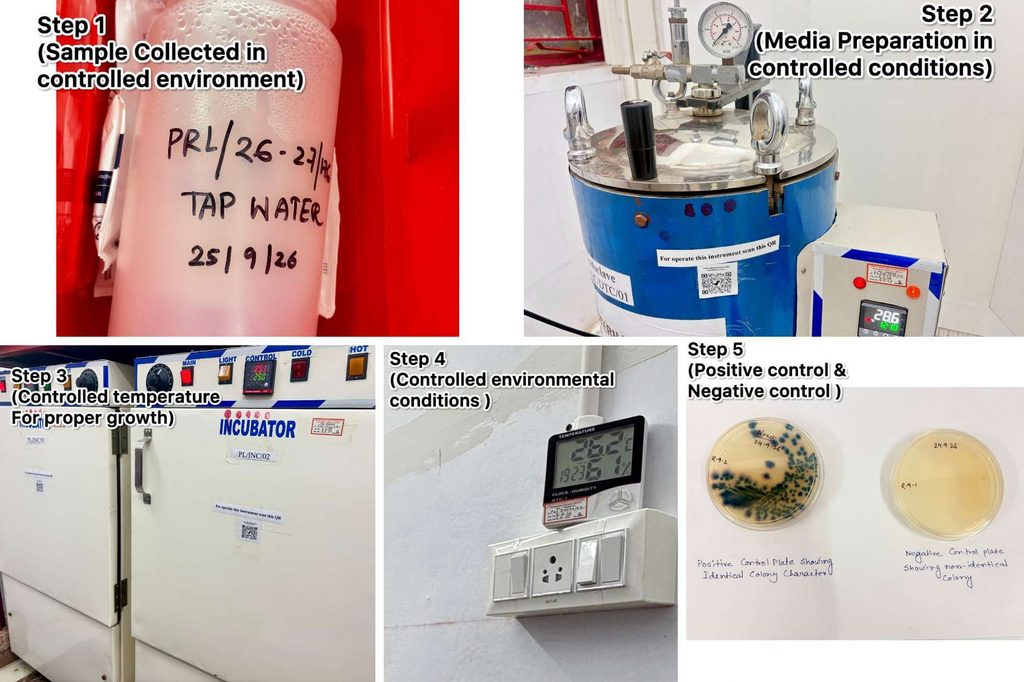
Quality Checkpoints of Critical Process Control
| Process Step | Critical Control |
| Sample Receipt | Correct identification and condition |
| Sample Storage | Temperature monitoring |
| Media Preparation | Sterility, pH, Growth Promotion Test |
| Sterilization | Autoclave validation and indicator checks |
| Equipment | Calibration and maintenance |
| Environmental Monitoring | Air and surface contamination control |
| Testing | Positive, negative, and sterility controls |
| Incubation | Temperature and time control |
| Reporting | Authorized signatory approval |
Process Flow
Sample Receipt
↓
Sample Registration
↓
Sample Storage(2-8°C)
↓
Media Preparation
↓
Media Quality Check
↓
Sterilization
↓
Sample Preparation
↓
Inoculation
↓
Incubation
↓
Observation
↓
Enumeration / Identification
↓
Result Verification
↓
Report Generation
↓
Record Retention
↓
Disposal of Biohazard Waste
Control of Culture Media
Each batch of culture media shall undergo visual inspection (appearance, batch number, opening date, expiry date), sterility (productivity, specificity) and other factors like pH and appearance.Culture media is controlled to ensure it is sterile, supports microbial growth properly, and produces accurate test results. Quality checks such as appearance, pH, sterility, and growth promotion testing help confirm that the media is suitable for use and prevent false positive or false negative results.
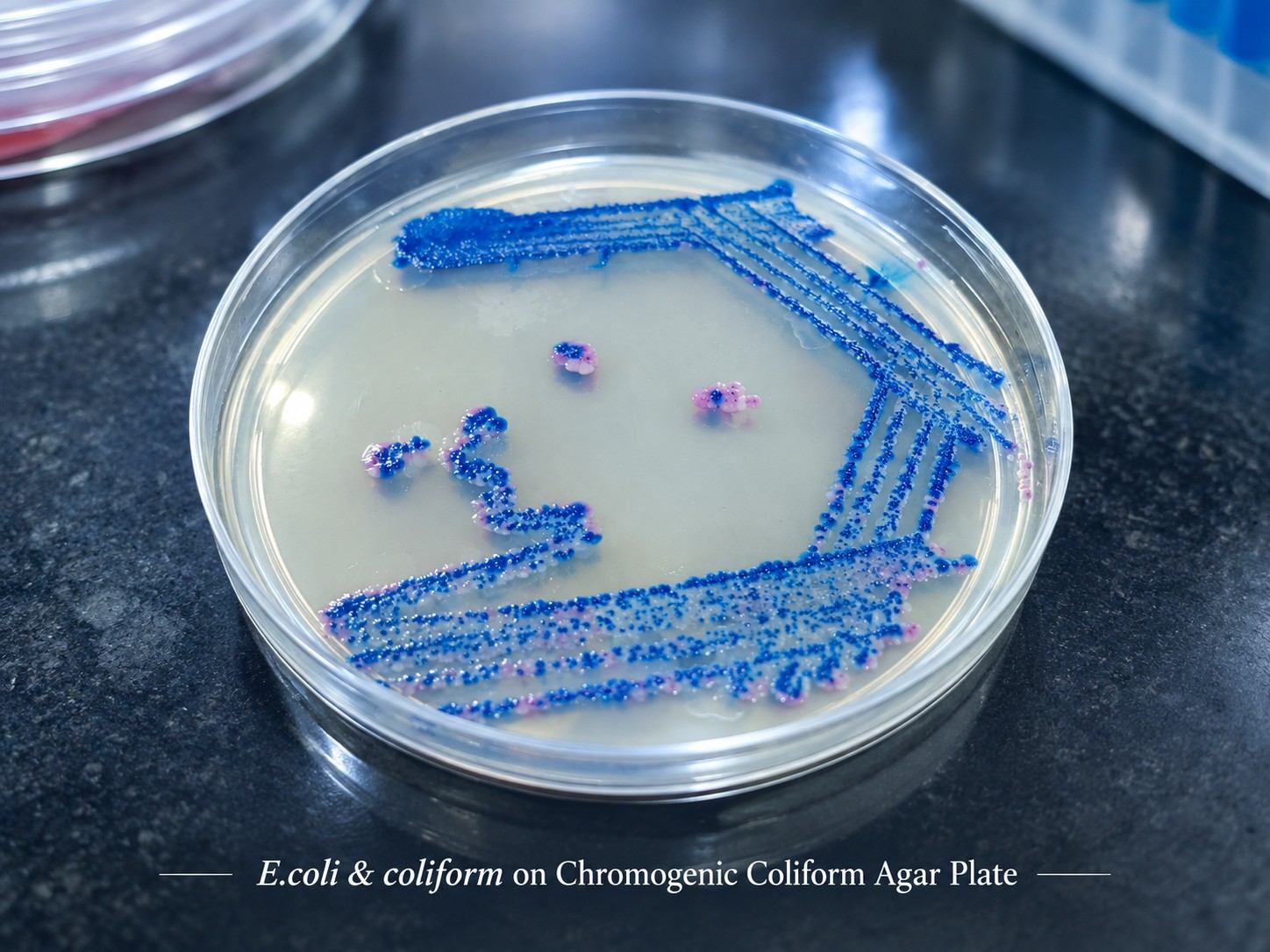
Example- Escherichia coli is a lactose fermenting bacteria and it will ferment the sugar lactose in any media that contains lactose. MacConkey agar is a differential and selective agar media that contains lactose. E. coli when grown on MacConkey agar, it ferments the sugar and alter the pH of the media. This will finally changes the colour of MacConkey Agar. Now, laboratory receives a sample “A” for E. coli detection. When the analyst inoculate the sample on MacConkey agar, it showed a change in colour after 24 hours of incubation. The analyst also processed a reference strain of E. coli on same MacConkey Agar which also shows a change in colour. Comparing both plates now the analyst can tell that the sample “A” contains E. coli. This reference strain of E. coli is the positive control for the test. Now, another bacteria that grow on MacConkey Agar is Pseudomonas sp. but it don’t ferment lactose. The analyst inoculate a reference strain of Pseudomonas sp. on MacConkey agar. After 24 hours this Pseudomonas sp. also grown on MacConkey Agar but don’t change any colour. This helps the analyst to understand and compare the phenomena of colour change on MacConkey agar. This is called negative control.
Environmental Controls
For regular laboratory activities, several environmental parameters like temparaturte, humidity and sterility must be checked for daily basis. The temparature of our laboratory remain between 18-27°C, relative humidity must remain between 45-55%.Sterilty is an important parameter for laboratories. If a laboratory has microbiological or biological unit, sterilty must be checked at regular interval to reduce external contamination. Air sampling, surface swabs and settle plate techniques are some of the method to check the sterility of a laboratory.
Equipment Control
A microbiology laboratory depends on its equipment every day. From incubators and autoclaves to microscopes and micropipettes, each instrument plays an important role in obtaining reliable results.But having good equipment is not enough. Proper equipment control is essential to ensure that instruments are safe, accurate, clean, and always fit for their intended purpose.
Equipment control is the systematic process of:
✅ Identifying laboratory equipment
✅ Checking equipment performance
✅ Calibrating instruments regularly
✅ Carrying out preventive maintenance
✅ Monitoring operating conditions
✅ Recording equipment-related activities
✅ Training staff in proper operation
✅ Managing equipment breakdowns and repairs
The goal is simple: the right equipment, in the right condition, at the right time.
Importance of Equipment Control
- Reliable equipments help to obtain accurate results.
- Properly maintained equipments reduce chances of occupational biohazards like spillage or leakage of bacterial media
- Preventive maintenance or internal checking helps to identify any equipment related problems at an early phase.
An accurately functioning equipment helps the growth of exact bacteria. For example, thermotolerant coliform bacteria grow well at 44.5°C ± 1°C but cannot tolerate temperature above 47°C ± 1°C. A poorly maintained incubator can easily reach 47°C ± 1°C and hamper the growth of thermotolerant coliform bacteria.This will give a false negative result.
- Control of Testing-During analysis of samples controlling the process is most tough and essential a matter in microbiological laboratory. During analysis a positive control, a negative control and a blank must be process with every batch of sample.
- Necessity of positive control– A positive control is a sample that is known to give a positive or expected result when a microbiological test or analytical procedure is performed correctly. In simple words: A positive control proves that the test system is capable of producing the expected result.
Incubation
Incubation is a critical step in microbiological testing and process control because microorganisms require specific conditions to grow and develop. Maintaining the correct temperature, incubation time, and environmental conditions helps ensure reliable and reproducible test results.
Proper incubation allows target microorganisms to grow to detectable levels, making it easier to identify contamination and assess the microbiological quality of food, water, pharmaceutical, and other products. On the other hand, incorrect temperature or incubation time may lead to underestimation, overgrowth, or inaccurate microbial counts.
For effective microbiological process control, incubators should be regularly monitored, calibrated, and maintained according to the applicable test method. Accurate incubation conditions therefore play an important role in ensuring test reliability, product safety, quality control, and compliance with laboratory standards.
Importance of incubation in microbiological process control
| Support growth of specific bacteria | Incubation at different temperatures support growth of different kind of micro-organisms. Like 30°C ± 1°C support growth of general hygiene parameters of food. 37°C ± 1°C support growth of pathogenic bacteria like E, coli, S. aureus etc, 25°C ± 1°C support growth of fungal growth of food. |
| Ensures accurate results | Incorrect incubation conditions can cause false low or high microbial counts. |
| Controls microbial growth | Maintains the required temperature, time, and atmospheric conditions for proper microbial growth. |
Conclusion of Process Control in microbiological analysis
Process control plays an important role in microbiological analysis. It helps maintain proper control over sampling, testing, handling, and other activities that can affect the test results. Regular monitoring makes it easier to find contamination or other problems at an early stage. If any issue is detected, suitable corrective steps can be taken to avoid its recurrence. Following proper laboratory practices, hygiene, and testing procedures also helps produce reliable and consistent results. Overall, good process control helps maintain the quality, accuracy, and safety of microbiological analysis.For more information, you can also reach out to Pro Research & Testing Laboratory for professional laboratory testing. You can also join our Internship Programme if you’re looking to enhance your skills, gain practical experience, and grow professionally.
FAQs on Microbiological Process Control
1. What is microbiological process control?
Microbiological process control means checking and controlling microorganisms during different stages of production and processing. It helps keep the product safe and reduces the chances of contamination.
2. Why is microbiological process control necessary?
It helps detect microbial contamination at an early stage. Regular monitoring can prevent spoilage, maintain product quality, and reduce the risk of harmful microorganisms affecting the final product.
3. Which industries use microbiological process control?
It is widely used in food and beverage manufacturing, pharmaceutical industries, water treatment, cosmetics, healthcare, and other industries where microbial quality is important.
4. What microorganisms are generally tested?
The microorganisms tested depend on the type of product and the testing requirements. Common tests include total viable count, coliform, E. coli, yeast and mould, Salmonella, and Staphylococcus aureus.
5. How is microbiological process control performed?
Samples are collected from suitable points in the process and tested using appropriate microbiological methods. The results are then reviewed to identify contamination or changes in microbial levels.
6. What shall be the frequency of process control?
There is no standard frequency for process control. But to ensure a perfect, result process control shall be done with every test or on arrival of any externally purchased reagent, culture media or material.
7. What can cause microbial contamination during processing?
Contamination may come from raw materials, water, equipment, working surfaces, employees, air, packaging materials, or improper handling and storage.
8. What is environmental monitoring?
Environmental monitoring involves checking the microbial condition of areas, surfaces, equipment, air, or other relevant locations within a processing environment. It helps identify possible contamination sources.
9. What should be done if a microbiological test result is not satisfactory?
The cause of the unsatisfactory result should be investigated. Cleaning and sanitation procedures, equipment, raw materials, handling practices, and other relevant factors may need to be checked before taking appropriate corrective action.
10. Can microbiological process control completely prevent contamination?
It cannot guarantee that contamination will never occur. However, regular testing, proper hygiene, sanitation, and good process practices can greatly reduce the risk.
11. What is the difference between microbiological testing and process control?
Microbiological testing checks the microbial quality of a particular sample. Process control is broader and involves monitoring the conditions and practices that can affect microbial quality throughout the production process.
12. Why is record keeping important in microbiological process control?
Maintaining proper records makes it easier to track test results, identify repeated problems, and check whether corrective actions have been effective. It also provides useful information during quality and compliance reviews.
How We Verified This Testing/Research Procedure :
This testing procedure is done under qualified analyst .Continually monitored by expertise.Repeatedly testing is always done to get accurate result.
 Written by
Sramana Ghosh (M.Sc Microbiology,MAKAUT)
Designation – Senior Microbiologist
Reviewed by Riya Ghosh
Designation – Quality Manager (M.Sc. Food Technology, MAKAUT)
 Verified By
Tathagata Talukdar (M.Sc,Microbiology) University of Calcutta
Designation – Senior/Chief Microbiologist
Experience – 12 Years + of experience including medical microbiology (NABL 15189) and general microbiology (NABL 17025)
Published On :25.09.2026 Updated On : 25.09.2026