
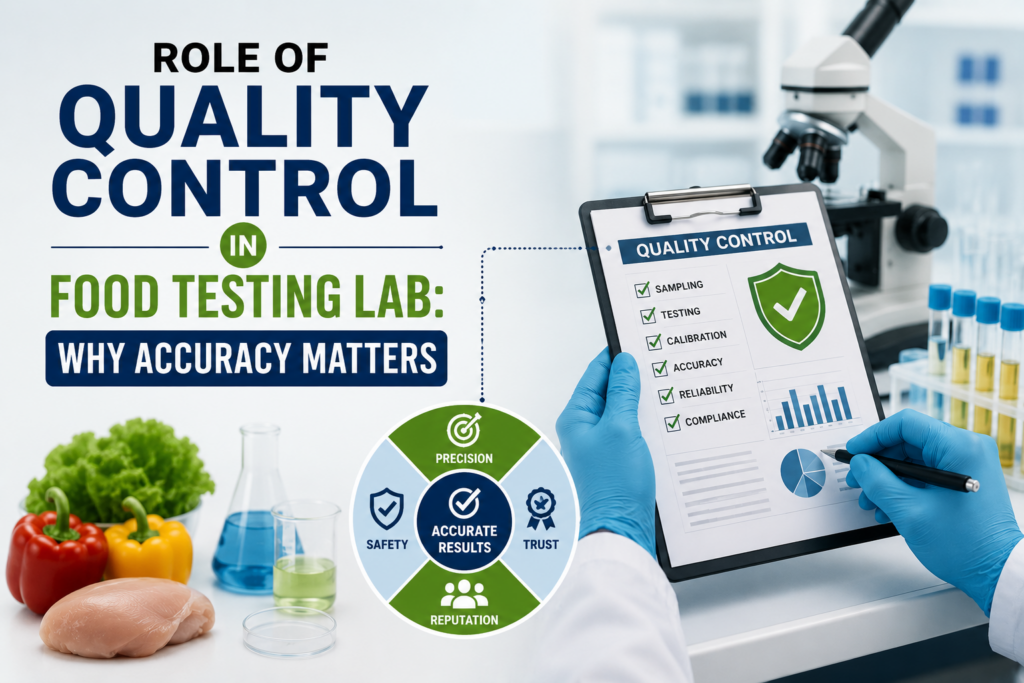
What gives value to a laboratory report? Is it the advanced equipment, the scientific methods, or the expertise of the analysts? The answer is simple: trust. Every day, businesses, industries, healthcare institutions, and regulatory authorities make critical decisions based on laboratory results. A food product may be approved for sale, a water source may be declared safe, or a manufacturing process may be validated using laboratory data. But none of these decisions would be reliable without strong quality control. Behind every accurate test result is a system designed to eliminate errors, verify procedures, and ensure consistency. Quality control is the invisible force that keeps laboratory testing reliable, helping labs deliver results that people can trust with confidence, every single time.
Quality Control at a Glance
| Quality Control Activity | Purpose | Benefit |
| Checking Testing Equipment Regularly | Ensures instruments provide accurate measurements | Reliable test results |
| Sample Verification | Confirms samples are correctly identified and handled | Prevents mix ups |
| Method Validation | Verifies testing methods are suitable and accurate | Improves result accuracy |
| Internal Quality Checks | Monitors testing performance regularly | Detects errors early |
| Staff Training | Ensures technicians follow proper procedures | Consistent testing standards |
| Documentation Review | Maintains traceability and accountability | Better compliance |
| Proficiency Testing | Compares performance with other laboratories | Confirms reliability |
| Quality Audits | Compares performance with other laboratories | Continuous improvement |
What Exactly Is Quality Control in Lab Testing?
Quality control refers to the procedures and practices used to ensure laboratory testing delivers accurate results. Think of it as a system of checks and balances that operates throughout the testing process. From receiving a sample to generating the final report, every step is monitored and verified to reduce the possibility of errors. Quality control helps labs identify potential problems before they affect results. Instead of discovering mistakes after reports are issued, labs can detect and correct issues during the testing process itself. The goal is simple: provide results that clients, regulators, and consumers can trust.
Accuracy Is the Foundation of Every Lab Test Report
Laboratory reports often influence important decisions. Businesses may decide whether to release a product, healthcare providers may evaluate safety risks, and regulatory agencies may determine compliance based on laboratory findings. When results are accurate, these decisions can be made with confidence. However, inaccurate results can lead to unnecessary product recalls, regulatory penalties, public health risks, and financial losses. This is why quality control is so important in labs. It helps make sure every test result is accurate and reflects the actual condition of the sample. By following the right testing steps every time, quality control helps laboratories produce consistent and trustworthy results.
Labs use different machines and instruments to test samples and measure important factors such as food safety, water quality, and chemical levels. Over time, these machines can lose accuracy, which may affect test results. That is why regular checking, calibration, and maintenance are important. Quality control helps ensure that all equipment is working correctly and giving accurate readings. When laboratory instruments perform properly, the results become more reliable and trustworthy.
Preventing Errors Before They Become Problems
Mistakes can happen in any environment, including laboratories. Samples may be mislabeled, procedures may be performed incorrectly, or data may be entered inaccurately. Quality control helps identify these issues before they affect final reports. Laboratories use verification procedures, duplicate testing, control samples, and routine checks to monitor performance. If something appears unusual, corrective action can be taken immediately. This proactive approach reduces errors and improves confidence in laboratory findings. The best laboratories do not simply react to mistakes. They actively work to prevent them.
Why Standardized Testing Methods Matter
Imagine two laboratories testing the same sample but using completely different procedures. The results could vary significantly. To avoid inconsistencies, laboratories follow standardized testing methods that have been scientifically validated. Quality control ensures these methods are followed correctly every time. This consistency allows results to be compared across different laboratories and testing periods. Standardized methods also help maintain compliance with regulatory requirements and industry standards. When everyone follows the same reliable procedures, confidence in laboratory results increases.
Building Trust Through Reliable Results
Trust is one of the most valuable assets a laboratory can have. Clients depend on laboratories to provide accurate information that supports important decisions. Whether the client is a food manufacturer, water treatment facility, pharmaceutical company, educational institution, or government agency, reliable results are essential. Quality control helps build this trust by demonstrating a commitment to accuracy and professionalism. When laboratories consistently produce dependable results, clients gain confidence in their services. Over time, this trust strengthens relationships and enhances credibility. Reliable testing is not just a technical requirement. It is the foundation of long term trust.
Supporting Regulatory Compliance
Many industries operate under strict regulations that require regular testing and documentation. Food businesses must comply with food safety regulations. Water providers must meet water quality standards. Manufacturers must verify product quality and environmental compliance. Quality control helps laboratories support these regulatory requirements by ensuring test results are accurate and defensible. Accurate testing reduces compliance risks and helps organizations demonstrate adherence to applicable standards. Without quality control, laboratory data may not withstand regulatory scrutiny.
Continuous Improvement Makes Labs Stronger
Quality control is not a one time activity. It is an ongoing process. The best laboratories continuously evaluate their performance and look for opportunities to improve. Regular audits, staff training, proficiency testing, and performance reviews help laboratories identify areas where processes can be strengthened. This commitment to continuous improvement ensures laboratories remain up to date with evolving technologies, regulations, and industry expectations. As testing requirements become more complex, strong quality control systems become even more important. A laboratory that constantly improves is better equipped to deliver accurate and reliable results.
Real World Example: Why Quality Control Matters
Consider a water testing laboratory responsible for monitoring a city’s drinking water supply. If testing procedures are not properly controlled, contamination could go undetected, putting thousands of people at risk. Similarly, a food testing laboratory that produces inaccurate results could allow contaminated products to reach consumers or cause safe products to be unnecessarily recalled. In both situations, quality control serves as the protective barrier that helps ensure accurate findings and informed decision making. These examples highlight why quality control is not just important for laboratories. It is important for public health, business operations, and consumer safety.
Quality Control Protects More Than Just Data
Many people think quality control is simply about numbers and reports. In reality, its impact goes much further. Accurate laboratory testing helps protect consumers, support businesses, safeguard public health, and strengthen confidence in products and services. Every reliable test result contributes to better decision making and reduced risk. Behind every accurate report is a quality control system working quietly to ensure excellence. Without quality control, laboratory testing would lose much of its value.
Conclusion: The Backbone of Reliable Lab Testing
Laboratory testing affects many parts of our daily lives, from the safety of the food we eat to the quality of the water we drink. Businesses, consumers, and regulatory authorities all depend on laboratory results to make informed decisions. But these decisions can only be trusted when the test results are accurate. That is why quality control is so important. By reducing mistakes and maintaining consistency, quality control helps labs deliver reliable results time after time. More than just a technical requirement, quality control is what gives people confidence in laboratory testing. Like many responsible testing facilities, Pro Research & Testing Laboratory follows quality control procedures throughout the testing process. These practices help maintain consistency, reduce the chances of error, and support the accuracy of laboratory results.
FAQs
1. What is quality control in laboratory testing?
Quality control refers to the procedures used to ensure laboratory tests produce accurate, reliable, and consistent results.
2. Why is quality control important in laboratories?
Quality control helps prevent errors, maintain accuracy, support compliance, and improve confidence in laboratory reports.
3. How do laboratories ensure testing accuracy?
Laboratories use equipment calibration, method validation, staff training, quality checks, and routine audits to maintain accuracy.
4. What happens if laboratory quality control is poor?
Poor quality control can lead to inaccurate results, regulatory issues, product recalls, safety risks, and loss of trust.
5. Does quality control help with accreditation?
Yes. Strong quality control systems are essential for maintaining laboratory accreditation and meeting industry standards.