
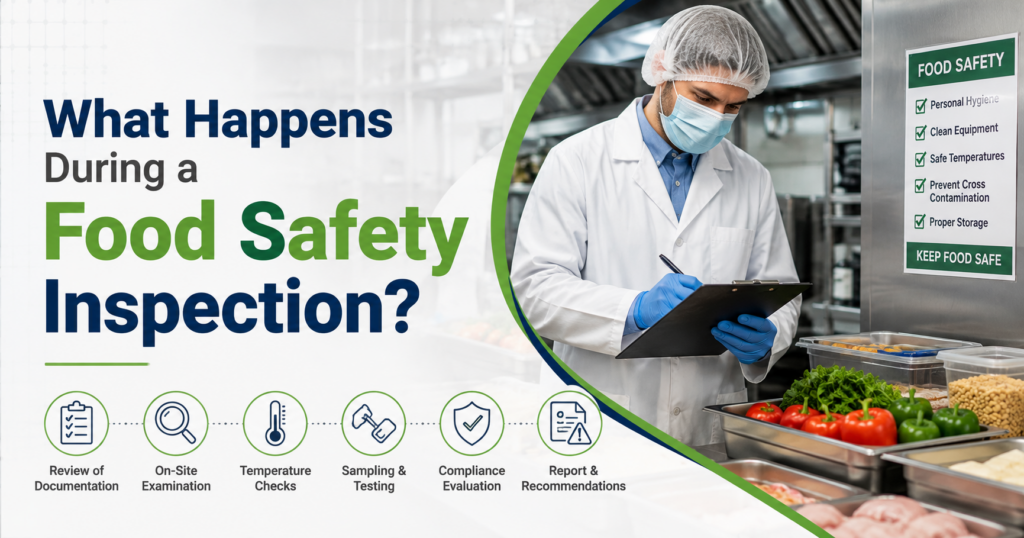
Walk into any restaurant, bakery, cloud kitchen, food factory, or catering unit, and one question matters more than the menu itself: Is the food safe to eat? A food safety inspection helps authorities answer that question by checking how businesses handle, store, prepare, and serve food. Many business owners think inspections are about catching mistakes. In reality, a good inspection is about preventing problems before they reach customers. It helps businesses protect their reputation, avoid legal trouble, and most importantly, keep people healthy. Food inspections are essential for ensuring that food businesses maintain proper hygiene, safe handling practices, and regulatory compliance. They help identify potential risks before they affect customers. According to the World Health Organization, around 866 million people worldwide become ill each year from contaminated food, highlighting the importance of regular inspections. So, what actually happens during inspection? Let’s take a closer look.
Why are food safety inspections important?
A food safety inspection is a systematic evaluation of a food business to ensure it follows food safety regulations and good hygiene practices. Inspectors verify whether the food being prepared, stored, transported, or sold is safe for consumers. They look beyond the appearance of the kitchen. Their focus is on identifying risks that may not be visible to customers. Regular inspections help businesses:
- Prevent food contamination
- Reduce foodborne illnesses
- Maintain legal compliance
- Improve customer confidence
- Protect business reputation
Think of an inspection as a health check for your food business. Finding small issues early can prevent major problems later.
What does an inspector usually check during food safety inspection?
Every food safety inspection follows a structured process. Although requirements may vary depending on the type of food business, inspectors generally examine the same core areas.
| Inspection Area | What the Inspector Looks For | Why It Matters |
| Personal hygiene | Clean uniforms, gloves, handwashing practices | Prevents contamination from food handlers |
| Food storage | Correct temperatures, proper labeling, FIFO method | Keeps food fresh and safe |
| Kitchen cleanliness | Clean surfaces, utensils, equipment, drains | Reduces bacterial growth |
| Pest control | No insects, rodents, or infestation signs | Prevents contamination |
| Documentation | Licenses, temperature logs, cleaning records | Demonstrates compliance |
| Waste management | Proper garbage disposal and segregation | Avoids cross contamination |
| Water quality | Safe water source and clean storage | Essential for food preparation |
Step by step: What happens during a food safety inspection?
1. Verification of licenses and records
The inspection usually begins with reviewing important documents. Inspectors may ask for food licenses, employee health records, cleaning schedules, pest control reports, supplier invoices, temperature monitoring logs, and food safety training records. Proper documentation shows that food safety is managed consistently instead of only during inspection days.
2. Inspection of food storage
Storage is one of the first physical areas to check. Inspectors verify whether raw and cooked foods are stored separately. They also check refrigeration temperatures, freezer conditions, expiry dates, and labeling. Food that is improperly stored can quickly become unsafe, especially during warm and humid weather.
3. Personal hygiene assessment
People handling food play a major role in food safety. Inspectors observe whether employees wash their hands correctly, wear clean uniforms, use hair restraints, avoid jewelry, and follow hygienic practices while preparing food. Even a clean kitchen cannot compensate for poor personal hygiene.
4. Kitchen and equipment inspection
The inspector carefully examines the kitchen environment. Preparation tables, cooking equipment, refrigerators, chopping boards, sinks, storage shelves, ventilation systems, and cleaning tools are all reviewed. Dirty equipment, damaged surfaces, or improper maintenance can become breeding grounds for harmful bacteria.
5. Cross contamination prevention
The biggest concern during food safety inspection is cross contamination. Inspectors check whether staff handle raw meat, seafood, vegetables, and ready-to-eat foods separately. They also verify that staff use different chopping boards, knives, and storage containers wherever necessary to prevent cross-contamination. Simple mistakes in handling can spread dangerous microorganisms from one food item to another.
6. Waste disposal and pest management
Waste attracts pests very quickly. Inspectors check whether garbage bins are covered, cleaned regularly, and emptied on time. They also look for signs of insects, rodents, droppings, damaged packaging, or entry points. An effective pest control program is an essential part of every food safety system.
7. Water and sanitation review
Staff use clean water for cooking, cleaning, washing vegetables, and maintaining hygiene. Inspectors evaluate water sources, storage tanks, plumbing, drainage systems, and sanitation procedures. Unsafe water can contaminate food at multiple stages of preparation.
Common mistakes inspectors often find
Many food businesses make similar mistakes without realizing the risks. Some of the most common observations are:
- Food stored without labels
- Expired ingredients kept with fresh stock
- Refrigerators operating above safe temperatures
- Employees skipping proper handwashing
- Dirty cutting boards and kitchen tools
- Improper cleaning schedules
- Open waste bins
- Pest activity near storage areas
- Missing food safety records
Why Seasonal Changes Can Increase Food Safety Risks
Weather conditions can have a significant impact on food safety. Higher temperatures, increased humidity, and changing environmental conditions can encourage the growth of harmful bacteria, mold, and pests if food is not handled properly. Fluctuations in storage temperatures and poor ventilation can also increase the risk of food spoilage. To minimize these risks, businesses should maintain strict cleaning schedules, regularly monitor refrigeration units, inspect incoming food supplies, and ensure proper waste management. Consistent food safety practices throughout the year help protect both customers and business reputation.
Food safety is everyone’s responsibility
Food safety is not only the responsibility of inspectors. Business owners, managers, chefs, food handlers, suppliers, and even customers all play a role in maintaining safe food practices. Training employees regularly, following standard operating procedures, maintaining documentation, and encouraging a culture of cleanliness create long term success. Remember this simple idea: Food safety is not about passing a food safety inspection. It is about protecting every customer who trusts your business.
The numbers behind food safety
Food safety is a global concern, not just a local one. The World Health Organization estimates that 866 million people fall ill every year because of contaminated food, resulting in approximately 1.52 million deaths worldwide. In the United States alone, government food safety inspectors conducted approximately 7.7 million food safety and food defense procedures across more than 7,100 regulated establishments in a recent fiscal year. These numbers highlight the scale of food safety monitoring carried out to protect consumers.
Final thoughts on food safety inspection
A food safety inspection should never be viewed as something to fear. Instead, it should be seen as an opportunity to improve operations, strengthen customer trust, and maintain high standards. Businesses that make food safety part of their daily routine usually perform well during inspections because compliance becomes a habit, not a last minute effort. At the end of the day, customers may never see your inspection report, but they will always remember safe, fresh, and hygienic food. That is the real success every food business should aim for.
FAQs
1. How often is a food safety inspection conducted?
Inspection frequency depends on the type of food business, its risk level, previous inspection results, and local food safety regulations. High risk businesses are generally inspected more frequently.
2. Can a business continue operating if violations are found?
Yes, if the violations are minor and corrected promptly. Serious violations that pose immediate health risks may result in penalties, temporary closure, or legal action depending on regulatory requirements.
3. What documents should be ready during a food safety inspection?
Businesses should keep food licenses, staff training records, cleaning schedules, temperature logs, pest control reports, supplier invoices, maintenance records, and employee health documents readily available.
4. How can businesses prepare for a food safety inspection?
Maintain daily cleaning routines, monitor food temperatures, train employees regularly, store food correctly, update records consistently, and conduct internal audits instead of waiting for official inspections.
5. Why is the rainy season considered a high risk month for food safety?
The rainy season brings higher humidity, increased bacterial growth, water contamination risks, and greater pest activity. These conditions make proper storage, hygiene, sanitation, and temperature control even more important during this season.