
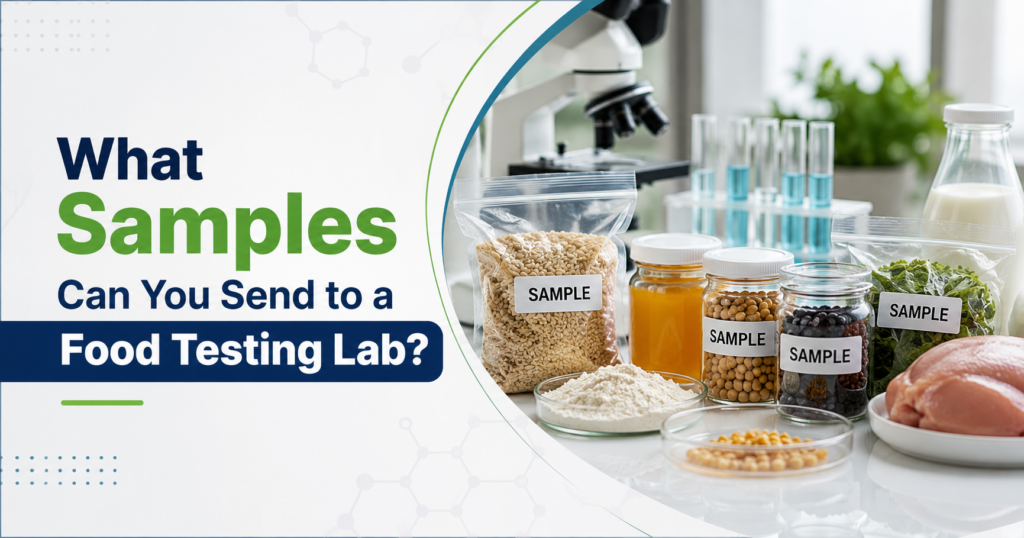
A packet of spice, a bottle of cooking oil, a glass of milk, or even a piece of paneer may look completely normal. But when you need to know what is actually inside, appearance can only tell you so much. This is where a food testing laboratory becomes important. Many people assume that laboratories only test packaged foods produced by large manufacturers. In reality, depending on the laboratory’s testing scope, many different types of food and related samples can be analysed. These may include milk, dairy products, spices, cereals, oils, sweets, beverages, fruits, vegetables, meat, fish, water, and processed foods. But sending a sample is not as simple as putting some food into a container. The right sample, quantity, packaging, storage, and testing requirements all matter. So, what exactly can you send to a food testing lab? Here is a practical guide.
Why the Type of Sample Matters
Different foods have completely different compositions and potential safety risks. Milk cannot be tested in exactly the same way as chilli powder, cooking oil, fish, or fruit juice. Each product may require different sample preparation methods and laboratory tests. The purpose of testing also matters. A business may want to verify product composition, while another may need microbiological analysis, adulteration testing, pesticide residue analysis, heavy metal testing, or nutritional analysis. FSSAI publishes separate methods of analysis covering numerous food categories and testing areas, including dairy products, oils and fats, spices, cereals, meat and fish, pesticide residues, water, microbiological examination, and more. The first step, therefore, is simple: know what you are sending and why you want it tested.
1. Milk and Dairy Products
Milk and dairy products are among the most commonly tested food samples. Depending on the laboratory’s capabilities and the purpose of analysis, samples may include liquid milk, paneer, khoa, curd, yoghurt, cheese, butter, ghee, cream, ice cream, and milk powder. Testing may examine composition, quality parameters, possible adulterants, contaminants, or microbiological conditions, depending on the product and requested analysis.
Here is an interesting example of how detailed food testing can become. In FSSAI’s National Milk Safety and Quality Survey 2018, 6,432 milk samples were collected, and the survey examined four quality parameters, 12 adulterants, and contaminants including residues from 93 antibiotics and 18 pesticides. This demonstrates that a single food category can require many different types of analysis depending on the purpose of testing. Milk may look simple in a glass, but laboratory analysis can tell a much deeper story.
2. Spices and Condiments
Spices are another major category that can be submitted for laboratory testing. Samples may include turmeric, chilli powder, coriander, cumin, black pepper, saffron, mixed masala, and other spices or condiments. Depending on the concern, testing may examine quality characteristics, composition, permitted colours, contaminants, adulteration, pesticide residues, or microbiological parameters. Powdered spices can be particularly difficult to judge by appearance alone because grinding removes many visible characteristics of the original ingredient. A bright colour or strong smell does not automatically confirm purity. When reliable confirmation is needed, targeted laboratory testing can provide much stronger evidence.
3. Edible Oils and Fats
Cooking oils and fats can also be submitted for analysis. Common samples may include mustard oil, sunflower oil, soybean oil, groundnut oil, coconut oil, ghee, butter oil, vanaspati, and other edible fats. Laboratory testing can help examine important quality and composition parameters. Depending on the purpose, testing may also investigate possible adulteration or whether a product meets relevant specifications. Oil adulteration can sometimes involve mixing a higher-value oil with another oil. Such differences may not always be easy for consumers or businesses to identify through appearance or taste. This is where scientific analysis becomes useful. What looks like one oil may require testing to understand its actual composition.
4. Cereals, Pulses and Flour
Rice, wheat, pulses, flour, corn products, cereal products, and other grains can also be tested in food laboratories. Depending on the sample, analysis may focus on moisture, foreign matter, damaged grains, quality parameters, contaminants, pesticide residues, mycotoxins, or other relevant characteristics. Storage conditions are particularly important for cereals and pulses. Excess moisture and poor storage can create quality problems and may encourage fungal growth under suitable conditions. Testing can help manufacturers, suppliers, retailers, and other food businesses better understand the condition and quality of their raw materials.
5. Fruits and Vegetables
Fresh fruits and vegetables may also be submitted to laboratories for specific testing requirements. Depending on the purpose, analysis may focus on pesticide residues, chemical contaminants, microbiological concerns, or other relevant parameters. Processed fruit and vegetable products can also be tested. These may include fruit juices, jams, sauces, pickles, purees, squashes, and other products. Fresh produce is highly perishable, which means sample collection and transportation become especially important. Delays or unsuitable temperatures can change the condition of the sample before testing begins. For perishable samples, always ask the laboratory about collection and transportation requirements beforehand.
6. Meat, Fish and Egg Products
Meat, poultry, fish, seafood, eggs, and related processed products can require detailed laboratory analysis because they are often highly perishable. Depending on the testing objective, laboratories may examine microbiological parameters, residues, contaminants, composition, or other relevant safety and quality characteristics. Temperature control is particularly important when transporting these samples. If a perishable product is kept under unsuitable conditions before reaching the laboratory, the test result may not accurately represent its original condition. FSSAI guidance specifically notes that perishable samples such as milk products, eggs, meat, fruits, and vegetables may need to be transported under chilled conditions. The journey to the laboratory matters almost as much as the analysis itself.
7. Sweets and Confectionery Products
Traditional sweets, chocolates, candies, bakery confectionery, syrups, and similar products may also be tested depending on the laboratory’s scope. Testing requirements can vary greatly because this category includes products with very different ingredients. A milk-based sweet may have different risks from a sugar confectionery product or chocolate. Analysis may focus on composition, colours, additives, microbiological quality, contaminants, or specific adulteration concerns. Businesses should explain exactly what product they are submitting and what information they need. The more clearly the testing objective is defined, the easier it becomes to select appropriate parameters.
8. Packaged and Processed Foods
Many packaged and processed foods can be sent for laboratory analysis. These may include snacks, sauces, ready-to-eat products, instant foods, bakery products, beverages, packaged meals, and other manufactured foods. Testing can support product development, quality monitoring, supplier verification, complaint investigations, and compliance activities. For new food businesses, laboratory testing may also help understand whether important product characteristics remain consistent between production batches. A professional package can make a product look ready for the market. Laboratory data can provide additional information about what is actually inside.
9. Water Used in Food Businesses
Although water is not always thought of as a food sample, it plays a major role in food production and preparation. Restaurants, hotels, bakeries, food factories, cloud kitchens, hospitals, and catering businesses may use water for cooking, washing, cleaning, beverage preparation, ice production, or processing. Depending on the purpose, water testing may examine physical, chemical, and microbiological parameters. Poor-quality water can affect more than drinking water. If contaminated water is used during food preparation or processing, it can create risks across multiple products. Testing the food while ignoring the water used to make it can leave an important gap.
10. Raw Materials and Ingredients
Food businesses do not have to wait until a product is completely manufactured before sending samples to a laboratory. Raw materials and individual ingredients can also be tested where appropriate. These may include flour, spices, oils, milk, sweeteners, additives, grains, nuts, seeds, and other ingredients used in production. Testing raw materials can help businesses identify potential problems before those ingredients enter a larger production batch. This can be particularly valuable when changing suppliers, investigating quality differences, or dealing with an ingredient that appears unusual. Finding a problem before production is usually easier than finding it after the finished product reaches customers.
Common Samples and Possible Testing Areas at A Glance
| Sample Category | Examples | Possible Testing Areas |
| Dairy | Milk, paneer, ghee | Quality, adulteration, microbiology |
| Spices | Turmeric, chilli, cumin | Adulteration, residues, contaminants |
| Oils | Mustard, sunflower, ghee | Composition and quality |
| Cereals | Rice, wheat, flour | Quality, contaminants, residues |
| Produce | Fruits and vegetables | Pesticide residues, contaminants |
| Animal products | Meat, fish, eggs | Microbiology, residues, quality |
| Processed food | Snacks, sauces, meals | Composition, safety, quality |
| Water | Drinking and process water | Chemical and microbiological quality |
The exact tests available will depend on the laboratory’s scope, equipment, methods, and the purpose for which the report is required.
How Much Sample Should You Send?
There is no single sample quantity that works for every food product. FSSAI’s general sampling guidance lists different indicative quantities for different foods. For example, sample requirements differ for cheese, spices, honey, edible oils, fruit beverages, and other products. The amount needed may also depend on how many tests you request. A small quantity may be sufficient for one analysis but inadequate for multiple chemical and microbiological tests. Always contact the laboratory before collecting or sending the sample. This simple step can prevent delays, rejection, or the need to collect another sample.
Why Proper Sample Collection Matters
Even the most advanced laboratory cannot completely correct a poorly collected sample. A sample should represent the product you actually want to evaluate. Using a dirty container, exposing the sample to contamination, mixing different batches, or storing a perishable product incorrectly can affect the reliability of results. Microbiological samples require particular care because contamination during collection can change the findings. Good laboratory testing starts before the sample enters the laboratory. It begins at the moment the sample is collected.
What Information Should You Provide?
When submitting a sample, clearly identify the product and explain why you need testing. Businesses may also need to provide information such as the product name, batch details, manufacturing information, sample condition, or specific testing requirements. Do not simply say, “Test this food for everything.” Different products require different analytical approaches. A clear testing objective helps the laboratory understand which parameters may be relevant. The better the question, the more useful the answer can become.
Final Thoughts
A reliable food testing lab can analyse far more than packaged products sitting on supermarket shelves. Depending on its scope, you may be able to submit milk, spices, oils, cereals, fruits, vegetables, meat, fish, sweets, processed foods, water, and raw ingredients. However, choosing the right sample is only the beginning. Proper collection, sufficient quantity, suitable packaging, correct transportation, and clear testing requirements all influence the value of the final report. Before sending anything, speak with the laboratory and explain what you need to know. Because a sample is not just a piece of food. When collected and tested correctly, it becomes evidence that can help you understand quality, identify problems, and make better decisions.
FAQs
1. Can I send homemade food to a testing laboratory?
Yes, depending on the laboratory’s scope and your testing requirements. Contact the laboratory first to confirm whether it can analyse the product and what sample quantity is required.
2. Can packaged food be tested without opening it?
An unopened product is often useful for maintaining sample integrity, but requirements depend on the purpose of testing. Ask the laboratory how the product should be submitted.
3. How should perishable food samples be transported?
Perishable samples may require chilled transportation and quick delivery. Always follow the laboratory’s instructions because incorrect temperatures can affect sample quality and test results.
4. Can raw ingredients be tested before food production?
Yes. Testing relevant raw materials can support supplier verification and quality control by helping identify certain problems before ingredients enter production.
5. Can Pro Research & Testing Laboratory test different food samples?
Pro Research & Testing Laboratory provides professional food testing services for various food and water samples. Contact the laboratory with your sample type and testing requirements to confirm the appropriate analysis.