
Conductivity testing in water is an analytical method used to assess the ability of water to conduct electrical current, which directly relates to the presence of dissolved ions such as salts, minerals, and inorganic substances.By measuring conductivity, we can quickly estimate the total dissolved solids (TDS) in water and detect changes that may indicate contamination, pollution, or system inefficiencies.
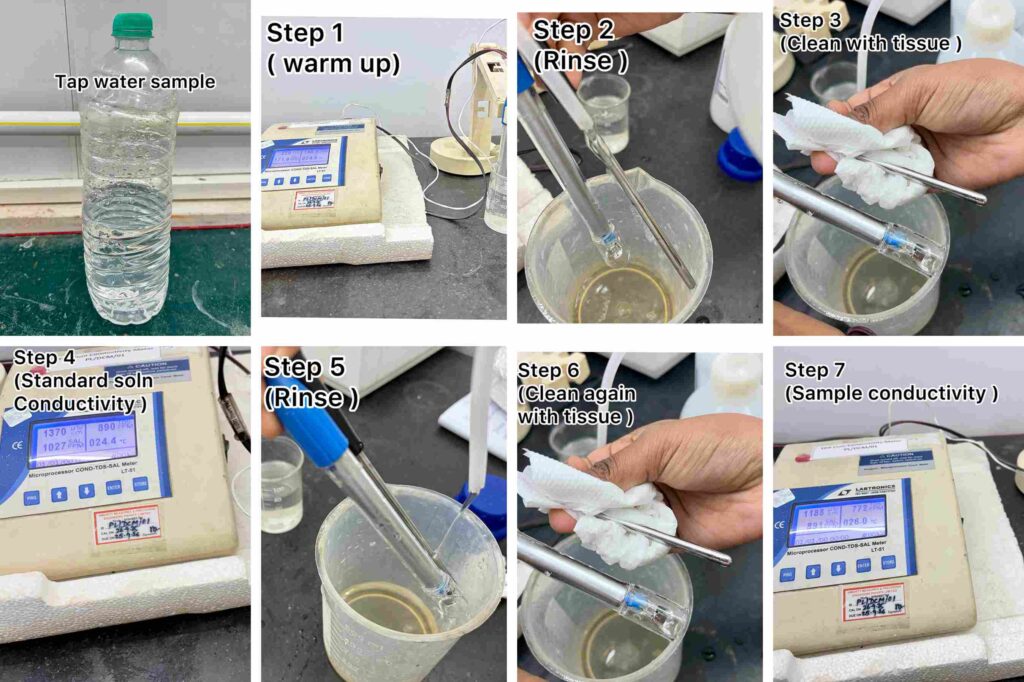
Here We take tap water to check conductivity.
Chemicals and Equipments Used in Conductivity Test of Water
Chemicals Used
- Standard Conductivity Solution (KCl solution):Used for calibration of the conductivity meter to ensure accurate readings.
- Distilled Water:Used for rinsing the probe and preparing standard solutions to avoid contamination.The conductivity of distilled water should be <5 μS/cm to prevent contamination.
Equipment Used
- Conductivity Meter: An electronic device that measures the electrical conductivity of water.
- Conductivity Probe (Electrode): Contains electrodes that pass electric current through the sample and measure resistance.
- Beaker : Holds the water sample during testing.
- Humidity meter: Measures temperature, as conductivity vary with temperature and may require correction. Room temperature should be 25°C to be maintained.
Procedure for Conductivity Testing Using a Conductivity Meter
| Preparation of Equipment | Ensure the conductivity meter is clean, properly functioning, and calibrated with standard solutions. |
| Calibration of the Meter | Calibrate the instrument using standard conductivity solutions.(1413 µs/cm) |
| Sample Collection | Collect the water sample in a clean, contamination-free container. |
| Rinsing the Probe | Rinse the electrode (probe) with distilled water to remove any impurities before testing. |
| Immersion of Probe | Immerse the probe into the water sample, ensuring it is fully submerged without touching the sides or bottom of the container. |
| Removal of Air Bubbles | Gently stir or tap the probe to remove any trapped air bubbles. |
| Measurement | Wait for the reading to stabilize, then record the conductivity value displayed on the meter. |
| Cleaning After Use | Rinse the probe again with distilled water after measurement to avoid cross-contamination |
Why Conductivity Test in Water Sample is done?
- Assessment of Water Quality:Determines the purity of water by measuring the concentration of dissolved ions such as salts and minerals.
- Detection of Contamination:Identifies the presence of pollutants like industrial waste, sewage, or agricultural runoff through changes in conductivity.
- Estimation of Total Dissolved Solids (TDS):Provides a quick and indirect method to estimate TDS levels in water.
- Industrial Process Control:Helps maintain optimal ion concentration in systems like boilers, cooling towers, and wastewater treatment plants.
- Regulatory Compliance:Ensures water meets established safety and quality standards for drinking and industrial use.
- Early Warning System:Detects sudden changes in water composition, allowing timely corrective actions.
Handling Mistakes to be Avoided during Water’s Conductivity Testing
- Using Unclean Equipment:Dirty probes or beakers can contaminate the sample and give inaccurate readings. Proper cleaning Process described previously.
- Improper Calibration of Instrument:Not calibrating the conductivity meter regularly leads to incorrect measurements.
- Temperature Negligence:Ignoring temperature effects can cause errors, as conductivity varies with temperature.
- Air Bubbles on Probe:Air bubbles trapped on the electrode surface can interfere with accurate readings.
- Incorrect Sample Handling:Touching the sample or exposing it to contaminants can alter its conductivity.
- Using Expired or Incorrect Standards:Calibration solutions that are outdated or wrong affect the reliability of results.
- Not Rinsing the Probe Between Samples:Residual solution from previous samples can contaminate the next reading.
- Improper Storage of Equipment:Storing the probe dry or incorrectly can damage it and affect performance.
- Delay in Measurement:Waiting too long after sample collection may change its properties and conductivity.
- Ignoring Instrument Maintenance:Lack of routine maintenance can reduce the accuracy and lifespan of the device.
Conclusion about Conductivity Measurement Process in Water
Conductivity testing is a simple, rapid, and effective method for evaluating water quality by measuring the presence of dissolved ions. It provides valuable information about the purity and suitability of water for drinking, industrial, and environmental purposes.Overall, conductivity testing plays a crucial role in monitoring water conditions, detecting contamination, and ensuring compliance with quality standards.By following these method, you can easily test the Conductivity of any water at laboratory & also manufacturing industry with availability of the equipments & chemicals. If you can’t understand the procedure you can check our real time photo attached with this writing or also you can reach to Pro Research & Testing Laboratory for the advance testing
Frequently Asked Questions (FAQ) – Conductivity Testing in Water
- What is conductivity in water?
It is the ability of water to conduct electricity due to the presence of dissolved ions such as salts and minerals. - Why is conductivity testing important?
It helps determine water quality, detect contamination, and ensure suitability for various uses. - What does high conductivity indicate?
High conductivity indicates a higher concentration of dissolved ions, which may suggest pollution or high mineral content. - What does low conductivity mean?
Low conductivity indicates fewer dissolved ions, suggesting purer water. - How is conductivity measured?
It is measured using a conductivity meter that passes an electric current through the water and records the result. - What units are used for conductivity?
Common units include microsiemens per centimeter (µS/cm) and millisiemens per centimeter (mS/cm). - Does temperature affect conductivity?
Yes, conductivity increases with temperature, so measurements are often temperature-compensated. - How often should the meter be calibrated?
It should be calibrated regularly, preferably before each use.
How We Verified This Testing/Research Procedure :
This testing is done under qualified analysts in our lab.Continually monitored by expertise.Repeatedly testing is always done to get accurate result.

Written by
Anwesha Das (M.Sc Microbiology,BU)
Designation – Microbiologist
Reviewed by
Riya Ghosh (M.Sc. Food Technology, MAKAUT)
Designation – Chemist
Verified By
Dr. Jyotirmoy Kumar Dey (Phd,Chemistry)
Designation – Senior/Chief Chemist
Experience – 25 Years +