Author name: Pro Research Team

Testing process for determination Of Total Kjeldahl Nitrogen in Wastewater Sample in our lab

Total Kjeldahl Nitrogen (TKN) testing is a analytical method used to determine the concentration of organic nitrogen and ammonia in wastewater. It plays a crucial role in assessing water quality, particularly in environmental monitoring and wastewater treatment processes. Chemical and Apparatus Used In Determination Of Total Kjeldahl Nitrogen in Wastewater Apparatus Used Chemicals Used Testing […]

Testing process for determination Of Total Kjeldahl Nitrogen in Wastewater Sample in our lab Read More »

Testing Procedure of Carbon Residue of Engine Oil in our lab

Carbon residue is a major analytical parameter which used to determine the tendency of engine oil to form carbon deposit in engine oil under high pressure condition. Carbon residue of oil is a carbonaceous residue which remains after evaporation of a petroleum product. This property is crucial for identifying the quality and purity of base

Testing Procedure of Carbon Residue of Engine Oil in our lab Read More »

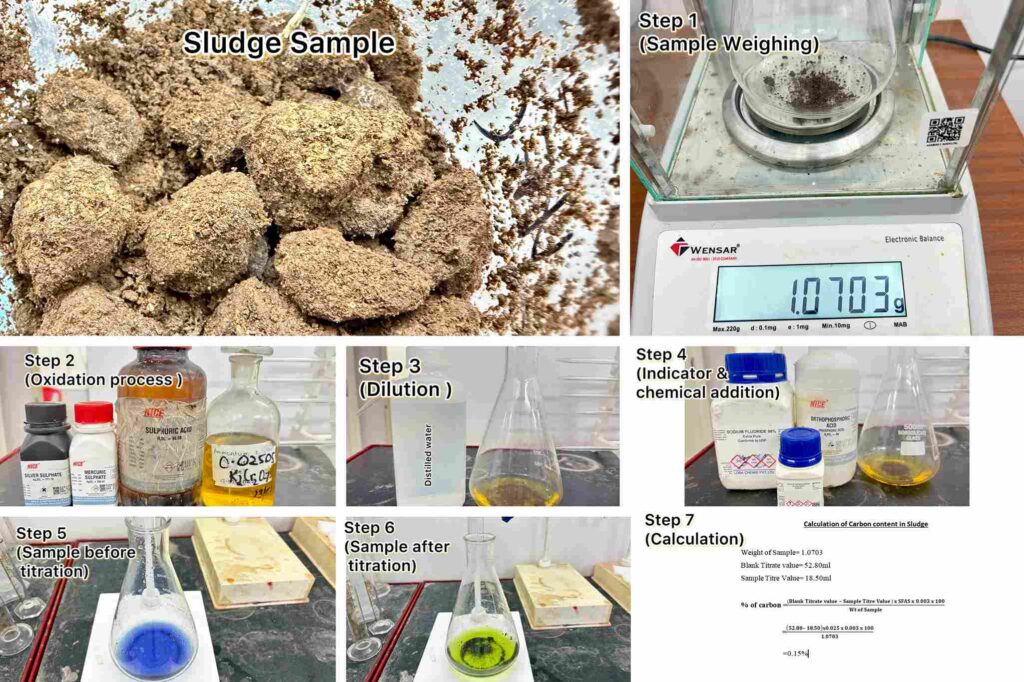
Testing Procedure Of Total Organic Carbon Detection for Soil Sample In Our Lab

Carbon is a major component of soil organic matter, which consists of decomposing plant and animal tissue. Carbon helps the soil store and release essential plant nutrients such as nitrogen, phosphorus, and sulfur. Detecting Total Organic Carbon is crucial for assessing soil fertility and structural stability as it directly impacts nutrient retention, water holding capacity, and

Testing Procedure Of Total Organic Carbon Detection for Soil Sample In Our Lab Read More »

Sodium Chloride (NaCl) detection Process in Milk and Milk products in our lab

High-quality protein, vitamins, and calcium, all essential for the development of health,are found in milk and milk products, which are extremely nutritious. Adulteration of milk is a major problem in modern times.When chemicals like sodium chloride (NaCl) are added to milk to cover up the dilution of water in the milk, the quality of milk

Sodium Chloride (NaCl) detection Process in Milk and Milk products in our lab Read More »

Silica Testing Process of Water Sample in our Lab

Silica (SiO₂) is a common constituent of natural waters. It exists in dissolved, colloidal, and particulate forms. Determining silica concentration is important in water analysis, especially for boiler feed water, cooling systems, and industrial processes, where excessive silica can form hard scales on equipment surfaces and reduce efficiency. Here we take Surface Water Sample to

Silica Testing Process of Water Sample in our Lab Read More »

Conductivity Testing Process in Water Sample in our Lab

Conductivity testing in water is an analytical method used to assess the ability of water to conduct electrical current, which directly relates to the presence of dissolved ions such as salts, minerals, and inorganic substances.By measuring conductivity, we can quickly estimate the total dissolved solids (TDS) in water and detect changes that may indicate contamination,

Conductivity Testing Process in Water Sample in our Lab Read More »

Curcumin Content Determination Process of Turmeric in our lab

Curcumin testing of turmeric is an essential analytical process used to determine the amount of curcumin, the primary bioactive compound responsible for responsible for its distinct yellow-orange color. This testing plays a crucial role in evaluating the quality, purity, and potency of turmeric samples. We have taken turmeric powder for this test. Chemical & Equipments

Curcumin Content Determination Process of Turmeric in our lab Read More »