Blog

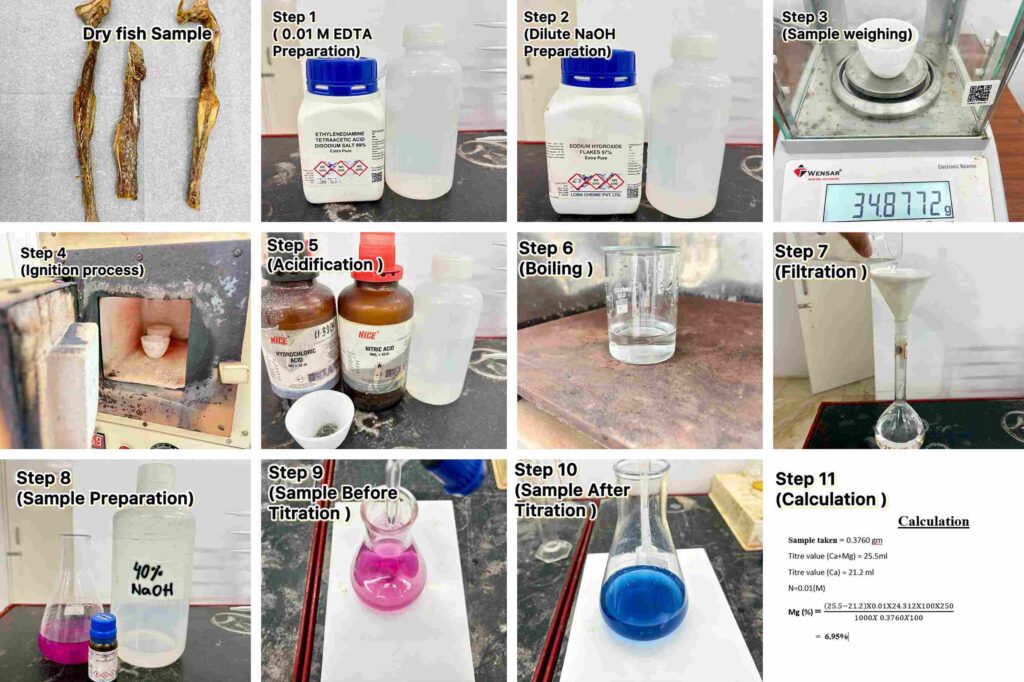
Magnesium Testing Process Of Food Sample in our lab

Magnesium is an essential mineral found naturally in fish and plays an important role in human nutrition. Determining the magnesium content of dried fish helps evaluate its nutritional value, ensure product quality, and verify compliance with food quality standards. We have taken dry fish(Bombay Duck/Lote Fish) sample for this test. Glassware used in Magnesium Testing […]

Magnesium Testing Process Of Food Sample in our lab Read More »

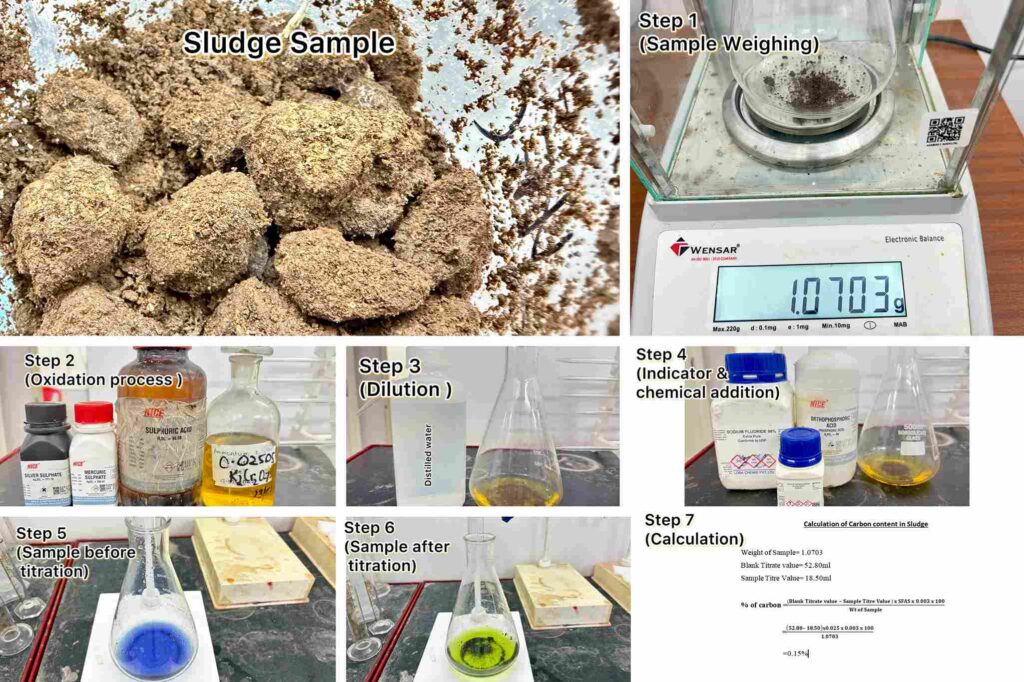
Testing Process of Carbon Content of Bio-Waste( Sludge) Product in our lab

Biowaste (sludge) is rich in organic matter and contains a significant amount of carbon. This carbon comes from decomposed biological materials such as food waste, plant residues, and wastewater solids. Measuring the carbon content of sludge is important for assessing its potential for composting, biogas production etc. Here we follow the Titrimetric Method to determine

Testing Process of Carbon Content of Bio-Waste( Sludge) Product in our lab Read More »

Procedure of Fungal Staining followed in our lab

Fungal staining is a laboratory technique in microbiology to detect and identify fungi isolated from food or others samples.These methods make transparent fungal structures visible under a microscope,like hyphae, conidia, and spores. There are several staining techniques vary based on the sample type and purpose.We followed Lactophenol Cotton Blue(LPCB) staining procedure in our lab. Here we

Procedure of Fungal Staining followed in our lab Read More »

Testing Process of Sand Content for Earthing Powder in our lab

The sand content test of Earthing powder/Bentonite Powder/Bentonite Clay is carried out to find the amount of sand present in the material. Earthing powder is used in grounding systems to improve electrical insulation, earth neutralisation and reduce earth resistance. A good-quality earthing powder should contain only a limited amount of sand because too much sand

Testing Process of Sand Content for Earthing Powder in our lab Read More »

Testing Procedure for Zinc Determination in Zinc Alloy Sample in our lab

Zinc testing in zinc alloys is an important quality-control process used to determine the zinc content and verify the alloy’s chemical composition. Accurate testing ensures that the alloy meets required specifications. Proper testing contributes to improved product quality, process control, and overall material performance. Chemicals & Equipments used during Zinc in Zinc Alloy Testing: Chemical

Testing Procedure for Zinc Determination in Zinc Alloy Sample in our lab Read More »

Procedure of Gram Staining followed in our Lab

Gram staining is the differential staining technique in microbiology. It classifies bacteria into two major groups Gram-positive and Gram-negative, based on the thickness of their peptidoglycan cell wall. In the gram staining procedure , we followed four distinct steps that are Primary Stain (Crystal Violet), Mordant (Gram’s Iodine),Decolorization (Acetone) & Counterstain (Safranin). Here we are doing

Procedure of Gram Staining followed in our Lab Read More »

Testing process to determine Nickel Content In Water Sample in our Lab

Nickel content determination in water is essential to protect health, prevent environmental degradation and ensure industrial compliance.Nickel is a non-biodegradable heavy metal that is highly toxic.If high levels of nickel are present in water ,that need accurate monitoring. To determinate the nickel content in water , we followed Dimethylglyoxime Method in our laboratory .Here we

Testing process to determine Nickel Content In Water Sample in our Lab Read More »

Testing Procedure for Detection of Ammonium Sulphate in Milk & Milk Products

Ammonium sulfate is a highly water-soluble, odorless inorganic salt. Milk with added water has lower density,so ammonium sulphate addition can increases the density,showing the milk is thick and pure.This testing helps to ensures product quality,detect adulteration & maintain safety as per regulations. In our lab ,We followed the chemical colour test for detection of Ammonium

Testing Procedure for Detection of Ammonium Sulphate in Milk & Milk Products Read More »

How Lab Testing Helps Businesses Avoid Legal Penalties

How Lab Testing Helps Businesses Avoid Legal Penalties

Running a business today is not only about making good products or offering fast service. It is also about following rules. Governments and regulatory bodies across industries now expect businesses to prove that their products, materials, and processes are safe, accurate, and compliant. This is where laboratory testing becomes extremely important. From food manufacturing and

How Lab Testing Helps Businesses Avoid Legal Penalties Read More »