
Microbiology Laboratory Section
| Instruments Name |
| Hot Air Oven |
| Autoclave |
| Laminar Air Flow |
| Biosafety Cabinet |
Lab ID -PL/HAO/02
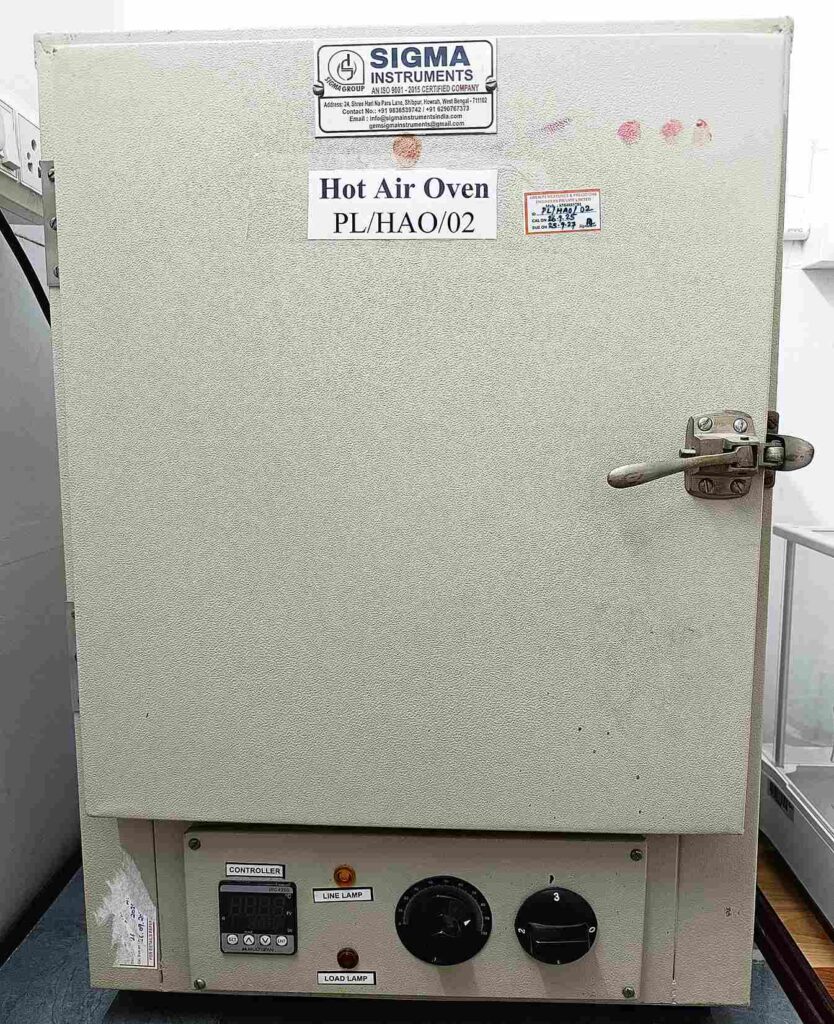
Switch on the equipment & set the desired temperature by thermostat key.
│
▼
Keep the sample until desired test result.
│
▼
After using switch off the equipment.
Precaution
- Do not overload the oven; allow proper air circulation inside.
- Use heat-resistant gloves or tongs when placing or removing materials.
- Avoid opening the door frequently to prevent temperature fluctuations.
- Repeat the calibration process or inform the technical manager if variation exceed the ±5% of expected value.
Autoclave
Model Name –
Lab ID – PL/AC/DTC/01
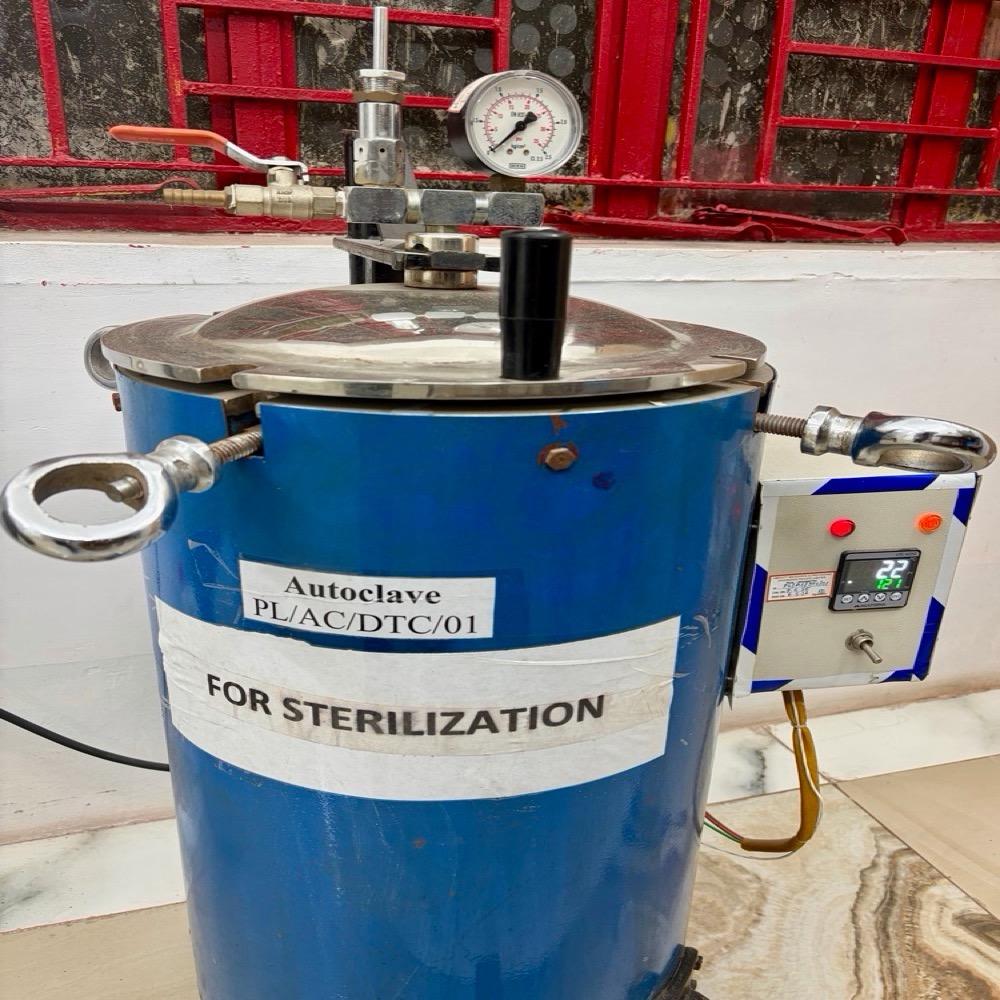
Fill the autoclave (PL/AC/DTC/01) with distilled water upto 5 cm above the coil.
│
▼
Use only autoclave-compatible materials in autoclave safe bags.
│
▼
Place items to allow free steam circulation
│
▼
Add chemical indicator.
│
▼
Seal the autoclave lid tightly. Start the cycle i.e.121°C ,15 psi for 15 mins.
│
▼
After reaching the temp and pressure, turn off the autoclave. Let the pressure come to 0 .
│
▼
Release the pressure by opening the safety valve. Open the lid .
│
▼
Remove items using heat proof gloves.
│
▼
Check the chemical indicator for positive result and record the data. In case of failed autoclave QC, discard the media and perform RCA and CA, till then label the autoclave as out of order and use the alternate autoclave (PL/AC/DTC/02).
Precautions
- Operate the autoclave only after proper training.
- Never overload the autoclave; allow free steam circulation.
- Use only autoclave-safe containers and materials.
- Do not seal bags or containers tightly.
- Ensure the correct cycle (temperature, pressure, time) is selected.
- Check water level, gasket, and chamber cleanliness before use.
- Never open the door when the chamber is pressurized.
- After cycle completion, allow pressure to reach zero.
- Open the door slowly and slightly to release steam.
- Stand back to avoid steam burns.
- Handle hot items with heat-resistant gloves.
- Do not touch hot surfaces inside the chamber.
- Verify sterilization using steam indicator tape.
- After autoclave discard/store as required.
- Inform technical manager immediately if any problem occurs during handling.
Laminar Air Flow
Model Name -UR Biococtin
Lab ID – PL/MB/LAF/01
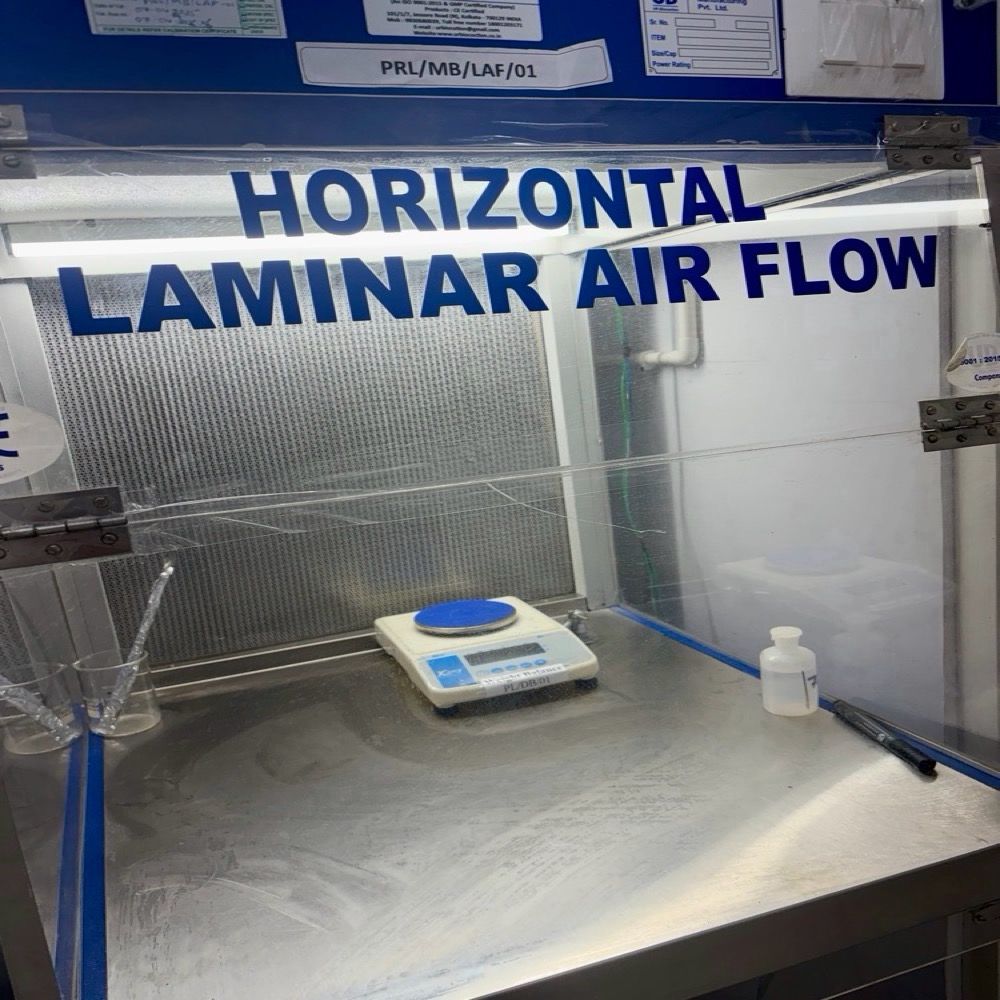
Wipe the chamber (work surface, side walls, and glass) with 70% isopropyl alcohol and tissue.
│
▼
Switch ON UV light for 15–30 minutes
│
▼
Switch OFF UV light before operating
│
▼
Turn on blower and fluorescent light. Allow blower to run for 10–15 minutes
│
▼
Wear proper PPE while handling.
│
▼
Place only necessary materials inside the cabinet. Arrange items from clean to dirty direction
│
▼
Perform any work, keeping the blower on. After completion of work, wipe the worktop with 70% alcohol & again turn on the UV for 15 minutes.
Precaution-
- Wear appropriate PPE: apron, gloves, mask, hair cover/cap, shoe cover.
- Clean the work surface and walls with 70% alcohol before and after use.
- Do not switch on UV light while working inside the cabinet.
- Place only required materials inside the LAF.
- Avoid rapid movements that disturb airflow.
- Do not talk, cough, or sneeze while working.
- Do not overcrowd the cabinet.
- Use only sterile tools and materials.
- Switch on UV light only after completion of work.
- Inform technical manager immediately if any problem occurs during handling.
Biosafety Cabinet
Model Name –UR Biococtin
Lab ID – PL/MB/BSC/01
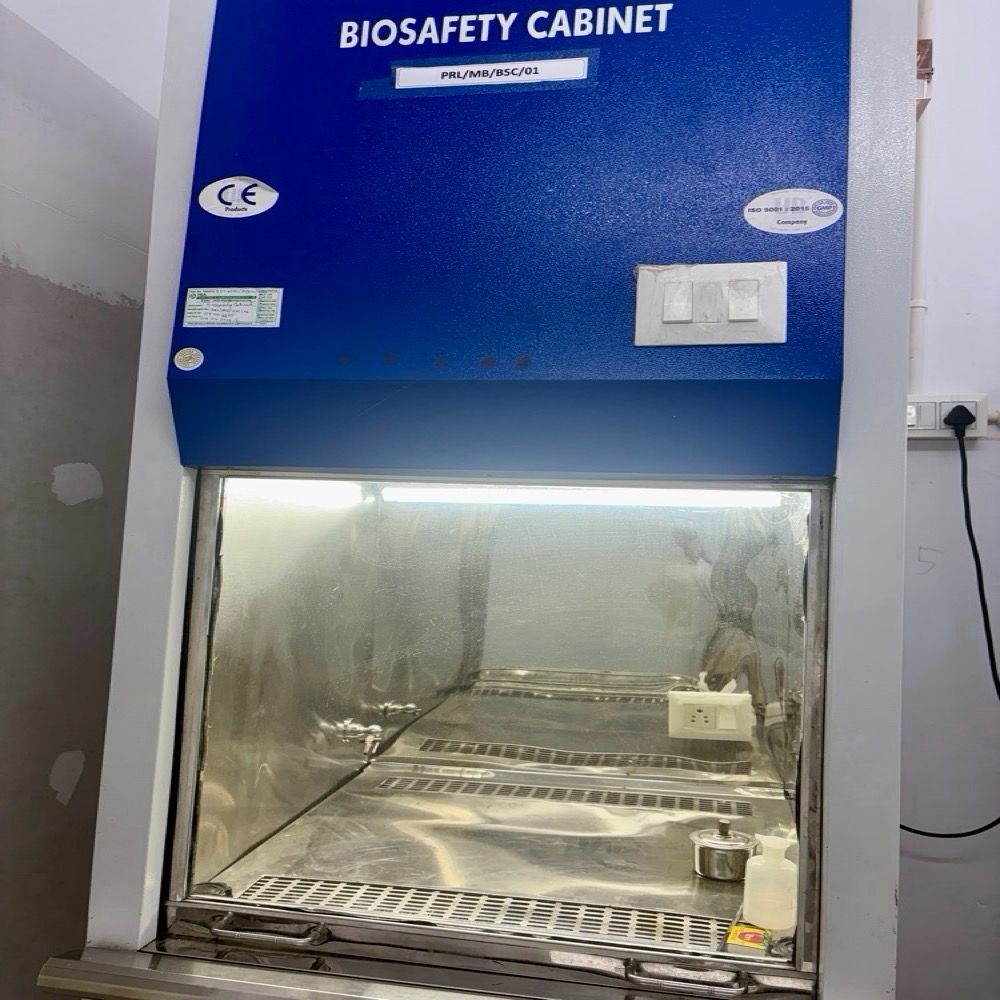
Wipe the chamber (work surface, side walls, and glass) with 70% isopropyl alcohol and tissue.
│
▼
Switch ON UV light for 15–30 minutes
│
▼
Switch OFF UV light before operating
│
▼
Turn on blower and fluorescent light. Allow blower to run for 10–15 minutes
│
▼
Wear proper PPE while handling.
│
▼
Place only necessary materials inside the cabinet. Arrange items from clean to dirty direction. Just put hands inside the chamber without opening the whole lid.
│
▼
Handle cultures and samples carefully to avoid aerosols
Precaution
- Always wear appropriate PPE (lab coat, gloves, mask,cap).
- Wash hands & sanitize before and after handling biological materials.
- Never eat, drink, smoke, or apply cosmetics in the laboratory.
- Never mouth pipette; use mechanical pipetting devices.
- Avoid splashes, spills, and aerosol formation.
- Dispose sharps in puncture-proof containers.
- Maintain good housekeeping and lab hygiene.
- Inform technical manager immediately if any problem occurs during handling.