
pH testing of water samples is a procedure used to determine the acidity or alkalinity of water. The term pH refers to the “potential of hydrogen” and is measured on a scale ranging from 0 to 14, where a value of 7 indicates neutrality, values below 7 indicate acidic conditions, and values above 7 indicate alkaline conditions. Monitoring pH is essential because it directly affects chemical reactions, biological processes, and the overall quality of water.
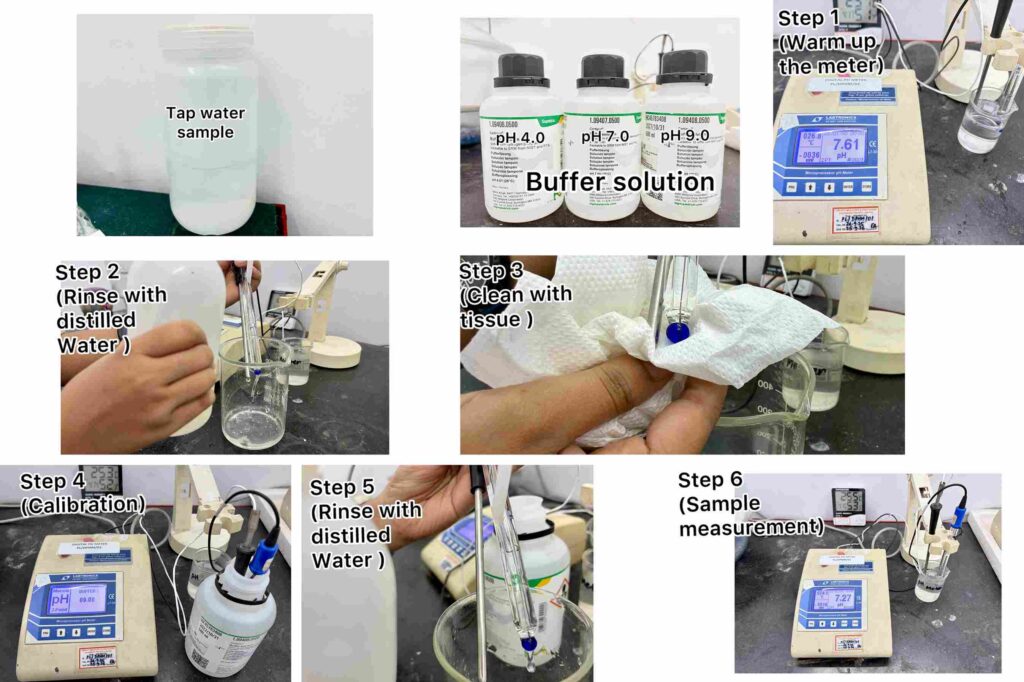
Various methods are used to measure pH, including pH meters, indicator solutions, and pH paper. Among these, digital pH meters are widely preferred for their accuracy and reliability.Here we test the pH in Tap Water Sample.
Chemicals and Instruments Used in pH Test of Water
Chemicals Used
- Standard Buffer Solutions (pH 4, 7, 9):These are standard solutions with known pH values used to calibrate the pH meter. They resist changes in pH and ensure accurate measurement by setting reference points.
- Distilled Water: Used for rinsing the electrode to avoid contamination. It does not affect the pH due to the absence of impurities.The conductivity of distilled water should be <5 μS/cm to prevent contamination.
Instruments Used
- pH Meter: A pH meter measures the hydrogen ion concentration using an electrode. It works on the principle of electrochemical potential difference. The glass electrode develops a voltage depending on the pH of the solution, and this voltage is converted into a pH value.
- Glass Electrode:It is sensitive to hydrogen ions (H⁺). When immersed in a solution, it generates an electrical potential proportional to the pH of that solution.
- Beaker: Holds the water sample without reacting chemically, ensuring that the sample remains unchanged.
- Humidity meter: Measures temperature, as pH values vary with temperature and may require correction.
Procedure for Testing of pH Using a Digital pH Meter
| Preparation of Equipment | Switch on the digital pH meter and ensure it is clean and in proper working condition. |
| Calibration of the pH Meter | Calibrate the meter using standard buffer solutions (commonly pH 4, 7, and 9). Rinse the electrode with distilled water before and after each calibration step. Adjust the meter until it shows the correct value for each buffer solution. |
| Rinsing the Electrode | Wash the electrode with distilled water to remove any residual buffer solution and gently wipe with a soft tissue (do not rub). |
| Sample Preparation | Take the water sample in a clean beaker. Ensure the sample is well-mixed and free from large particles. |
| Measurement | Immerse the electrode into the water sample. Make sure the electrode is fully dipped and no air bubbles are present. Wait for the reading to stabilize on the display. |
| Recording the Result | Note the pH value displayed on the meter. |
| Rinsing After Use | Remove the electrode and rinse it again with distilled water to avoid contamination. |
| Proper Storage | Store the electrode in the appropriate storage solution to keep it moist and maintain accuracy. |
Importance of pH Testing in Water Sample
- Determine Acidity or Alkalinity:To measure whether the water is acidic, neutral, or alkaline.
- Ensure Safe Drinking Water:To check if the water meets safe pH standards for human consumption.
- Protect Aquatic Life:To maintain a suitable pH range for the survival of fish and other aquatic organisms.
- Monitor Water Quality:To assess overall water quality and detect possible contamination.
- Support Agricultural Use:To ensure water is suitable for irrigation and does not harm soil or crops.
- Aid in Water Treatment Processes:To control and adjust pH levels during purification and treatment.
- Prevent Corrosion and Scaling:To protect pipes, equipment, and infrastructure from damage caused by improper pH levels.
Handling Mistakes to Avoid During pH Test in Water Sample
- Using Dirty or Contaminated Equipment: Always use clean containers, electrodes, and glassware to avoid inaccurate results.Proper cleaning Process described previously.
- Not Calibrating the pH Meter:Failing to calibrate the pH meter with standard buffer solutions can lead to incorrect readings.
- Touching the Electrode with Hands:Oils or dirt from fingers can contaminate the electrode and affect accuracy.
- Allowing Air Bubbles on the Electrode:Air bubbles can interfere with proper contact between the electrode and the sample.
- Not Rinsing the Electrode Between Samples:Residual solution from previous samples can contaminate the next reading.
- Measuring at Incorrect Temperature:pH readings can change with temperature; measurements should be taken at a controlled or noted temperature.
- Leaving the Electrode Dry:The electrode should always be kept moist in storage solution; a dry electrode gives unreliable results.
- Improper Sample Collection:Collecting water in unclean or inappropriate containers can alter the pH.
- Not Stirring the Sample Properly:Uneven mixing may lead to inconsistent readings.
- Delay in Testing After Collection:pH can change over time due to exposure to air; testing should be done promptly.
Conclusion about Testing of pH in Water
pH testing of a water sample using a digital pH meter is a simple, accurate, and reliable method to determine the acidity or alkalinity of water. Following proper procedures, calibration, and handling techniques, precise results can be obtained. The test plays a vital role in assessing water quality for drinking, agriculture, industrial use, and environmental protection.By following these method, you can easily test the pH of any water at laboratory & also manufacturing industry with availability of the equipments & chemicals. If you can’t understand the procedure you can check our real time photo attached with this writing or also you can reach to Pro Research & Testing Laboratory for the advance testing
Frequently Asked Questions (FAQ) – pH Testing of Water
1. What is pH?
pH is a measure of how acidic or alkaline a water sample is, on a scale of 0 to 14.
2. What is the normal pH of drinking water?
The acceptable pH range for drinking water is usually between 6.5 and 8.5.
3. Why is pH testing important?
It helps determine water quality, safety for drinking, and suitability for various uses.
4. Which instrument is commonly used for pH testing?
A digital pH meter is commonly used for accurate measurement.
5. Why is calibration necessary?
Calibration ensures that the pH meter gives correct and reliable readings.
6. Can pH change after sample collection?
Yes, pH can change due to exposure to air, temperature changes, or contamination.
7. What happens if the pH is too low or too high?
Extreme pH levels can harm human health, damage pipes, and affect aquatic life.
8. How often should the electrode be cleaned?
The electrode should be cleaned and rinsed before and after each use.
9. What are buffer solutions used for?
They are used to calibrate the pH meter and maintain accuracy.
10. Is digital pH meter more accurate than indicator paper?
Yes, a digital pH meter provides more precise and reliable results than pH paper.
How We Verified This Testing/Research Procedure :
This testing is done under qualified analysts in our lab.Continually monitored by expertise.Repeatedly testing is always done to get accurate result.
Written by
Anwesha Das (M.Sc Microbiology,BU)
Designation – Microbiologist

Reviewed by
Riya Ghosh (M.Sc. Food Technology, MAKAUT)
Designation – Chemist
Verified By
Dr. Jyotirmoy Kumar Dey (Phd,Chemistry)
Designation – Senior/Chief Chemist
Experience – 25 Years +