
Carbon residue is a major analytical parameter which used to determine the tendency of engine oil to form carbon deposit in engine oil under high pressure condition. Carbon residue of oil is a carbonaceous residue which remains after evaporation of a petroleum product. This property is crucial for identifying the quality and purity of base oil and this also highlights the presence of non volatile components. High carbon residue oil also lead to the formation of sludge and coke which damage the internal part of engine.
Chemicals and apparatus required in Carbon Residue of Oil
Apparatus & Instruments
- G-3 crucible – Filtration apparatus which used for medium-fine filtration and gravimetric analysis.
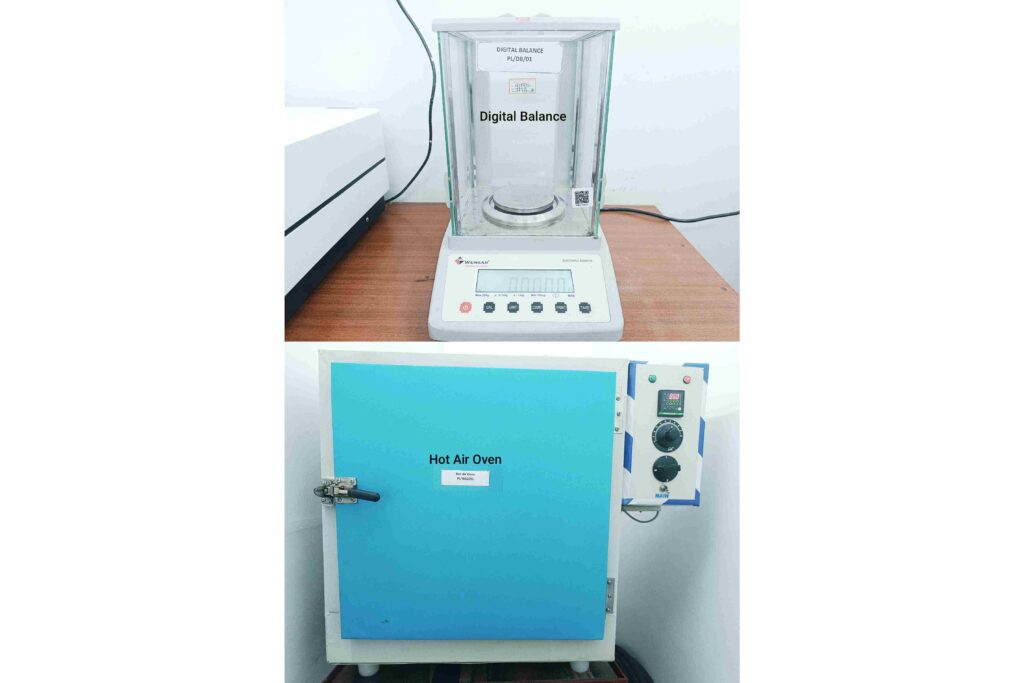
- Hot air oven(100°C)– Used for drying.
- Flat Bottom Flask – To hold the sample
- Weigh balance(4-digit)– Helps to measure proper weight.
- Condenser– Acts as a heat exchanger that converts gaseous substances into liquid by cooling them.
- TSS Flask– Used for the rapid separation of solid particles from liquid samples.
- Desiccator-Maintains a moisture-free environment to cool and stabilize the crucible weight.
Chemical
- Denatured alcohol- Denatured alcohol is used as the solvent to dissolve and return volatile components to the flask for consistent sample concentration.
Method followed to test Carbon Residue of Oil
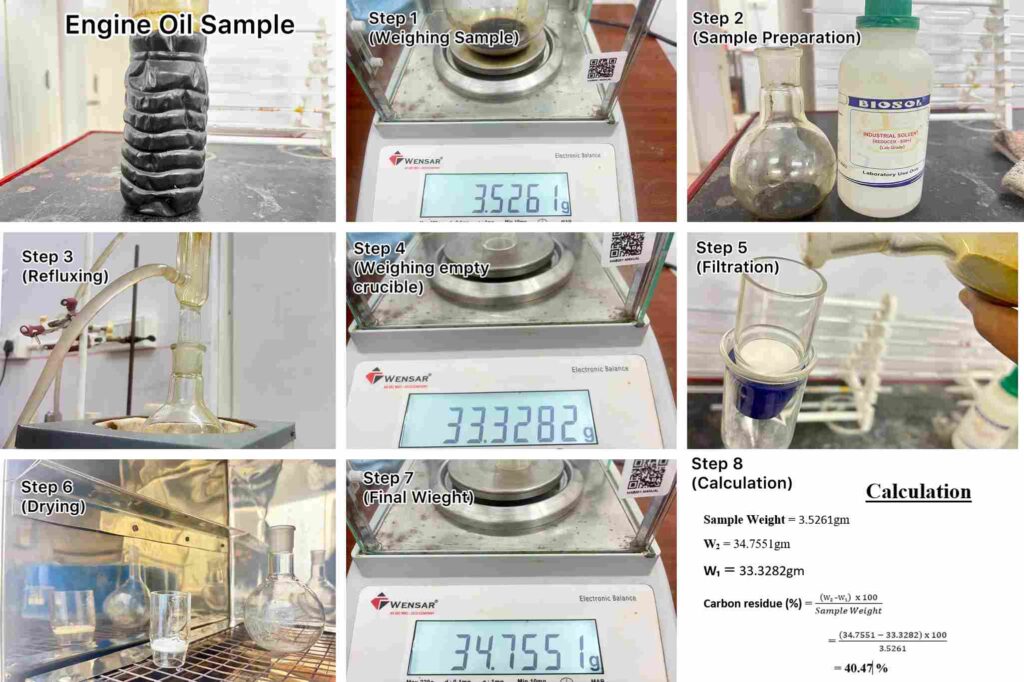
- Take approx 5 gm of sample.
- Add 100 ml denatured alcohol and mixed it properly.
- Then reflux this solution for 1 hour.
- After that filter this solution in hot condition through G3 crucible.
- Then dry the crucible in 100°C in hot air oven,till constant weight.
Calculation of Carbon Residue of Engine Oil–
Carbon residue(%)= 100 (W₂ –W₁)/ W
(W₂ –W₁)= mass in mg of non-filterable residue
W = sample taken
Importance of testing Carbon Residue of Oil
- Measures how much carbon residue remains after oil is exposed to high temperatures
- Indicates how well the oil resists breakdown under extreme heat
- Lower residue means fewer deposits, leading to smoother operation and better efficiency.
- Reduces risks like wear, overheating, and engine knocking caused by deposits
- Oils with low carbon residue can allow longer service intervals
Handling mistakes should avoided during the analysing Carbon Residue of Oil
- Touching the crucible- Fingerprints and oily hands add extra weight which leads to inaccurate result..
- Wrong heating time- Not taking weight until constant,may lead to wrong result.
- Use of proper sample- Contamination gets into the oil before the test then it leads to inaccurate result.
- Incorrect oil weight – Weigh proper sample to get the right percentage.
- Use clean and dry glassware — Moisture or residue affects reagent strength.Avoid contamination of glassware and samples. Proper cleaning Process described previously.
Conclusion of testing Carbon Residue of Oil
Carbon residue test helps to evaluate the thermal stability and quality of engine oil. A low percentage of residue indicates the oil is high quality and stays clean under heat. By following these method, you can easily test the carbon residue of engine oil of any testing laboratory & also manufacturing industry with availability of the equipments. If you can’t understand the procedure you can check our real time photo attached with this writing or also you can reach to Pro Research & Testing Laboratory for the advance testing.
FAQ – Determination of Carbon Residue of Oil
- Why do we need to avoid to touch crucible?
Fingerprints and oily hands also add extra weight which leads to inaccurate result - What is carbon residue?
Carbon residue is the amount of solid carbonaceous material left after an oil sample is heated in the absence of air. It reflects the oil’s tendency to form coke or deposits at high temperatures.. - What is the effect of high residue?
High residue causes sludge, hard crusts which leads to engine failure. - What is the function of denatured alcohol?
Denatured alcohol usedas the solvent to dissolve and return volatile components to the flask for consistent sample concentration. - How this test minimises the costs?
This test helps to minimise the cost by predicting deposit levels and protect from expensive engine damage and breakdown.
How We Verified This Testing/Research Procedure :
This testing procedure is done under qualified analyst .Continually monitored by expertise.Repeatedly testing is always done to get accurate result.

Written by
Debapriya Bhattacharya (M.Sc Biotechnology,MAKAUT)
Designation – Junior chemist
Reviewed by
Riya Ghosh (M.Sc. Food Technology, MAKAUT)
Designation – Chemist
Verified By
Dr. Jyotirmoy Kumar Dey (Phd,Chemistry)
Designation – Senior/Chief Chemist
Experience – 25 Years +