Author name: Pro Research Team

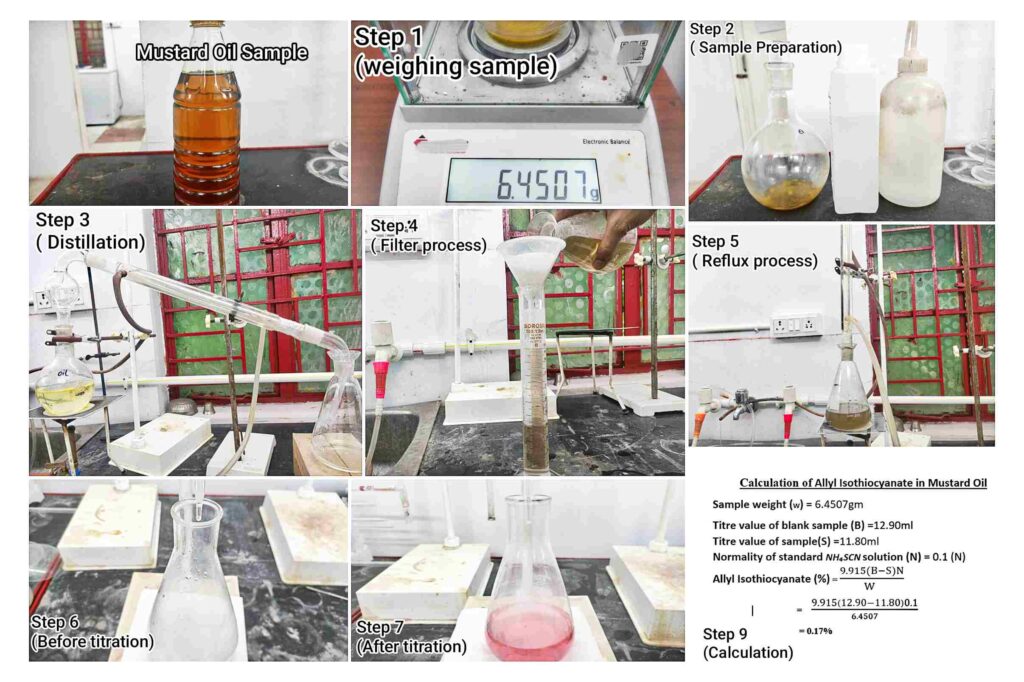
Allyl Isothiocyanate Testing Procedure in Mustard Oil in our Lab

Allyl isothiocyanate (AITC) is a naturally occurring compound responsible for the strong flavor and aroma of mustard oil. Testing for AITC in mustard oil is crucial to ensure product authenticity, quality, and safety. This test helps differentiate mustard oil from adulterated or synthetic oils and determines compliance with food safety standards. Accurate estimation of AITC

Allyl Isothiocyanate Testing Procedure in Mustard Oil in our Lab Read More »

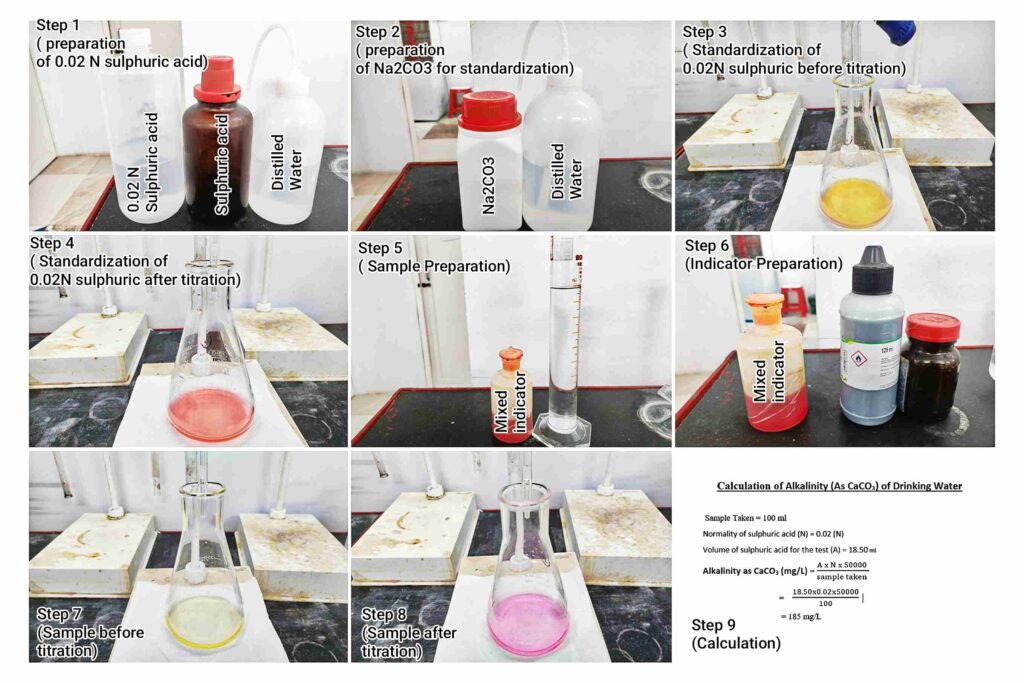
Alkalinity (as CaCO3) Testing Procedure in Water Sample in our Lab

Alkalinity in water is due to the presence of bicarbonate (HCO₃⁻), carbonate (CO₃²⁻) ions. When titrated with a standard acid, these ions are neutralized. The mixed indicator changes color, marking the endpoint of titration where total alkalinity is measured.In laboratory testing, alkalinity is accurately determined through acid-base titration using standardized 0.02 N sulfuric acid and

Alkalinity (as CaCO3) Testing Procedure in Water Sample in our Lab Read More »

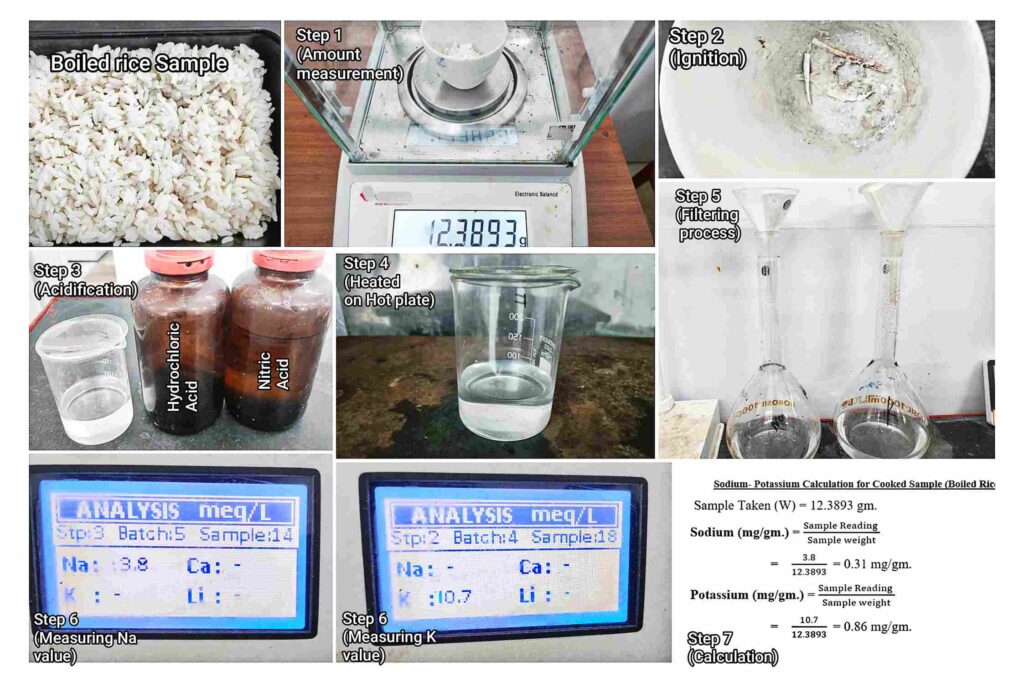
Sodium-Potassium Testing Process in Cooked Food (Boiled Rice) in our Lab

Sodium and potassium are essential electrolytes naturally present in many foods, including cooked meals. Sodium, often added as salt during cooking, helps regulate fluid balance and nerve function. Potassium supports heart health, muscle function, and maintains blood pressure. The balance between sodium and potassium intake is crucial for overall health. Improper balance of sodium-potassium in

Sodium-Potassium Testing Process in Cooked Food (Boiled Rice) in our Lab Read More »

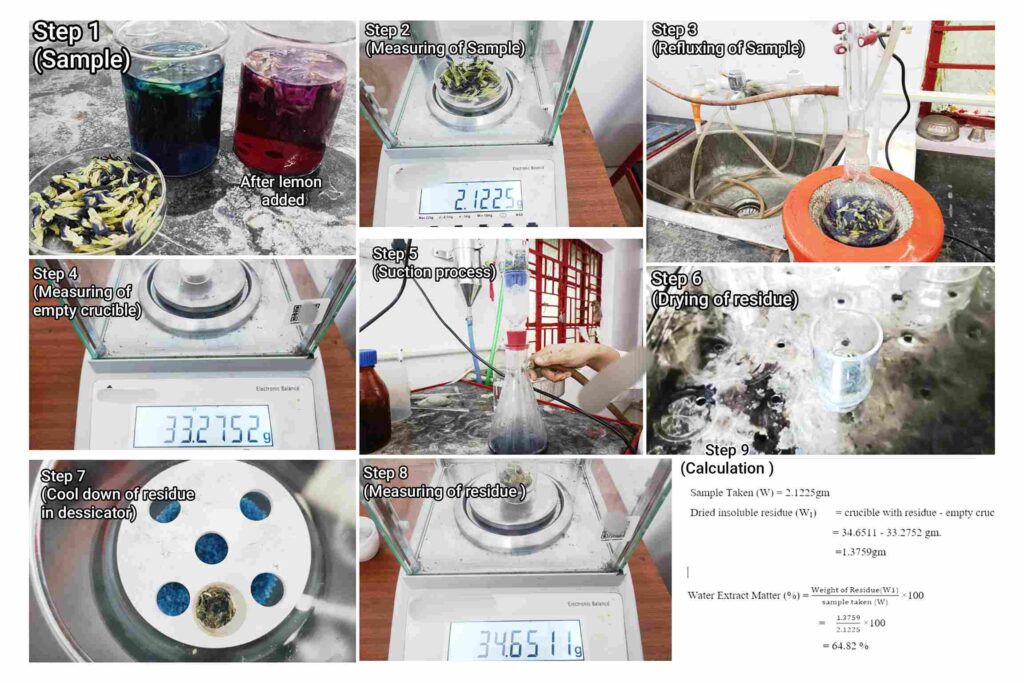
Testing Procedure of Water Extract Matter of Blue tea in our lab

Blue tea is an herbal infusion made from the dried petals or whole flowers of the butterfly blue pea flower(Oporajita Flower). It is not like regular tea, known for its vibrant blue color, which can change to purple when lemon is added. This blue tea is rich in antioxidants,anti-inflammatory & anti-aging and skin protective. Water

Testing Procedure of Water Extract Matter of Blue tea in our lab Read More »

Testing Procedure of Total Hardness(as CaCO3) in Water Sample in our Lab

Water hardness (as CaCO₃) testing measures the total concentration of calcium and magnesium ions in water, expressed as milligrams per liter (mg/L) of calcium carbonate (CaCO₃).Hardness is a critical water quality parameter, affecting domestic, industrial, and agricultural water use. Excess hardness can cause scale formation in boilers, pipes, and appliances, which may affect on their

Testing Procedure of Total Hardness(as CaCO3) in Water Sample in our Lab Read More »

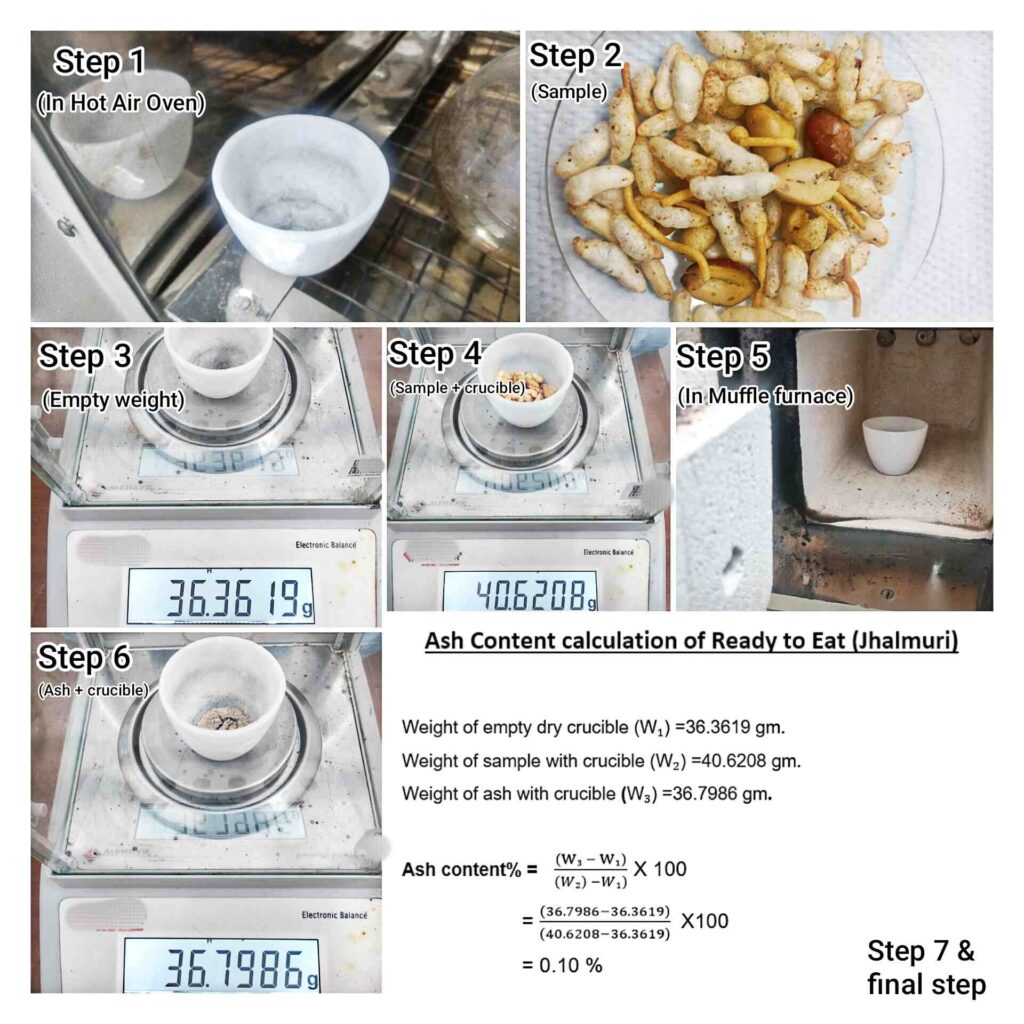
Ash Content (Mineral Content) Testing Procedure of Ready to Eat Food in our Lab

Jhalmuri which is ready-to-eat food, served as a dry snack, known for its crunchy texture, spicy-tangy flavor, and aromatic ingredients.It normally consist of puffed rice, peanuts, spices, mustard oil, salt etc. Ash content of a food sample refers to the total amount of minerals(Na,K,Ca,Mg,Fe,Cl & heavy metals etc) present in the food. It is the

Ash Content (Mineral Content) Testing Procedure of Ready to Eat Food in our Lab Read More »

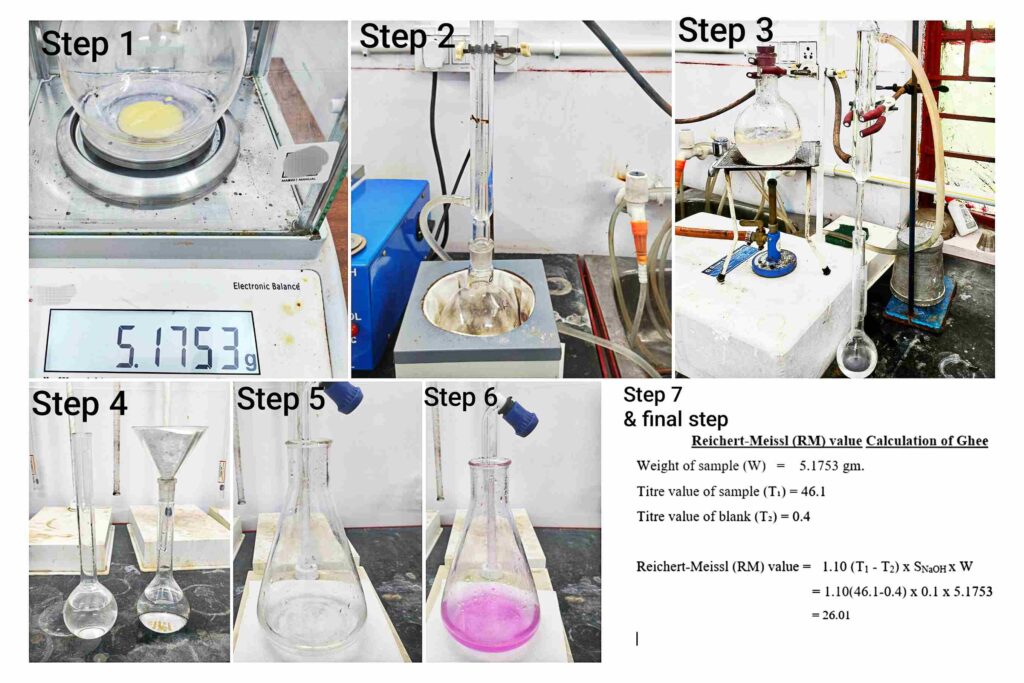
Testing Procedure of Reichert-Meissl (RM) value in Ghee Sample in our Lab

The Reichert-Meissl (RM) value of ghee is a measure of the amount of volatile water-soluble fatty acids,present in the fat. It is an important quality parameter used to detect adulteration and to assess the purity and authenticity of ghee. Pure ghee, especially from cow or buffalo milk, contains a high RM value due to its

Testing Procedure of Reichert-Meissl (RM) value in Ghee Sample in our Lab Read More »

Detection of Coliform and E. coli by Membrane Filtration Technique from Water in our Lab

Coliforms and E. coli or thermotolerant bacteria are a group of gram negative, oxidase negative,bacilli shaped non spore forming bacteria mainly from enterobacteriaceae family. They commonly serve as indicator microorganism of faecal contamination of water.Presence of coliform bacteria in water usually indicates the pathogenic contamination of which may cause severe adverse health effects and sometimes

Detection of Coliform and E. coli by Membrane Filtration Technique from Water in our Lab Read More »