Blog

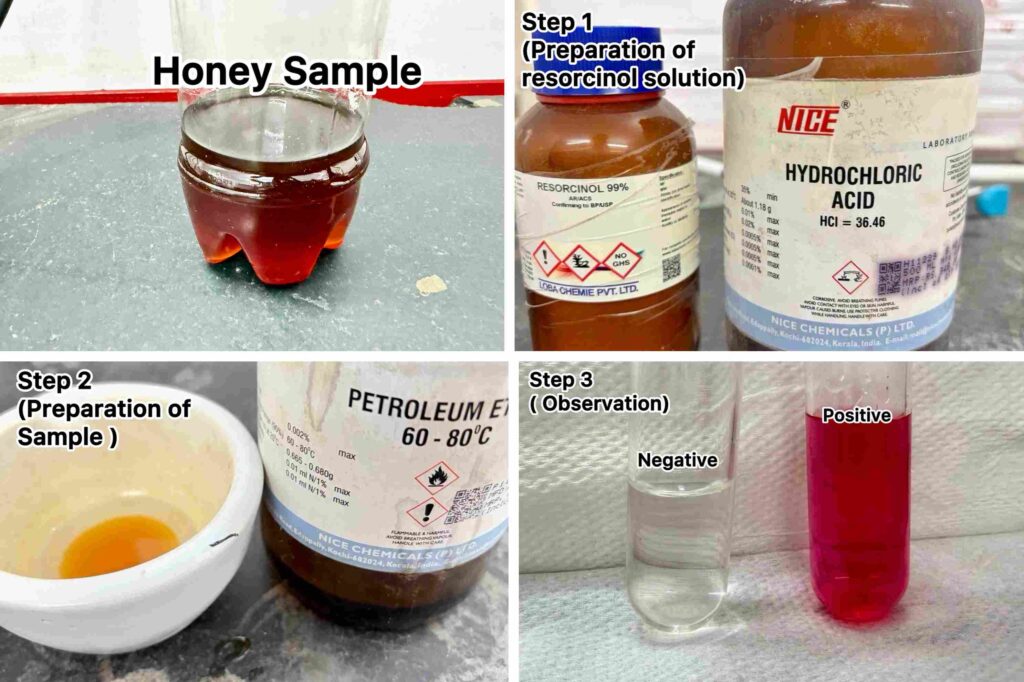
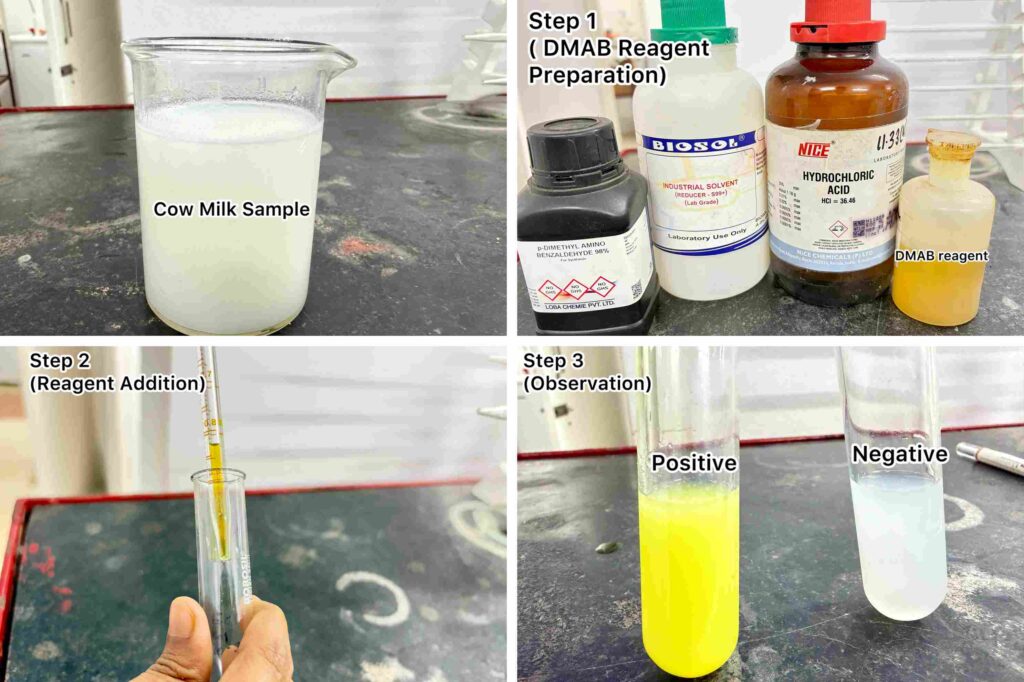
Added Urea detection Process in Milk Sample in our lab

Milk is rich in proteins, fat, lactose, vitamins, and minerals. However, due to increasing demand, milk adulteration has become a significant problem. One typical adulterant is urea, unlawfully added to milk to raise its protein content by increasing viscosity also match with natural solids-not-fat (SNF) level.Very small levels of urea are naturally found in milk […]

Added Urea detection Process in Milk Sample in our lab Read More »
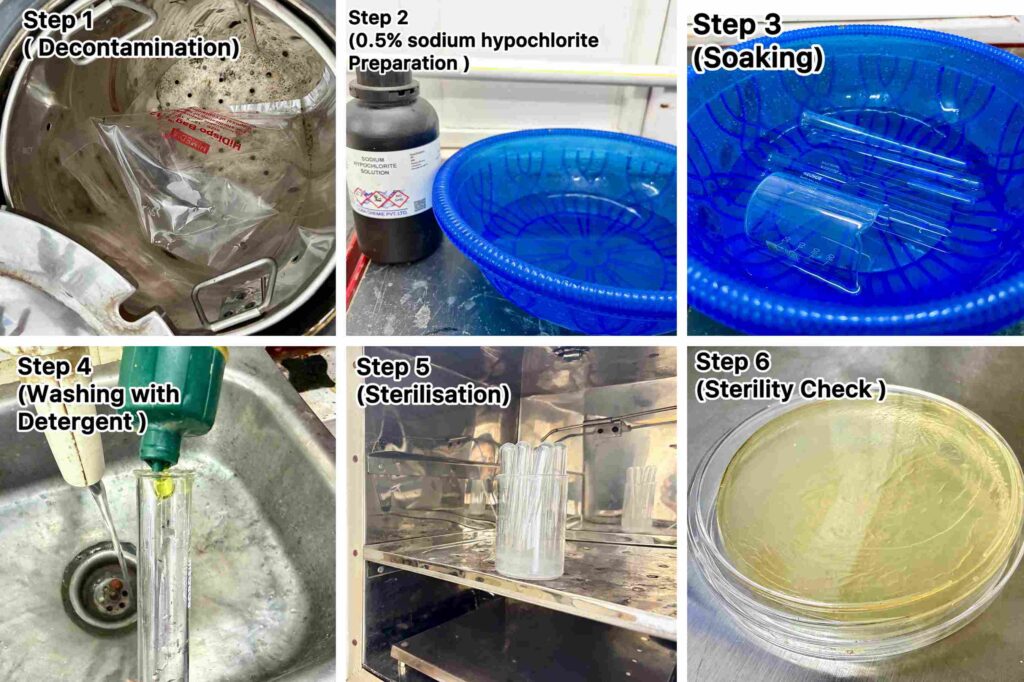
Cleaning & Sterilization Procedure of glasswares after work(Microbiological Testing) in our lab

The cleaning and sterilization of laboratory glassware is a multi-step process designed to ensure that equipment is properly clean. Proper protocols prevent cross-contamination, protect personnel from hazardous residues, and ensure the accuracy of experimental results.  Materials & Equipments needed in Cleaning & Sterilization Process of glasswares Washing method of glasswares after work(Microbiological Testing) Cleaning Procedure Empty all

Cleaning & Sterilization Procedure of glasswares after work(Microbiological Testing) in our lab Read More »

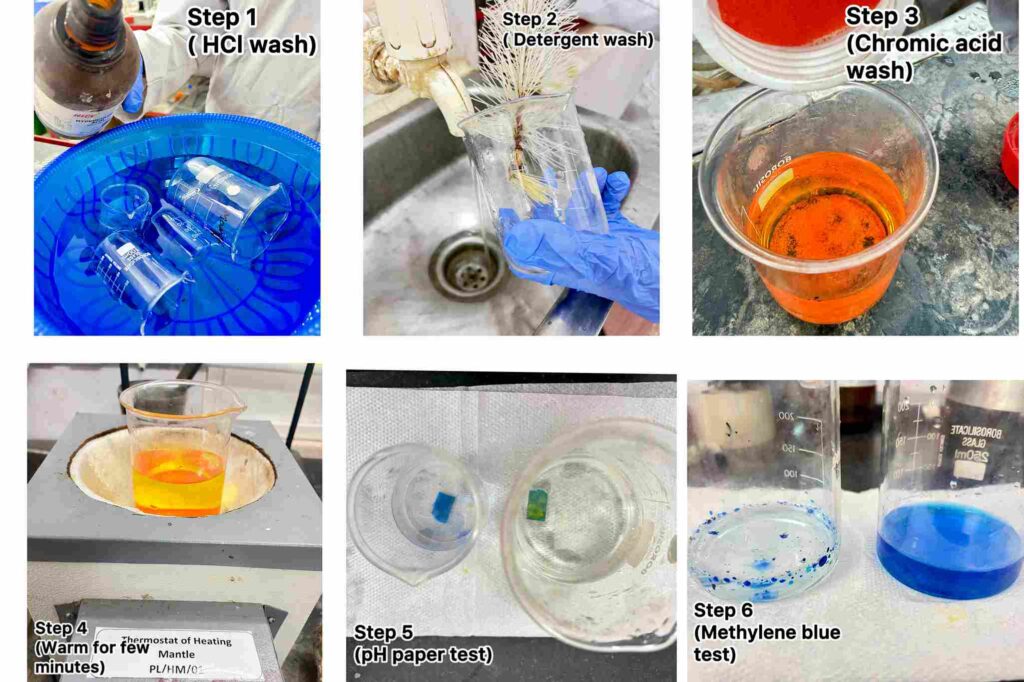
Cleaning Procedure of glasswares after work(Chemical Testing) in our lab

For Chemical Section Clean glasswares are essential to prevent cross-contamination and chemical interference, which can give false results. The process of glassware cleaning for chemical analysis is as follows. Chemicals used in cleaning process of glasswares after chemical testing Glasswares Washing Method The used glasswares are at first rinsed thoroughly with dilute HCL to remove any inorganic stains.(see

Cleaning Procedure of glasswares after work(Chemical Testing) in our lab Read More »

Instrument Operating Procedure in our lab

Microbiological Laboratory Section Instruments Name Water-Bath Incubator-01 Incubator-02 Incubator-03 Vortex Microscope Colony Counter WATER-BATH Lab ID -PL/DWB/02 Pour distilled water into the water path upto atleast 5 cm above the heating cell in immersed condition.│▼Switch on the hot water bath & set the temperature to 45 ± 1 ℃.│▼Constant temperature is reached with thermostat control.│▼After

Instrument Operating Procedure in our lab Read More »

Instrument Operating Procedure in our lab

Microbiology Laboratory Section Instruments Name Hot Air Oven Autoclave Laminar Air Flow Biosafety Cabinet Lab ID -PL/HAO/02 Switch on the equipment & set the desired temperature by thermostat key.│▼Keep the sample until desired test result.│▼After using switch off the equipment. Precaution Autoclave Model Name – Lab ID – PL/AC/DTC/01 Fill the autoclave (PL/AC/DTC/01) with distilled

Instrument Operating Procedure in our lab Read More »

Instrument Operating Procedure in our lab

Chemical Laboratory Section Instruments Name Flame-photo Meter Digital Water-Bath Digital Air Oven Digital Muffle-Furnace COD Digester BOD Incubator Flame Photometer Model Name -Labtronics Lab ID – PL/FM/01 Switch on the instrument & compressor pump.│▼Set the pressure in the compressor between 0.40 to 0.60 kg/m2│▼Calibration ok & ready to measure sample’s pH.│▼Now ignite the flame &

Instrument Operating Procedure in our lab Read More »

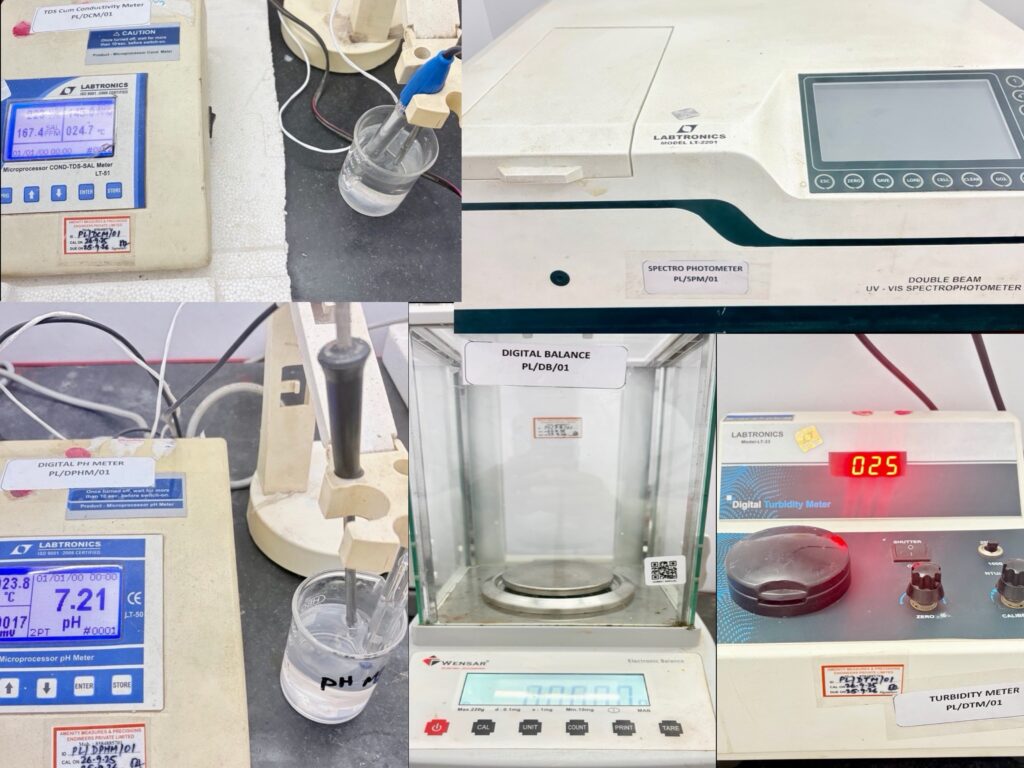
Instruments Operating Procedure in our Lab

Chemical Laboratory Section Instruments Name pH Meter TDS Cum Conductivity Meter Analytical Balance UV-Vis Spectrophotometer Turbidity Meter pH Meter Model no- Labtronics LT-150                                                  Lab Id no –PL/DPHM/01 Switch on the instrument & allow to warm for 15 minutes at room temperature(22°C-25°C)│▼Calibrate by buffer solution of pH 4.0, 7.0 & 9.0│▼Calibration ok & ready to measure

Instruments Operating Procedure in our Lab Read More »