Author name: Pro Research Team

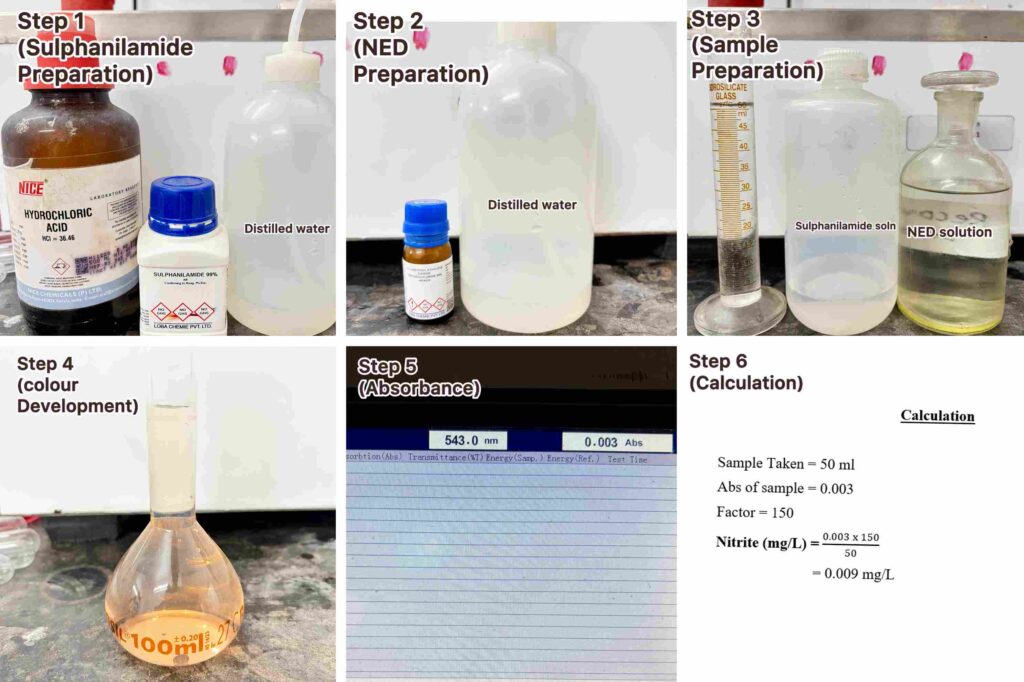
Nitrate(NO₃⁻) Testing Procedure in water Sample in our Lab

Nitrates are compounds made of nitrogen and oxygen that are commonly found in water. They can enter water sources through fertilizers used in agriculture, animal waste, sewage. Although small amounts of nitrates occur naturally, high nitrate levels can be harmful to both humans and the environment. In drinking water, excessive nitrates can be dangerous to […]

Nitrate(NO₃⁻) Testing Procedure in water Sample in our Lab Read More »

Saponification Value (Sap Value) Testing in our lab

Saponification Value (Sap Value) testing is an important analytical method used in fats and oils products.This testing is also widely used in food analysis, cosmetics, pharmaceuticals, and soap manufacturing to assess quality, purity, and suitability for specific applications It measures the amount of potassium hydroxide (KOH), expressed in milligrams, required to completely saponify one gram

Saponification Value (Sap Value) Testing in our lab Read More »

Free Residual Chlorine(FRC) Testing of Water Sample in our Lab

Free residual chlorine is the portion of chlorine that remains in water after the disinfection process and is available to inactivate harmful microorganisms.The iodometric method is a reliable and widely used titrimetric technique for determining free residual chlorine in drinking water and treated water supplies, ensuring effective disinfection and compliance with water quality standards. Free

Free Residual Chlorine(FRC) Testing of Water Sample in our Lab Read More »

Sucrose Determination of Food sample in our lab

Sucrose determination in honey is an important quality-control test used to assess purity and detect possible adulteration. Honey naturally contains very low sucrose because most of the sucrose from nectar is enzymatically converted into glucose and fructose by bees. Fehling’s method is a classical analytical technique that measures reducing sugars based on their ability to

Sucrose Determination of Food sample in our lab Read More »

ARSENIC (as As) ANALYSIS IN WATER SAMPLE in our lab

Arsenic is a naturally occurring element found in the earth’s crust, but it can enter water sources through both natural processes and human activities. In groundwater, arsenic often dissolves from mineral deposits.Industrial areas such as mining, pesticide use, and improper waste disposal can further elevate arsenic levels in surface and groundwater. Because arsenic is colorless,

ARSENIC (as As) ANALYSIS IN WATER SAMPLE in our lab Read More »

WATER INSOLUBLE ASH TESTING IN FOOD SAMPLE in our lab

Water insoluble ash testing is an important quality control method used to determine the amount of inorganic impurities such as dirt, sand, and siliceous matter present in a sample. After obtaining the total ash, it is treated with water to separate the soluble and insoluble portions. The residue that remains undissolved represents the water insoluble

WATER INSOLUBLE ASH TESTING IN FOOD SAMPLE in our lab Read More »

Calcium Hardness & Magnesium Hardness Testing Process of Water Sample in our lab

Water hardness is primarily caused by the presence of dissolved calcium and magnesium ions, carbonates, bicarbonates, chlorides and sulphates,which naturally enter water as it moves through mineral-rich soils and rocks. Calcium hardness refers to the concentration of calcium ions, usually originating from limestone, gypsum, or other calcium-containing minerals. It is the main contributor to scale

Calcium Hardness & Magnesium Hardness Testing Process of Water Sample in our lab Read More »

Alcoholic Acidity Testing Procedure Of Maize in our Lab

Alcoholic acidity of maize/corn is a key quality parameter used to assess the freshness and storage stability of maize grains. During spoilage or fermentation, organic acids accumulate, increasing acidity. By extracting these acids with alcohol and titrating them, alcoholic acidity helps determine whether the maize is fit for food, feed, and industrial processing. Chemical &

Alcoholic Acidity Testing Procedure Of Maize in our Lab Read More »