Author name: Pro Research Team

Instrument Operating Procedure in our lab

Chemical Laboratory Section Instruments Name Flame-photo Meter Digital Water-Bath Digital Air Oven Digital Muffle-Furnace COD Digester BOD Incubator Flame Photometer Model Name -Labtronics Lab ID – PL/FM/01 Switch on the instrument & compressor pump.│▼Set the pressure in the compressor between 0.40 to 0.60 kg/m2│▼Calibration ok & ready to measure sample’s pH.│▼Now ignite the flame & […]

Instrument Operating Procedure in our lab Read More »

Instruments Operating Procedure in our Lab

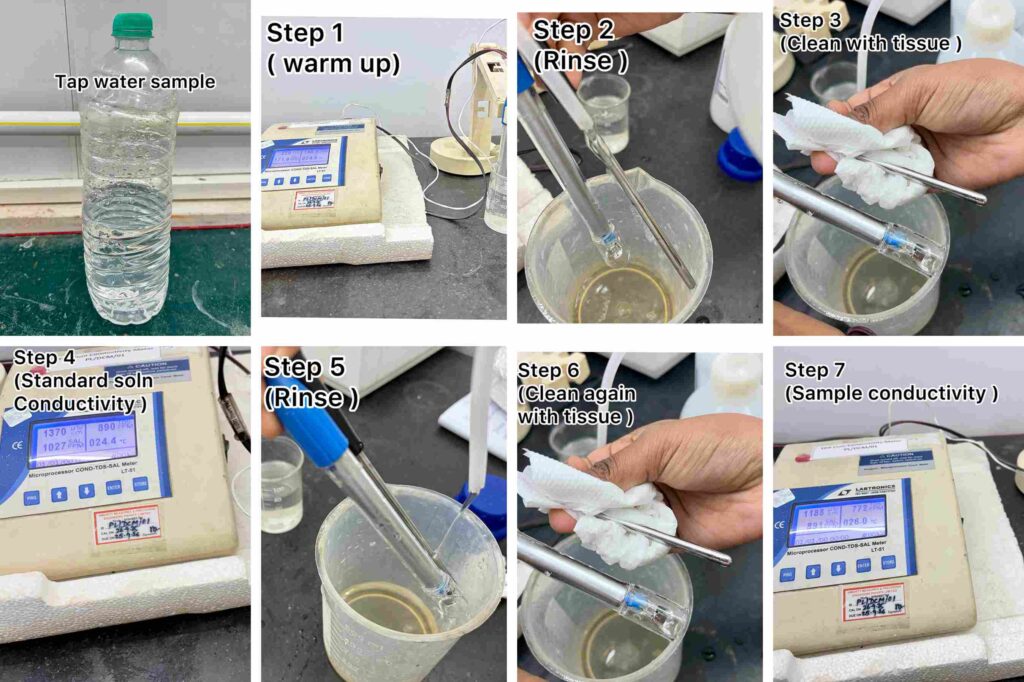
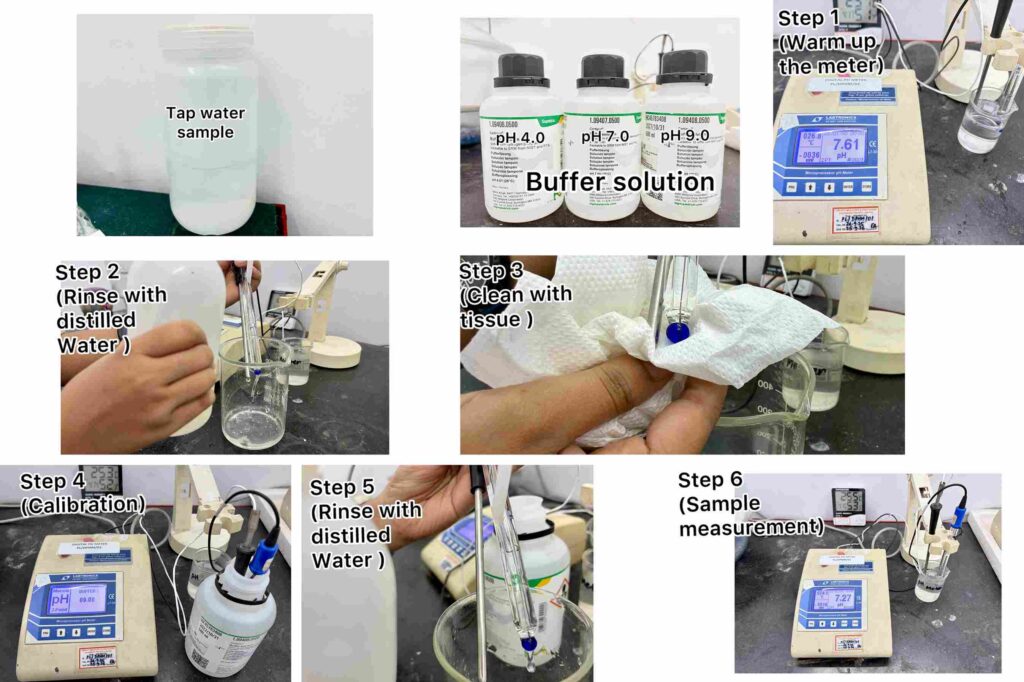
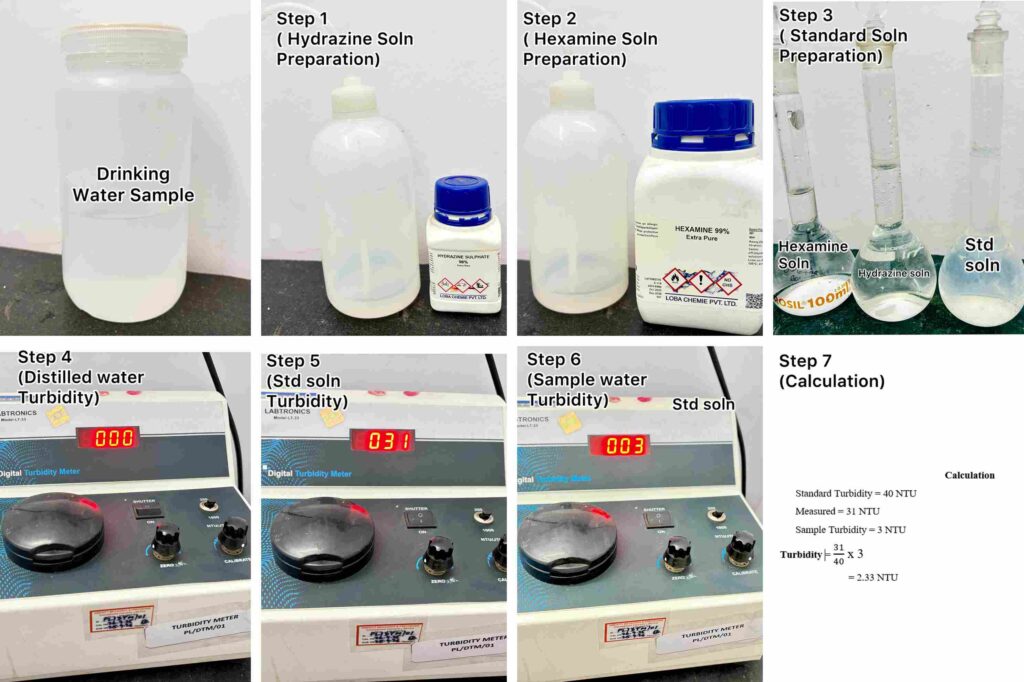
Chemical Laboratory Section Instruments Name pH Meter TDS Cum Conductivity Meter Analytical Balance UV-Vis Spectrophotometer Turbidity Meter pH Meter Model no- Labtronics LT-150                                                  Lab Id no –PL/DPHM/01 Switch on the instrument & allow to warm for 15 minutes at room temperature(22°C-25°C)│▼Calibrate by buffer solution of pH 4.0, 7.0 & 9.0│▼Calibration ok & ready to measure

Instruments Operating Procedure in our Lab Read More »

Total Solid (TS) Testing procedure in Liquid Food Sample in our lab

Total solids (TS) refers to all the components in a liquid food sample that remain after all the water has evaporated. This includes both dissolved solids (such as sugars, salts, and proteins) and suspended solids (like minute particles), as well as fats, minerals, and other constituents found in food. In products like milk, Total solids

Total Solid (TS) Testing procedure in Liquid Food Sample in our lab Read More »

Starch Testing in Milk Sample in our lab

Milk is a vital component of the human diet, valued for its high nutritional content, including proteins, fats, vitamins, and minerals. Due to its widespread consumption, milk quality and purity are major public health concerns. However, milk is sometimes adulterated with substances such as starch like corn starch, wheat flour, rice flour, and arrowroot flour,potato starch etc. To

Starch Testing in Milk Sample in our lab Read More »

Oil & Grease Testing Procedure of Water sample in our lab

Wastewater generated from domestic, commercial, and industrial activities often contains significant amounts of oil and grease. These substances originate from sources such as food processing units, restaurants, petroleum industries and households. Oil and grease are not single compounds but a mixture of fats, oils, waxes, and hydrocarbons that are insoluble or only slightly soluble in

Oil & Grease Testing Procedure of Water sample in our lab Read More »

Total Suspended Solids (TSS) Testing Procedure of Water Sample in our lab

Total Suspended Solids (TSS) represents the amount of undissolved particles—like silt, clay, organic matter, and industrial waste—present in water. It is one of the most important parameters for assessing water quality in drinking water, wastewater, rivers, and industrial effluents.Here we tested TSS in surface water. Glassware Used in TSS Detection in Water Procedure of Total

Total Suspended Solids (TSS) Testing Procedure of Water Sample in our lab Read More »

Nitrate(NO₃⁻) Testing Procedure in water Sample in our Lab

Nitrates are compounds made of nitrogen and oxygen that are commonly found in water. They can enter water sources through fertilizers used in agriculture, animal waste, sewage. Although small amounts of nitrates occur naturally, high nitrate levels can be harmful to both humans and the environment. In drinking water, excessive nitrates can be dangerous to

Nitrate(NO₃⁻) Testing Procedure in water Sample in our Lab Read More »

Saponification Value (Sap Value) Testing in our lab

Saponification Value (Sap Value) testing is an important analytical method used in fats and oils products.This testing is also widely used in food analysis, cosmetics, pharmaceuticals, and soap manufacturing to assess quality, purity, and suitability for specific applications It measures the amount of potassium hydroxide (KOH), expressed in milligrams, required to completely saponify one gram

Saponification Value (Sap Value) Testing in our lab Read More »